
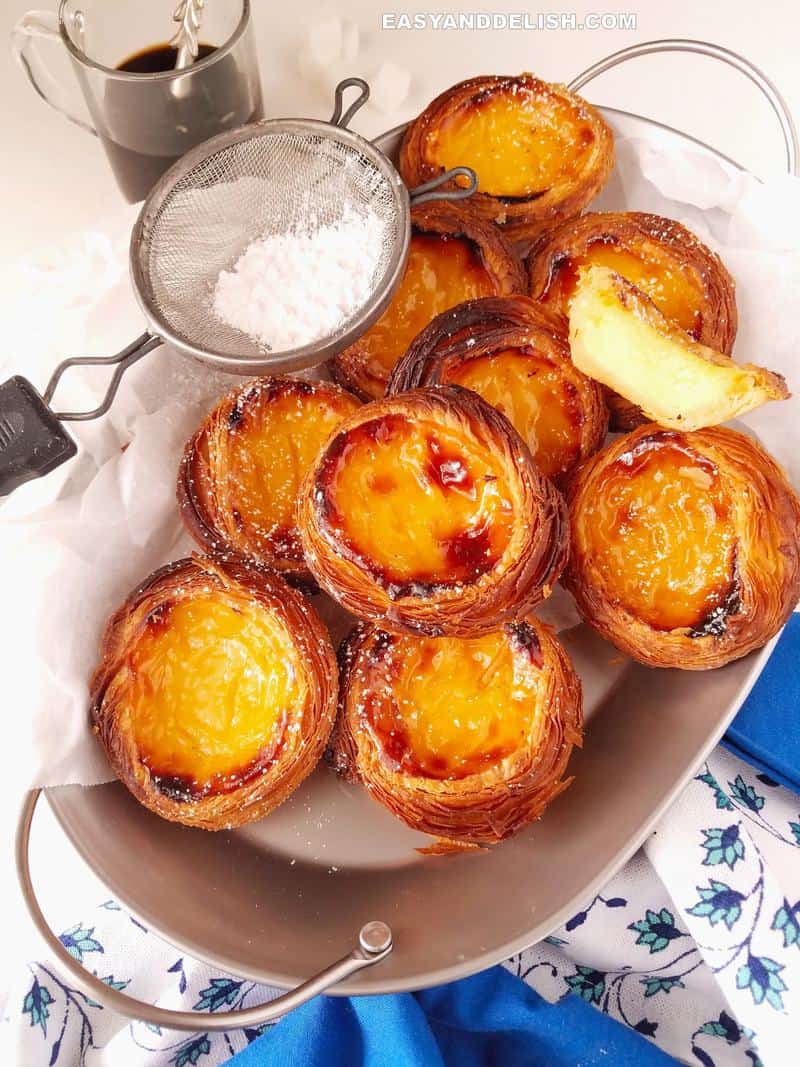






How a monastery, a mountain of leftover egg yolks, and a little Portuguese ingenuity gave the world a very good reason to visit Lisbon.
Some of the world’s greatest food inventions begin with a brilliant chef, an expensive kitchen, and years of culinary experimentation.
Others begin with a much simpler problem.
Too many egg yolks.
Imagine living in a Portuguese monastery centuries ago. You have religious garments to maintain, wine to prepare, and an entire community to feed. Egg whites are useful for tasks such as starching clothes and clarifying wine, but what happens to all those leftover yolks?
Throwing them away seems wasteful. Eating them all as omelets would become boring rather quickly.
Fortunately, somebody had a sweeter idea.
Portugal developed a remarkable tradition of convent sweets, many made with generous amounts of egg yolks and sugar. Among the country's most famous pastries is the pastel de nata: a small, golden custard tart with crisp pastry, a creamy center, and a beautifully blistered top.
It is delicious enough to make you reconsider your sightseeing schedule.
And its connection to Portuguese monasteries has given it a backstory almost as tempting as the pastry itself.
A Very Sweet Solution to a Very Eggy Problem
 To understand the story, we need to travel back to the kitchens of Portugal's religious communities.
In convents and monasteries, egg whites had practical uses. They could be used to starch garments, helping clothes hold their shape, and to clarify wine. The yolks left behind were valuable ingredients rather than rubbish.
Portuguese convent confectionery, known as doçaria conventual, grew into a rich culinary tradition. Egg yolks, sugar, and other ingredients were transformed into cakes, pastries, and sweets with wonderfully rich textures.
The idea was simple: use what you have.
Today, we might call that reducing food waste. Back then, it was practical kitchen wisdom—and occasionally, a very fortunate development for anyone with a sweet tooth.
The story commonly connects the pastel de nata to the Jerónimos Monastery in Belém, now part of Lisbon. According to the traditional account, the monks associated with the monastery made sweet pastries that eventually became famous beyond their original home.
There is an important distinction, though. Portugal's tradition of egg-yolk-rich convent sweets is well established, but the precise origin of this particular tart is less firmly documented than the popular story sometimes suggests. No publicly available monastery recipe book gives us a complete, unquestionable account of who invented it and exactly when.
So, did a monk stand in a kitchen, look at a bowl of leftover yolks, and announce, “Gentlemen, I have an idea that will change dessert forever”?
We cannot know.
But it is a rather delightful image.
Enter Belém: Where History Meets a Bakery Queue
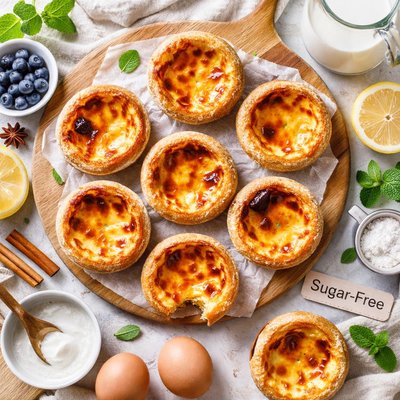
Fast-forward to nineteenth-century Portugal.
The country was going through political change, and in 1834 religious orders were dissolved and monasteries closed. The Jerónimos Monastery was affected, leaving the people connected with its traditional activities facing an uncertain future.
The well-known account from the Pastéis de Belém bakery says that someone associated with the monastery began selling sweet pastries in a nearby shop, next to a sugar-cane refinery.
The pastries proved popular with visitors who came to see the magnificent monastery and the nearby Belém Tower.
In 1837, regular production of the famous pastries began at the premises associated with the refinery. The bakery that became known as Pastéis de Belém says it continues to follow the old secret recipe passed down from the monastery.
That is how a pastry linked to a religious kitchen became a business with a place in Portugal's culinary identity.
There is something wonderfully human about the story. Institutions change, livelihoods disappear, and people find ways to carry their skills forward. Sometimes the thing that survives is a building, a song, or a family recipe.
In this case, it was a little custard tart.
Not the worst legacy to leave behind.
The First Bite: A Tiny Pastry With a Big Personality
Now let's talk about the actual reason most travelers are interested in this story.
The food.
Imagine walking into a Lisbon bakery and seeing rows of small golden tarts behind the counter. They look simple enough: a delicate pastry shell, a creamy filling, and dark caramelized spots on top.
Then you take a bite.
The outer pastry breaks into crisp, buttery flakes. The custard is smooth and rich, with the sweetness balanced by the deep, toasted flavor on the surface. Depending on the recipe, hints of lemon and cinnamon may add fragrance to the filling.
The contrast is the secret: crisp outside, soft inside, sweet but not simply sugary.
It is the sort of dessert that makes you pause halfway through chewing because your brain needs a moment to acknowledge what has just happened.
Of course, the first tart rarely travels alone.
You tell yourself you will have one with coffee. That sounds sensible. You are on holiday, after all, and there is a city to explore.
Then you notice that the second tart is conveniently small.
The third would be excessive, surely.
And yet the plate is still right there.
At some point, you begin to suspect that Portuguese pastry chefs understand human psychology better than most people who write self-help books.
The Cinnamon Question
Pastéis de nata are often enjoyed warm, sometimes with cinnamon or powdered sugar sprinkled over the top. A small, strong Portuguese coffee is a classic companion.
The coffee's bitterness works beautifully against the creamy sweetness of the tart. It is a pairing that feels balanced rather than complicated.
But how much cinnamon should you use?
That depends on personal preference. Some people enjoy the extra warmth and fragrance; others prefer to taste the custard without much added spice.
This is not a matter requiring an international committee.
There is no need to organize a summit, appoint a pastry ambassador, or create a twenty-page document titled The Correct Cinnamon Policy.
Order your tart, add cinnamon if you like, and enjoy it.
The more important question is whether you can stop at one.
History offers no useful guidance on that matter.
Pastel de Nata or Pastel de Belém?
Here is a small detail worth knowing before you arrive in Lisbon.
The names are closely related, but they are not quite interchangeable.
Pastel de nata is the general name for this style of Portuguese custard tart. You can find versions in bakeries and cafés throughout Portugal, and the pastry has become popular in many other parts of the world.
Pastel de Belém, on the other hand, is the name used for the specialty produced by the historic Pastéis de Belém bakery in the Belém district.
That bakery identifies its product with the recipe it says originated at the monastery and has been protected through generations of specialist bakers.
You can enjoy a pastel de nata almost anywhere in Portugal without making a pilgrimage to Belém. But if you are interested in the history behind the traditional account, visiting the original bakery is part of the experience.
Just be prepared for other people to have the same idea.
A famous pastry tends to attract a queue. Apparently, the secret to international popularity is to be delicious and small enough that people immediately consider ordering another one.
A Bakery Is Also a Window Into Lisbon
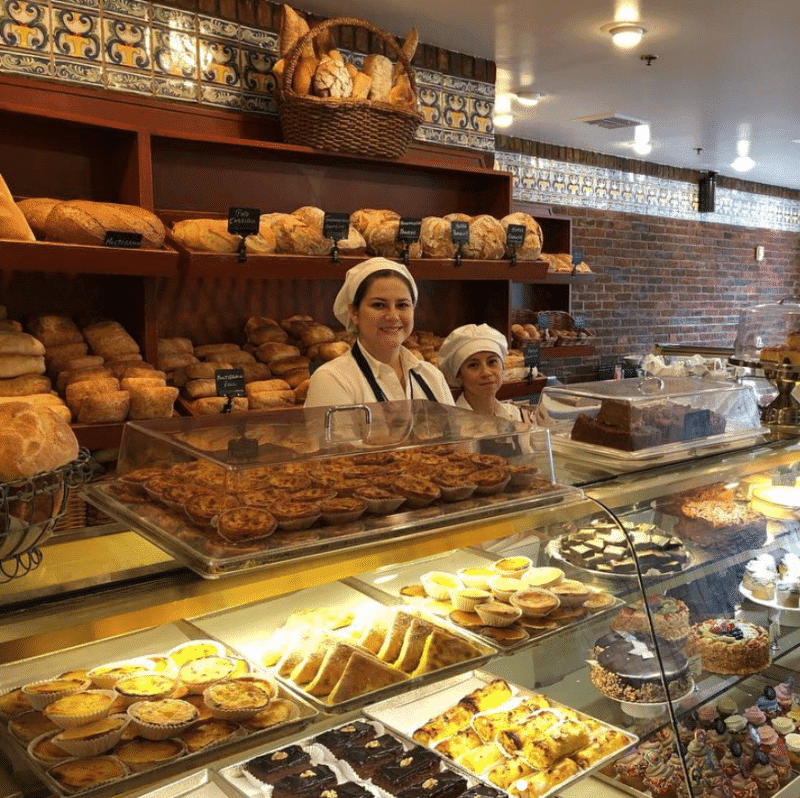
It would be easy to treat the pastel de nata as a dessert-shaped souvenir: eat one, take a photograph, and move on to the next attraction.
But food often offers a more personal way to understand a place.
A neighborhood bakery is where people stop during the day, pick up something sweet, drink coffee, and carry on with their routines. It is not always a grand culinary performance. Sometimes it is simply a familiar pause in a busy morning.
That is part of what makes eating in Lisbon enjoyable. The pastry belongs to a broader culture of cafés, bakeries, coffee breaks, and sweets shared across generations.
The city also offers plenty of other flavors to explore, from savory pastries to seafood dishes and traditional desserts. A pastel de nata may be a natural starting point, but it does not have to be the end of your culinary adventure.
And if you visit Belém, the pastry's story sits alongside a much larger history. The Jerónimos Monastery and Belém Tower are closely associated with Portugal's maritime past and the age of overseas exploration. Seeing these landmarks helps place the bakery story within the historical landscape of the district.
You can admire the architecture, learn about the past, and then reward yourself with a tart.
For once, a history lesson comes with a snack.
How Much of the Story Is Actually True?
Food history is full of wonderful stories, but not every detail comes with a neat paper trail.
In the case of the pastel de nata, several points are clear:
- Portugal has a long tradition of convent sweets made with egg yolks.
- The famous Belém bakery traces its production back to 1837.
- The bakery's own history connects its recipe to the Jerónimos Monastery and the period following the closure of religious institutions in 1834.
Other details are harder to prove conclusively. The exact moment the tart was invented, the identity of its original creator, and every step by which the recipe passed from monastery to bakery are not all independently documented in a publicly available original recipe.
That does not mean the traditional story is meaningless. It means we should tell it accurately: as a historical account preserved by the bakery and supported by the wider tradition of Portuguese convent confectionery, rather than as a fully documented scene in which every detail is certain.
Honestly, the uncertainty makes the story more interesting to me.
Recipes are rarely born with a birth certificate. They evolve in kitchens, pass between people, and change as ingredients and circumstances change. The person who first made a pastry may never have imagined that travelers centuries later would cross an ocean to taste it.
Perhaps they were simply trying to use the ingredients they had.
Perhaps they wanted to make something delicious.
Either way, their legacy has done rather well.
The Sweetest Lesson of All
The pastel de nata is more than a pretty pastry in a bakery window. It connects a tradition of Portuguese convent sweets with a story of changing institutions, resourcefulness, and the survival of culinary knowledge.
Its exact origins are not perfectly documented, and that is worth acknowledging. But the tart's place in Portugal's food culture is unmistakable.
So, the next time you visit Lisbon, find a bakery, order a warm pastel de nata, and pair it with a small coffee. Notice the crisp layers, the creamy filling, and the dark spots that give the top its distinctive appearance.
Then remember the monks, the egg whites, and the leftover yolks.
Somewhere in the long history of Portuguese kitchens, ingredients that could have been wasted became part of a dessert loved around the world.
That is a pretty good result for a surplus-egg situation.
And if you order a second tart, don't worry. You are not being greedy.
You are simply conducting further historical research.