
If someone asked me to name a dish that represents Singapore, I wouldn't need a long moment to think. I'd probably say Hainanese chicken rice.
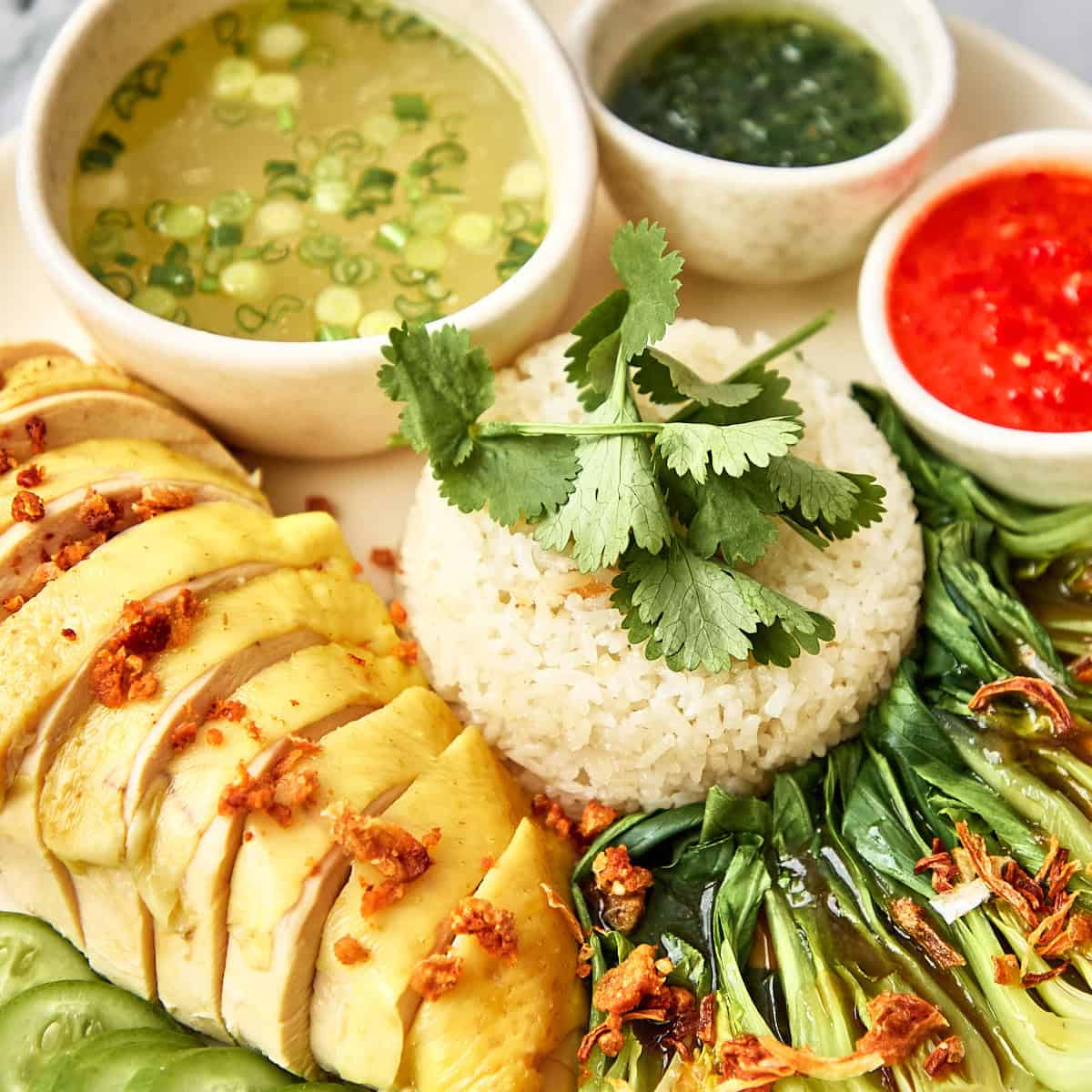
It's not flashy. It doesn't come with a mountain of cheese, a tower of toppings or a sauce that requires three napkins and a serious commitment. It's simply chicken, rice, a few slices of cucumber and some dipping sauces.
Yet somehow, this humble plate has become one of Singapore's most beloved foods. Locals eat it for lunch, tourists hunt it down, food writers argue about where to find the best version, and some people seem willing to cross half the city just to satisfy a chicken rice craving.
So what's the secret? How did a dish brought over by Chinese immigrants become such a big part of Singapore's food identity?
To find out, let's imagine spending a day in Singapore, following the irresistible smell of ginger, garlic and chicken fat through its busy hawker centres. Warning: reading this article on an empty stomach is not recommended.
A Dish That Travelled Far From Home
The story of Singaporean chicken rice begins on Hainan Island, in southern China.
Hainanese immigrants started arriving in Singapore and other parts of Southeast Asia during the 19th and early 20th centuries. Like many migrants, they carried more than their luggage. They brought their cooking traditions, family recipes and memories of home.
One important dish was Wenchang chicken rice, named after Wenchang, a city in Hainan famous for its chicken.
The traditional dish featured chicken served with rice cooked using chicken fat and broth, accompanied by a dipping sauce made with ingredients such as ginger and garlic. It was a familiar taste of home for Hainanese families far away from the island.
But Singapore was a different place, with different ingredients, customers and culinary influences. And the dish was about to get a makeover.
The Hainanese community gradually adapted its cooking to local tastes. One major influence came from Cantonese cuisine, particularly the technique of preparing pak cham kai, or white-cut chicken.
Instead of simply reproducing the original Wenchang dish, cooks developed a version featuring tender poached chicken, fragrant rice and a collection of punchy sauces.
Think of it as a family recipe that moved abroad, made new friends and came back with a completely different personality.
From Bamboo Baskets to Singapore's Hawker Centres
In the early days, chicken rice wasn't the polished, beautifully arranged dish we see in food photographs today.
It was practical food for people who needed an affordable, filling meal.
Historical accounts connect some of the earliest chicken rice sellers with the Middle Road and Purvis Street areas of Singapore. One frequently mentioned pioneer was Wong Yi Guan, a Hainanese hawker who reportedly carried his food in bamboo baskets suspended from a shoulder pole.
Imagine walking through the streets and spotting a man carrying two baskets filled with chicken and rice. No food delivery app, no fancy restaurant sign, no Instagram account telling you where to eat. Just a travelling food seller and a very tempting lunch.
Wong's apprentice, Mok Fu Swee, later became associated with Swee Kee Chicken Rice, one of the early businesses that helped popularise the dish.
Other Hainanese chicken rice businesses also appeared around the 1930s and 1940s. Yet Con, for example, opened in 1940 and became one of the best-known names in the dish's history.
After World War II, economic difficulties pushed more people towards street hawking. For many Hainanese migrants, selling food offered a way to earn a living using the cooking skills they already possessed.
Over time, chicken rice spread beyond its early neighbourhoods. It became a familiar sight in coffee shops, hawker centres and restaurants across Singapore.
And that's how a dish rooted in one community gradually became something enjoyed by people from many different backgrounds.
The Rice Is Not Just a Sidekick
Now, let's talk about the most underrated character in this story: the rice.
At first glance, it might look like ordinary white rice. But one spoonful quickly reveals that it has been working much harder than it appears.
The rice is typically fried or sautéed with ingredients such as garlic, ginger and chicken fat before being cooked in chicken stock. Some versions also use pandan leaves to add a delicate fragrance.
The result is rich, savoury and aromatic rice that can easily steal the spotlight from the chicken.
In fact, cooking the rice well is one of the trickiest parts of making chicken rice. It needs to be fragrant without becoming greasy, tender without turning mushy, and flavourful without overwhelming the chicken.
That's a lot of pressure for something that usually sits quietly on the plate.
I imagine watching a hawker prepare a serving: the chicken is chopped with impressive speed, the rice is scooped into a neat mound, and everything is arranged as if the vendor has done this thousands of times.
Which, of course, they probably have.
And then comes the moment of truth: the first spoonful of rice. If it's good, you might find yourself eating it on its own before remembering that there's an entire portion of chicken waiting for you.
The Chicken: Soft, Shiny and Surprisingly Serious
The classic Singapore-style version usually features poached chicken, often served at room temperature or slightly warm.
The cooking process is more delicate than simply throwing a chicken into boiling water and waiting for dinner.
At some stalls, the chicken is carefully dipped into hot stock, cooked for a controlled period and then cooled in water. This helps create the characteristic smooth skin and tender texture.
A practitioner interviewed by Singapore's National Heritage Board described a meticulous process involving dipping the chicken in and out of stock, immersing it for cooking, cooling it, hanging it to drain and allowing it to rest before chopping.
That's quite a routine for a bird that will eventually be eaten in about ten minutes.
The chicken is usually served in bite-sized pieces, sometimes with a light soy-based dressing and sesame oil. The meat should be tender and juicy, with the skin adding a delicate, silky texture.
Of course, not every stall prepares it in exactly the same way. Some offer roasted chicken, while others serve soy-braised versions.
If you're the sort of person who finds choosing between two ice cream flavours difficult, the chicken rice menu might present a new challenge.
Steamed or roasted? White chicken or dark meat? Extra rice or extra sauce?
Take your time. Nobody is judging you. Well, perhaps the person waiting behind you in the queue.
The Three Little Sauces That Cause Big Arguments
A good plate of chicken rice is not complete without its sauces.
And this is where things become personal.
The classic chilli sauce is usually made with fresh red chillies, garlic, ginger and lime juice. It brings a bright, tangy heat that cuts through the richness of the rice and chicken.
Then there's the ginger paste, which offers a fresh, warming flavour. It's particularly lovely with the delicate chicken.
Finally, dark soy sauce adds sweetness, saltiness and a deeper flavour.
Each sauce has a different job, and together they turn a relatively simple meal into something much more exciting.
Imagine sitting at a hawker-centre table with a plate in front of you. You try a piece of chicken with ginger paste. Nice. Then you add chilli. Better. Then you mix a little dark soy sauce into the rice.
Suddenly, you're conducting a full culinary experiment with three tiny bowls.
Some people prefer a generous amount of chilli, while others want just enough to wake up their taste buds. There is no universal rule, but one thing is certain: don't underestimate the chilli sauce.
It may look innocent, but it can quickly remind you that red peppers are not decorative ingredients.
Why Singaporeans Take Chicken Rice So Seriously
Singapore is famous for its multicultural food scene. Chinese, Malay, Indian and other culinary traditions have influenced the way people eat, cook and share meals.
Chicken rice fits naturally into this environment.
Although its roots are Hainanese, the dish has evolved through the influence of other Chinese cooking traditions and local ingredients. It is now widely enjoyed across Singapore's different communities.
It's also remarkably accessible.
You don't need to book a table weeks in advance or dress up for dinner. You can find chicken rice at ordinary hawker centres and coffee shops, as well as restaurants and hotels.
That accessibility is part of its charm. A student, an office worker, a family and a tourist can all sit down to enjoy essentially the same dish.
And while Singapore is often described as having a national dish, chicken rice is better understood as one of its most widely recognised culinary symbols rather than an officially designated national dish.
Still, if you ask many visitors what they want to eat in Singapore, chicken rice is likely to appear very high on the list.
It has even travelled beyond the island. In some places overseas, the dish is marketed as Singapore chicken rice – a pretty impressive achievement for a meal that started with such humble ingredients.
The Great Chicken Rice Hunt
Now comes the most enjoyable part: finding a plate to eat.
Singapore has plenty of famous chicken rice stalls, and food lovers often have their personal favourites.
Maxwell Food Centre is one of the places visitors commonly associate with the dish. It's home to Tian Tian Hainanese Chicken Rice, a well-known stall that began operating there in 1986.
Its founder, Mdm Foo Kui Lian, built the business through years of hard work, early mornings and careful attention to ingredients. Her story is a reminder that behind many famous hawker dishes are people who have spent decades perfecting their craft.
But here's a little secret: you don't necessarily need to chase the most famous stall.
Some of the most satisfying meals may come from an ordinary neighbourhood coffee shop, where a vendor has been preparing chicken rice for years and regular customers know exactly what to order.
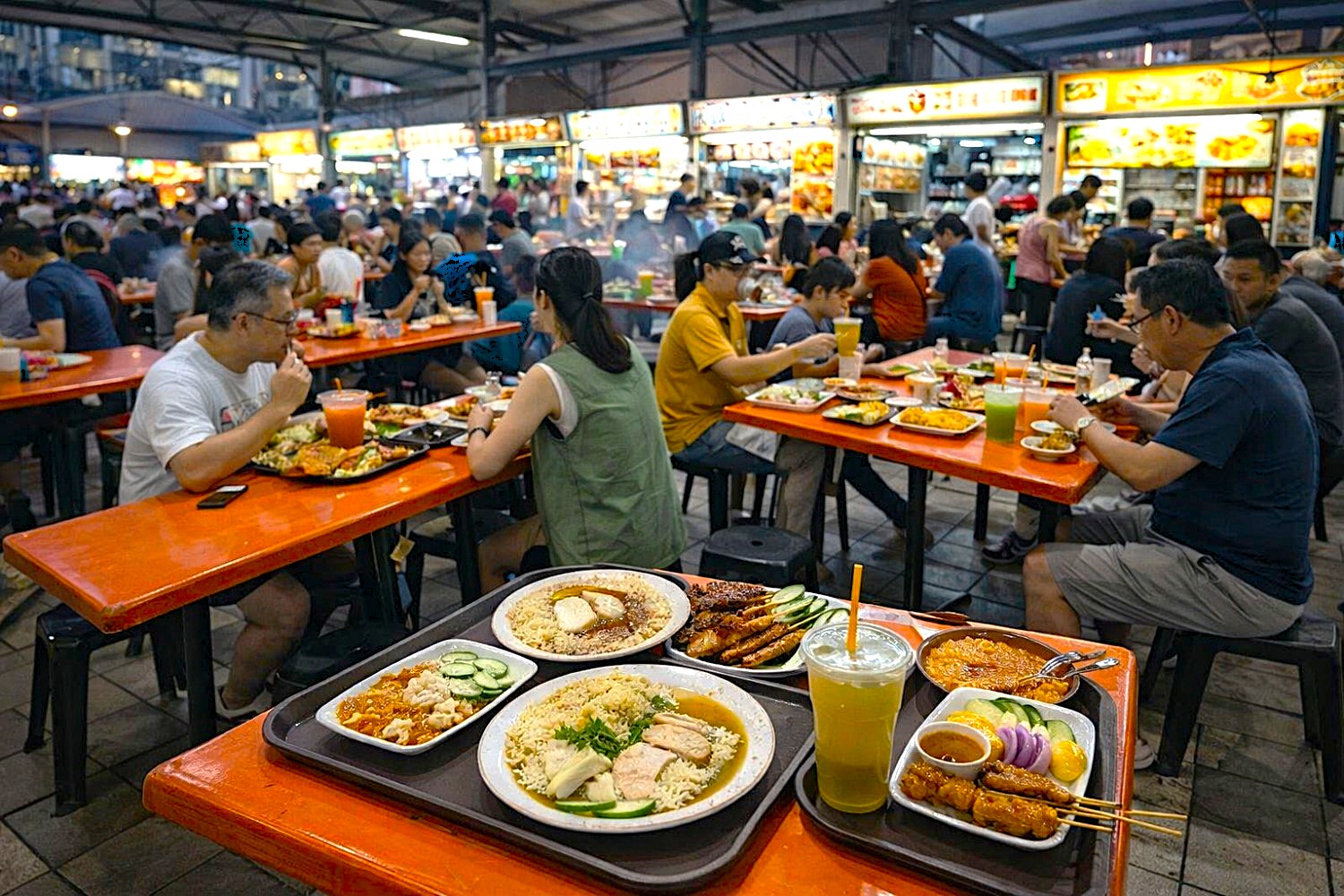
Imagine wandering into a busy hawker centre around lunchtime. The air is filled with the smell of roasted meat, noodles, soup and freshly cooked rice. People are moving between tables, carrying trays and looking for somewhere to sit.
Then you spot a queue in front of a chicken rice stall.
You join it, trying to decide whether to order steamed or roasted chicken. A few minutes later, a plate arrives: glossy chicken slices, fragrant rice, cucumber and little bowls of sauce.
The first bite is simple but satisfying. The rice is savoury, the chicken is tender, and the chilli adds just enough excitement.
You look down and realise you've nearly finished the plate.
So much for saving room for dessert.
More Than Just Chicken and Rice
Perhaps the reason chicken rice has become such an important part of Singapore's food culture is that it tells a bigger story.
It represents migration, adaptation and the way food changes when people bring their traditions to a new home.
The dish began with Hainanese cooking traditions, absorbed influences from Cantonese techniques, adapted to local ingredients and eventually became a favourite across Singapore.
It also reflects the importance of hawker culture – the everyday food stalls that have helped shape the country's culinary identity.
A plate of chicken rice may look modest, but behind it are generations of cooks, family businesses, hard-working hawkers and hungry customers.
So the next time you see Hainanese chicken rice on a menu, don't dismiss it as just another chicken-and-rice meal.
There's a whole journey behind that plate – from Hainan to Singapore, from bamboo baskets to busy hawker centres, and from a migrant community's home cooking to one of the island's most beloved food icons.