






I thought I was a fairly experienced breakfast person.
I've eaten breakfast in hotels, cafés, airports, and once at a train station where the croissant was so sad it looked like it had just received terrible news. I know how breakfast works. You order something, it arrives on a plate, you eat it, and you get on with your day.
Simple.
Then I went to Turkey.
I sat down at a lovely little café, ready for a peaceful morning. I imagined a cup of tea, a piece of bread, perhaps an egg. Nothing dramatic. I had sightseeing to do, after all. There were streets to explore, photographs to take, and probably at least one historic building I would accidentally walk past while looking at my phone.
I ordered Turkish breakfast.
A few minutes later, the waiter appeared with a small plate of olives.
Lovely.
Then came cheese.
Then tomatoes and cucumbers.
Then bread.
Then jam.
Then honey.
Then something creamy that looked like it belonged in a luxury dessert advertisement.
Then another plate.
And another.
And another.
I watched the table fill up with the growing concern of someone who had accidentally ordered catering for a small wedding.
"Excuse me," I wanted to ask. "Are more people coming?"
Apparently, no.
This was breakfast.
And I was beginning to suspect that in Turkey, breakfast wasn't a meal. It was a long-term commitment.
Welcome to Kahvaltı, Where One Plate Is Apparently Not Enough
The Turkish word for breakfast is kahvaltı. The word is traditionally connected to the idea of eating before coffee, and the meal itself can be a wonderful introduction to Turkish food culture.
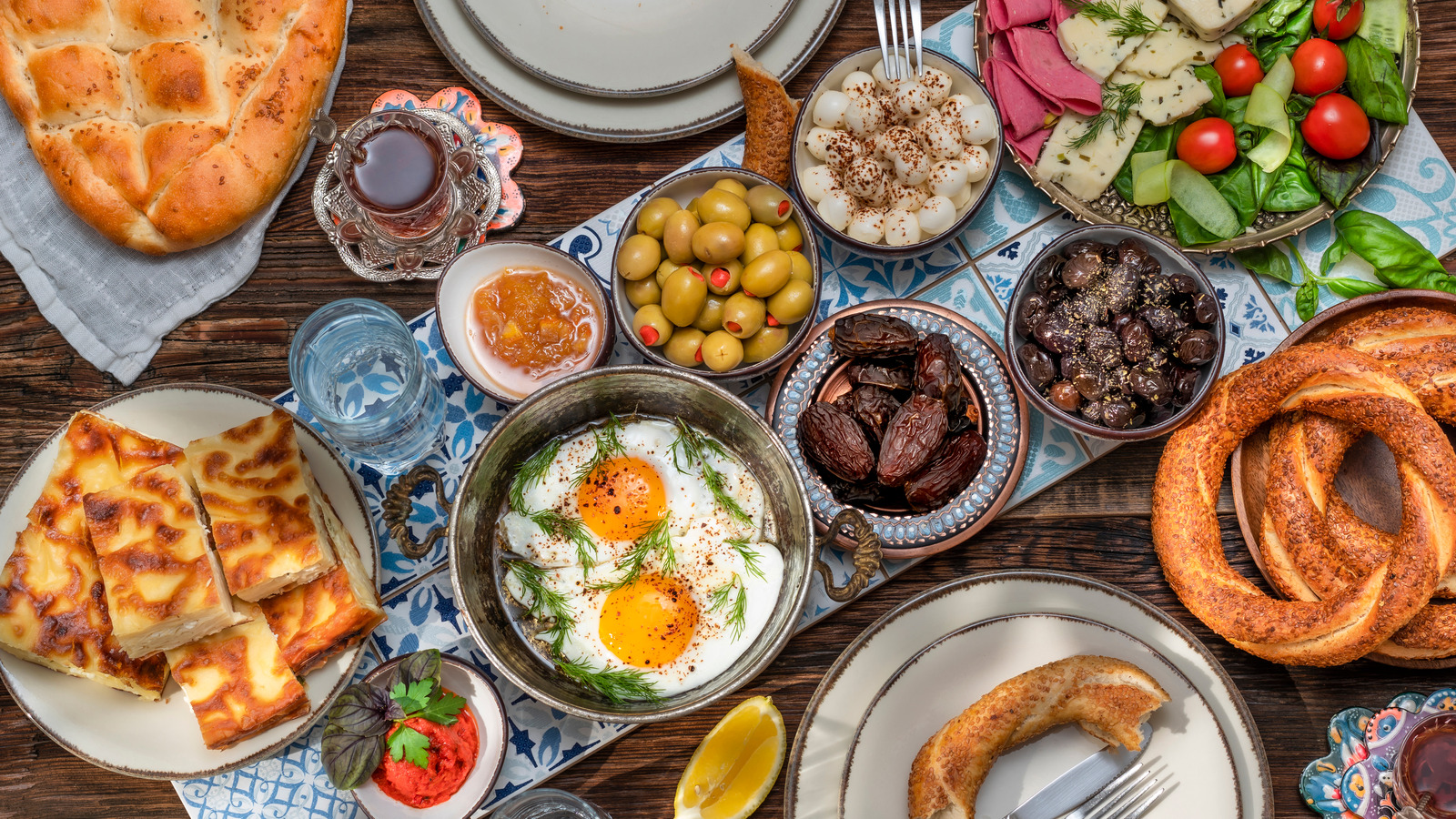
A typical spread may include several kinds of cheese, black and green olives, fresh tomatoes, cucumbers, bread, eggs, jams, honey, and Turkish tea.
Notice the phrase "may include."
That is a very polite way of saying that your table might soon look like a miniature food exhibition.
One of the best-known versions is called serpme kahvaltı, a breakfast spread made up of many small dishes arranged across the table for everyone to share.
And that's the key: share.
The dishes aren't necessarily meant to be tackled by one ambitious tourist who believes that ordering breakfast is a competitive sport.
Unfortunately, nobody explained this to my stomach.
My stomach saw the bread basket and immediately developed a strategy.
Try everything.
My brain, which had apparently been left in charge of absolutely nothing, agreed.
The olives were first. Then a little cheese. Then bread dipped into honey. Then more bread, because apparently the first piece had only been a practice round.
I was doing wonderfully.
Then I noticed the eggs.
And the sausage.
And the pastries.
And I began to wonder whether Turkish breakfast had been designed by someone who was deeply suspicious of the concept of lunch.
The Little Dishes That Stole My Entire Morning
The beauty of Turkish breakfast is that it doesn't revolve around one main attraction. Instead, it's a collection of flavors, textures, and small discoveries.
Every plate seems to offer a different reason to ignore the fact that you've already eaten enough.
1. Olives and Cheese: The Quiet Beginning
 The olives arrived first, glossy and dark, alongside little pieces of cheese.
Turkish breakfasts often feature a variety of cheeses, from soft white cheeses to firmer, saltier varieties. Olives are also a familiar part of the table, especially alongside fresh vegetables and bread.
Together, they make a simple but satisfying combination.
There's something lovely about starting the day with food that doesn't need much decoration. Good ingredients, a little bread, and a few small plates can be more appealing than an elaborate dish that looks as though it requires its own photographer.
I was enjoying the calm, unhurried beginning.
I should have known it wouldn't last.
2. Simit: The Bread That Deserves Its Own Fan Club
Then there was simit, the round, sesame-covered bread that is a familiar sight in Turkey.
Crisp on the outside, soft inside, and covered in sesame seeds, simit is often eaten as a simple snack or breakfast food. You'll find it in bakeries and on the streets, where vendors sell it to people heading to work or going about their day.
It's wonderfully straightforward.
No complicated filling. No mysterious sauce. No instructions printed on a menu.
Just bread.
Excellent bread.
I tore off a piece and paired it with cheese. Then I tried it with jam. Then I dipped another piece into something else on the table.
At some point, I stopped asking myself what I was eating and started asking a much more dangerous question:
"Would this taste good with that?"
This is how food adventures begin.
It is also how people end up ordering dessert when they were supposedly too full for lunch.
3. Honey and Kaymak: A Combination Designed to Destroy Self-Control
 If the olives and cheese represented the sensible side of breakfast, honey and kaymak were clearly here to cause trouble.
Kaymak is a rich, clotted cream commonly enjoyed in Turkish cuisine. Paired with honey and fresh bread, it becomes a sweet, creamy treat that is wonderfully simple and dangerously easy to keep eating.
I spread a little onto my bread.
Then I took a bite.
Then I stared at the plate.
There are moments when you realize that a food combination is so good that you should probably stop eating it immediately, just to preserve the memory.
This was not one of those moments.
I reached for another piece of bread.
The honey was sweet, the cream was rich, and the bread was the perfect vehicle for delivering both directly into my increasingly uncooperative stomach.
4. Menemen: Eggs That Refuse to Be Boring
 Just when I thought I had settled into a comfortable rhythm of bread, cheese, and olives, a warm pan of menemen appeared.
Menemen is a popular Turkish egg dish cooked with tomatoes and green peppers. Depending on the recipe, it may include other seasonings or ingredients, but the idea is simple: eggs cooked gently with vegetables until everything comes together into a soft, flavorful dish.
It often arrives in the pan in which it was cooked, which makes it feel wonderfully informal.
No elaborate tower of ingredients. No dramatic drizzle of sauce. Just a warm dish that practically begs for bread.
And naturally, I obeyed.
I dipped in a piece of bread.
Then another.
Menemen is the kind of food that makes you feel as though somebody has invited you into their kitchen and said, "Sit down. Eat something. You look hungry."
Which is a dangerous thing to say to a person who has already eaten six different breakfast items.
Still, I couldn't resist.
By now, my sightseeing schedule was becoming less of a schedule and more of a distant rumor.
The Tea Kept Coming. So Did My Problems.
Just when I thought I might finally have a moment to appreciate the view, a small, tulip-shaped glass of Turkish black tea appeared.
Turkish tea is a central part of everyday hospitality, and it's commonly served with breakfast. The little glasses are elegant, easy to hold, and deceptively small.
I took a sip.
Perfect.
Then I took another.
The tea was strong and refreshing, a lovely contrast to the rich food on the table.
I leaned back, satisfied, and thought, There. I have finished breakfast.
A moment later, I noticed another piece of bread.
It was sitting there innocently.
I am not proud of what happened next.
The tea itself seemed to encourage the leisurely pace of the meal. There was no need to rush through every plate. You could eat a little, sip your tea, chat with friends, and return to the food when you felt like it.
This is one of the things I love about experiencing food in another country: sometimes, the meal teaches you a different way of spending time.
In a busy city, it's easy to treat breakfast as a task to complete before the real day begins.
But at a Turkish breakfast table, the meal can be part of the day itself.
You don't just eat and leave.
You sit. You talk. You taste something new. You reach for another piece of bread.
And occasionally, you question whether you have misunderstood the definition of "light breakfast."
Wait, Are We Still Eating Breakfast?
At some point, I noticed that other tables seemed to be enjoying themselves without any visible sense of urgency.
Friends were chatting. Families were sharing plates. Tea was being poured. Nobody seemed particularly interested in rushing away.
Meanwhile, I was conducting a private negotiation with my stomach.
We should stop.
But there's still jam.
We have already eaten jam.
Not that jam.
This was the problem with a breakfast made up of so many little dishes: even when you were full, there was always something you hadn't tried.
A different cheese.
Another type of olive.
A pastry you hadn't noticed earlier.
A little spoonful of something sweet.
It felt less like ordering food and more like being introduced to an entire culinary culture, one small plate at a time.
And that is precisely what makes Turkish breakfast so memorable.
The variety reflects the richness of Turkish food traditions, which differ from region to region. Some breakfasts are relatively simple, while others include local cheeses, breads, pastries, eggs, and other specialties.
In eastern Turkey, the city of Van is particularly famous for its elaborate breakfast tradition, featuring regional foods such as herbed cheese and local pastries.
So, if you thought the breakfast I was describing sounded excessive, just remember that Turkey has places where breakfast itself is a reason to travel.
Suddenly, my little table of olives and bread seemed almost modest.
Almost.
A Little Breakfast, A Lot of Turkish Hospitality
The more I thought about the meal, the more I realized that its appeal wasn't simply the number of dishes.
It was the way the food brought people together.
Turkish breakfast is often enjoyed with family and friends, especially during leisurely weekend meals. The dishes are shared, the tea keeps flowing, and the table becomes a place to spend time together rather than merely refuel before heading out.
That sense of hospitality is part of what makes the experience so special for visitors.
Food becomes a way to connect with a place.
You don't need to understand every ingredient or know the history of every dish to enjoy sitting at the table. You can start with a piece of bread, ask about a cheese you haven't tried before, and discover that a simple meal can tell you something about local habits and traditions.
Of course, you can also learn that the phrase "just a little breakfast" means very different things to different people.
I had arrived expecting a quick meal before sightseeing.
Instead, I found myself slowing down, sampling unfamiliar flavors, and enjoying the simple pleasure of having nowhere particularly urgent to be.
For a traveler who usually tries to squeeze five attractions into a morning, that was a surprisingly valuable discovery.
Turkey had managed to make me sit still.
And it had done so using bread.
I respect that.
How to Enjoy a Turkish Breakfast Without Losing the Plot
If you're planning a trip to Turkey, I strongly recommend trying a traditional breakfast spread at least once.
Here are a few things I'd tell my past self before sitting down.
First, arrive hungry. Really hungry.
Don't make the mistake of eating a huge snack immediately beforehand and then ordering a generous breakfast spread. Your stomach deserves better planning than that.
Second, don't try to eat everything at once.
The whole point is to sample different things. Take a little of each dish, share with your companions, and return to your favorites.
Third, give the tea a chance.
Turkish black tea is a familiar part of the breakfast experience. Sip it slowly and enjoy the way it balances the variety of flavors on the table.
Fourth, leave room for surprises.
Breakfast menus vary by region and establishment. You might encounter different cheeses, local breads, savory pastries, or egg dishes that aren't part of the standard spread.
Ask what something is. Be curious. And if you find a combination you love, don't be shy about going back for another bite.
Finally, don't schedule your most ambitious sightseeing activity immediately afterward.
You may need a little time to recover from the experience.
Perhaps a gentle walk through the neighborhood.
Perhaps a visit to a nearby market.
Perhaps sitting somewhere with another cup of tea and wondering whether lunch is still necessary.
I can't make any promises on that last point.
Would I Order It Again?
Absolutely.
Although I might approach the table with a slightly more realistic plan next time.
I would try the cheeses, enjoy the olives, tear into the fresh bread, and make sure I saved room for honey and kaymak. I would order menemen if it was available, drink my tea slowly, and resist the temptation to treat every new dish as a personal challenge.
I would also remember that breakfast isn't always about eating quickly and getting on with the day.
Sometimes, it is the day.
A Turkish breakfast offers a delicious introduction to the country's food culture, but it also offers something less tangible: a chance to slow down and enjoy the company of the people around the table.
And if you happen to eat more bread than you intended, well, that is between you and the bread basket.
As for me, I arrived in Turkey expecting breakfast.
I got cheese, olives, bread, honey, cream, eggs, tea, a minor crisis of appetite, and a new appreciation for the art of taking your time.
I had planned to spend the morning exploring Turkey.
Instead, Turkey introduced me to breakfast.
And honestly?
I think breakfast won.
Now, if you'll excuse me, I need to go for a walk.
A very long walk.
Preferably past a bakery.
Just to look, of course.