




Imagine opening a cheese board at a dinner party.
There is creamy Brie, some sharp cheddar, a few grapes, perhaps a fancy little pot of fig jam. Everyone is nodding appreciatively, pretending they can detect “notes of toasted hazelnut” because the menu says so.
Then someone brings out a cheese that contains living maggots.
Suddenly, nobody is discussing hazelnuts anymore.
Welcome to casu marzu, one of Italy’s most controversial traditional foods. Originating in Sardinia, a beautiful Mediterranean island famous for its sheep’s milk cheeses, this unusual delicacy has attracted international attention for a reason that is difficult to ignore: its ripening process involves the larvae of cheese flies.
Yes, actual larvae.
If your first reaction is to close the imaginary cheese board and quietly reconsider your dinner plans, you are not alone.
But casu marzu is more than a bizarre food challenge for adventurous tourists. It represents generations of Sardinian food traditions, the resourcefulness of rural communities, and a modern debate about whether cultural heritage should be allowed to survive when food-safety regulations raise serious concerns.
So, how did this unusual cheese come about? Why do some people treasure it? And how did a traditional local delicacy become a legal controversy?
Let’s open the lid. Metaphorically, at least.
1. What Exactly Is Casu Marzu?
First, the name.
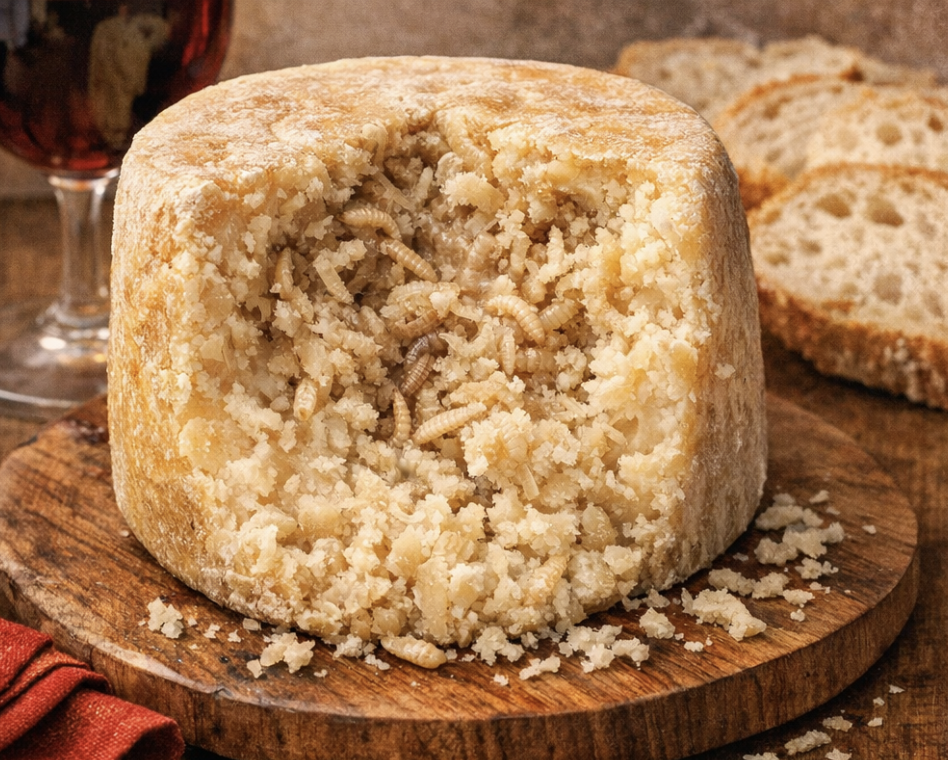
Casu marzu means “rotten cheese” in the Sardinian language. It is also known by regional names such as casu frazigu and casu becciu. Even the name sounds like the cheese is being brutally honest about its personality.
The cheese is traditionally made from sheep’s milk, often using a pecorino-style cheese as its starting point. What makes it different from ordinary aged cheese is the involvement of the cheese fly, Piophila casei.
During the traditional process, the cheese is exposed so that the flies can lay their eggs. The eggs hatch, and the larvae feed within the cheese, changing its texture as they develop.
The result is a very soft, spreadable cheese with an intense aroma and a strong, tangy flavor. Its texture can become almost creamy, quite unlike the firm wedges many people associate with pecorino.
In other words, this is not a case of someone accidentally leaving cheddar in the back of the refrigerator until it develops a personality.
The transformation is deliberate and forms part of the traditional method.
For its admirers, casu marzu represents a distinctive stage of cheese maturation. For many other people, the presence of living larvae is a deal-breaker that no amount of artisan labeling can fix.
Both reactions help explain why this cheese has become so famous.
2. A Taste of Traditional Sardinia
To understand casu marzu, we need to leave behind the modern supermarket aisle for a moment.
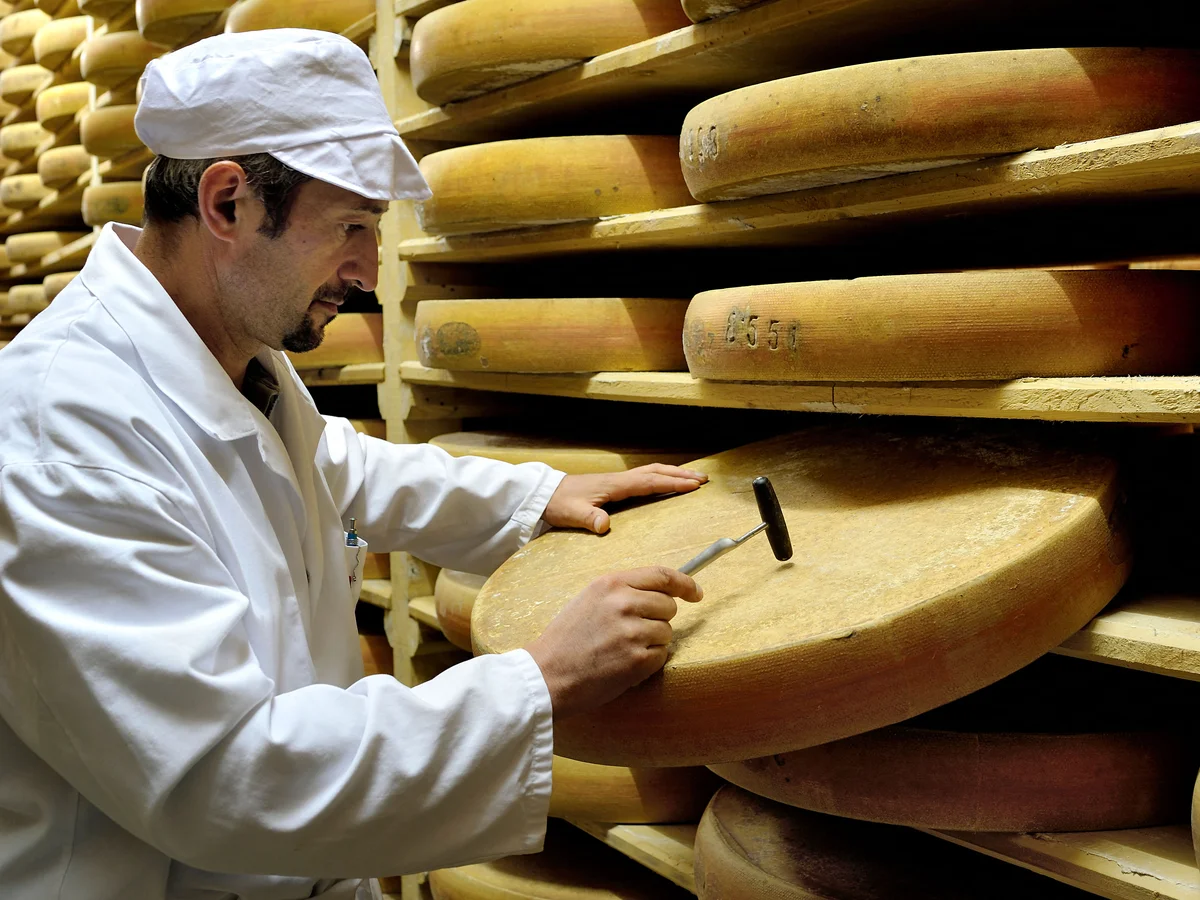
Sardinia has a long history of sheep farming and cheesemaking. For generations, sheep’s milk has been an important part of the island’s rural economy and food culture. Cheese was not merely something to sprinkle over pasta; it was a way to preserve milk, use available resources, and produce food that could sustain families and communities.
Traditional cheesemaking developed through practical knowledge passed from one generation to another. Producers learned how local conditions, seasonal milk, aging, and handling affected the final product.
Casu marzu belongs to this world of regional food traditions.
Its exact origins are difficult to pin down, and claims that it was invented in a particular year or by a particular shepherd should be treated cautiously. The tradition is generally considered centuries old, but there is no universally accepted origin story.
One explanation is that the technique developed from rural cheesemaking practices in which the natural activity of insects transformed cheese. Over time, what might otherwise have been considered spoilage became a deliberately valued process.
It is an example of a broader pattern in food history: people have often learned to transform ingredients through fermentation, aging, and other processes that might initially look strange to outsiders.
Think of blue cheese, fermented fish, or strong-smelling aged cheeses. Their appeal depends partly on transformations that are not immediately obvious to someone encountering them for the first time.
Of course, casu marzu takes the idea of unusual cheese considerably further.
Blue cheese has veins. Casu marzu has tenants.
3. Why Would Anyone Want to Eat It?
This is probably the question most readers want answered.
Why would anyone choose a cheese that makes other people reach for the nearest exit?
For people who grew up with the tradition, casu marzu is not necessarily a stunt or a dare. It can be a food associated with family, community gatherings, local identity, and memories of rural life.
Its texture and flavor are also part of its appeal to admirers. The larvae’s activity breaks down fats and proteins in the cheese, producing an unusually soft consistency and a powerful, pungent taste.
Some enthusiasts describe the flavor as an intense extension of mature Sardinian sheep’s milk cheese. Others would probably prefer to describe it from several streets away.
Taste, after all, is shaped by familiarity. A food that feels comforting to one person can seem completely bewildering to another.
Consider the first time someone encounters blue cheese, fermented tofu, or a very strong washed-rind cheese. The smell may arrive before the explanation, and the explanation may not improve matters.
Yet these foods have loyal fans because their flavors carry cultural associations as well as sensory appeal.
Casu marzu is no exception. Its significance is not limited to the unusual ingredient that makes headlines. For some Sardinians, it is part of a wider food heritage that connects people to local landscapes, pastoral traditions, and previous generations.
That does not mean everyone on the island eats it, loves it, or agrees about its future. Sardinians, like everyone else, have different tastes and opinions.
Still, dismissing the cheese as nothing more than a disgusting internet curiosity misses a large part of the story.
4. From Traditional Delicacy to Legal Trouble
Here is where the story becomes more serious.
Casu marzu has faced restrictions on commercial sale in Italy for decades. Italian legislation dating to 1962 prohibited the sale of this type of cheese on food-hygiene grounds. Broader European Union food-hygiene rules have also prevented its ordinary commercial marketing.
The central concern is food safety.
Unlike cheeses produced under established, controlled aging procedures, casu marzu deliberately involves living insect larvae. The process can vary, and the finished product is difficult to assess using the same assumptions applied to more conventional cheeses.
One concern is that larvae may survive ingestion and cause intestinal problems. Medical literature has documented cases of intestinal pseudomyiasis, in which fly larvae temporarily survive in the digestive tract.
This does not mean every person who encounters the cheese will necessarily become ill. It does mean there is a documented hazard that cannot simply be dismissed because the food has a long history.
Traditional experience and modern safety assessment answer different questions.
A tradition may demonstrate that a practice has existed for generations. It does not, by itself, establish that every batch is safe under every condition.
That distinction matters for food sold to the public, where consumers need reliable information, traceability, and protection against avoidable hazards.
And here lies the uncomfortable contradiction: a food can be culturally important while still raising legitimate safety concerns.
A centuries-old recipe does not automatically receive a legal exemption just because the family cookbook has impressive historical credentials.
5. The Great Cultural Heritage Debate
For supporters of casu marzu, the restrictions raise a different concern.
If traditional production cannot continue openly, what happens to the knowledge behind it?
Small-scale food traditions are often built on practical skills that are not fully captured in written recipes. Producers may learn through observation, experience, and years of working alongside older family members.
When a traditional food becomes difficult to produce or sell legally, the people who make it may struggle to pass that knowledge on. A distinctive local practice can become increasingly difficult to document, study, or preserve.
This is why casu marzu has become part of a wider debate about cultural heritage.
Supporters argue that traditional foods deserve serious consideration, rather than being dismissed simply because they look unfamiliar. They have called for scientific research and regulatory approaches that could assess whether controlled production might ever be possible.
The opposing concern is equally important: cultural preservation should not mean asking consumers to accept a product whose safety has not been adequately demonstrated.
The challenge is not simply to decide whether tradition or regulation is more important. It is to determine whether a traditional process can meet appropriate safety standards without losing the characteristics that make it distinctive.
That requires evidence, not just nostalgia or disgust.
In November 2023, a petition seeking the restoration of casu marzu’s status as an edible product was submitted to the European Parliament. The Parliament’s Committee on Petitions later published a document recording the European Commission’s response and the concerns surrounding the cheese.
The petition did not establish a new legal route for ordinary commercial sale. The case illustrates how difficult it can be to reconcile a traditional production method with existing food-safety requirements.
The debate is therefore about more than one unusual cheese. It raises a question that applies to many traditional foods: how can societies preserve culinary knowledge while protecting the people who eat the results?
6. Is Casu Marzu Really the World’s Most Dangerous Cheese?
 The internet loves a dramatic ranking.
Give it an unusual food, and within minutes someone will declare it the world’s most dangerous, disgusting, terrifying, or absolutely-not-on-my-plate delicacy.
Casu marzu has collected plenty of these labels.
But calling it “the world’s most dangerous cheese” is a catchy description, not a precise scientific ranking. Assessing food risk requires evidence about hazards, exposure, production conditions, and the likelihood and severity of harm.
The real concern is not that the cheese is strange. Unfamiliarity is not a safety test.
The concern is the deliberate presence of live larvae, the possibility of harm, and the difficulty of guaranteeing consistent safety in a product whose traditional production is not authorised for ordinary commercial sale.
Nor should the controversy be treated as an invitation to conduct a personal taste test.
Because commercial sale is restricted and the safety concerns are real, casu marzu is not a food to seek out through informal sellers or unverified online offers. A traditional reputation does not guarantee that a particular product has been made or handled safely.
The sensible way to explore the subject is through its history, cultural context, and the science behind the controversy—not by turning dinner into an experiment.
There are easier ways to make a meal memorable. Setting the kitchen timer to the wrong time is already stressful enough.
7. Sardinia Has Much More to Offer Than One Controversial Cheese
One final point is worth remembering: casu marzu does not represent the entirety of Sardinian cuisine.
The island has a rich food culture shaped by sheep farming, fishing, agriculture, local ingredients, and centuries of exchange across the Mediterranean.
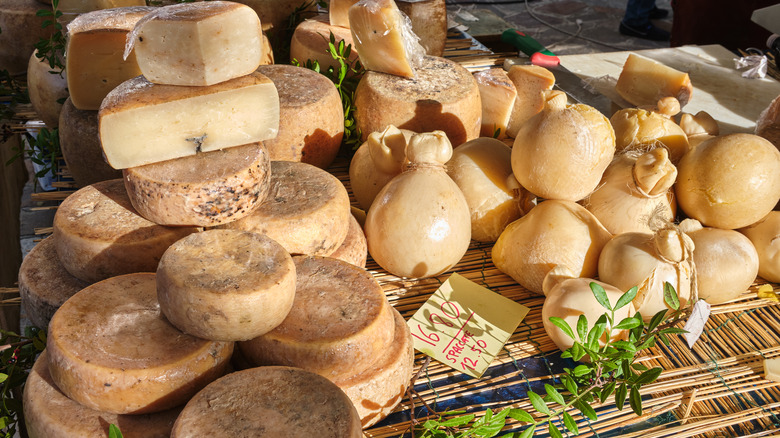
Visitors can discover pecorino cheeses, pane carasau—a thin, crisp traditional bread—fresh pasta, seafood, honey, and seadas, a traditional pastry filled with cheese and served with honey.
These foods tell their own stories about the island’s geography, history, and everyday life.
For travelers interested in food culture, Sardinia offers a chance to explore how communities develop distinctive culinary identities. A dish can reveal how people use local ingredients, celebrate important occasions, preserve food, and maintain connections with previous generations.
And if you are curious about casu marzu, you can learn about its history without needing to make it the centerpiece of your culinary adventure.
You can visit a cheesemaking museum, learn about Sardinian pastoral traditions, explore local markets, or try legally sold regional cheeses made under established food-safety standards.
You can also appreciate the fact that Sardinian cheesemakers have spent generations developing a remarkable range of products—without requiring every visitor to become comfortable with the most controversial one.
Sometimes cultural exploration means trying something new. Sometimes it means asking questions, listening to local people, and understanding why a tradition matters even when you would never choose it for dinner.
Both approaches count.