
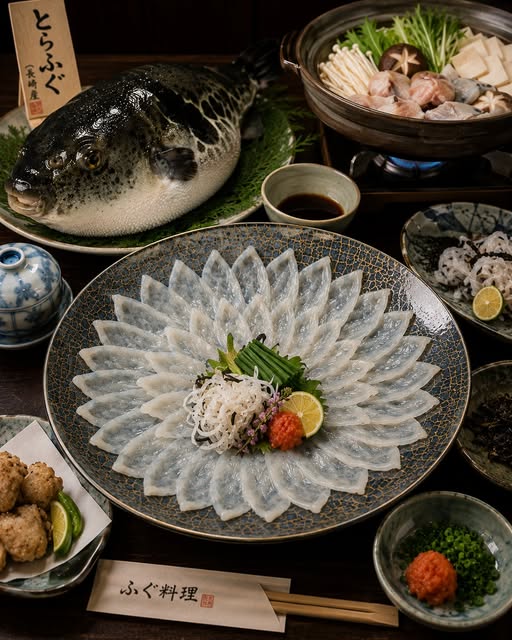






There are foods that make people hungry. There are foods that make people curious. And then there is Japanese fugu — a dish that can make diners admire the chef’s skills while quietly wondering whether ordering fish was supposed to involve quite so much trust.
Fugu, or Japanese pufferfish, is one of Japan’s most famous delicacies. It is prized for its delicate flavor, firm texture, elegant presentation, and long culinary history. Yet it has a reputation unlike that of almost any other seafood. Certain pufferfish contain tetrodotoxin, a powerful natural toxin that ordinary cooking cannot reliably destroy.
So why has fugu remained a celebrated part of Japanese food culture? The answer is not simply that people enjoy living dangerously. It lies in centuries of tradition, highly regulated preparation, seasonal eating, and a dining experience built around precision rather than bravado.
A Fish With a Complicated Past
 Fugu has been eaten in Japan for centuries, but its history has not always been smooth.
In 1592, Toyotomi Hideyoshi, the military ruler who helped unify Japan, introduced a ban on eating pufferfish. The restriction was associated with poisoning incidents among samurai, and it was particularly significant in areas where people had a strong appetite for the fish.
The ban did not erase the culinary tradition. People continued to eat fugu, even though doing so could carry serious consequences. For a long period, the fish occupied an awkward position: admired at the table but treated with considerable suspicion by authorities.
A famous turning point came in 1888. According to a story preserved by Japan’s tourism authorities, Itō Hirobumi, Japan’s first prime minister, was served fugu at an inn in Shimonoseki, in Yamaguchi Prefecture. Impressed by the meal, he helped bring about the lifting of the ban in the region.
Whether or not every detail of the story has been polished by retelling, it captures an important part of fugu’s identity. The fish was not simply accepted because people wanted to take a risk. Its place in Japanese cuisine developed alongside growing efforts to control how it was handled and served.
Today, Shimonoseki remains closely associated with fugu. The city is famous for its pufferfish trade, specialist markets, and restaurants serving the fish in several different forms.
In other words, fugu went from being a dish that could get people into trouble to one that helped put a city on the culinary map. That is quite a career change for a fish.
Why Do People Love Eating Fugu?
Fugu is not famous because it has an overwhelmingly strong flavor. In fact, its appeal is almost the opposite.
The flesh is delicate and relatively subtle, with a clean taste that allows the texture and accompanying ingredients to play important roles. Properly prepared fugu can have a firm, slightly springy bite, making it particularly suited to thin slicing and carefully controlled cooking.
For many diners, the attraction lies in restraint. Rather than covering the fish with heavy sauces or intense seasoning, Japanese preparations often emphasize its natural qualities.
Fugu is also associated with technical skill. The way the fish is cut, arranged, and served reflects the precision valued in Japanese cuisine. A beautifully prepared dish can turn a relatively understated ingredient into something visually memorable.
And then there is the story behind it.
Food is rarely just food. People travel for regional specialties, celebrate seasonal ingredients, and seek out dishes that connect them with a place or tradition. Fugu offers all three. For visitors to Japan, trying it at a reputable specialist restaurant can be a way to explore a culinary tradition that is difficult to separate from the country’s history and food culture.
Still, the experience does not need to be dramatic. The fish does not become more delicious because someone is nervous. Its appeal comes from its flavor, texture, preparation, and cultural significance — not from treating dinner as a test of courage.
The Chef’s Skill Is More Than a Fancy Knife
One reason fugu commands respect is that preparing it requires specialist knowledge.
The danger comes from tetrodotoxin, which can be present in different parts of certain pufferfish. The species, the fish’s origin, and the particular organs involved all matter. The liver and ovaries are among the parts of greatest concern, and prohibited poisonous parts must not be served.
Japan regulates which pufferfish species and body parts may be used for food. Professional handling requirements also apply, with specific rules varying by prefecture and local regulations. In Tokyo, for example, businesses handling unprocessed fugu must meet local certification requirements and have an appropriately qualified person responsible for its handling.
This means there is no single, identical licensing system that applies in precisely the same way everywhere in Japan. Nevertheless, the underlying principle is clear: specialist knowledge and approved handling procedures are essential.
A qualified fugu professional must know how to identify the fish correctly and distinguish the parts that may legally be served from those that must be excluded. The work requires careful attention, sound judgment, and a thorough understanding of food safety.
It is tempting to imagine the chef as a culinary superhero, performing a dramatic feat with a razor-sharp knife. The reality is less theatrical and much more reassuring: proper training, established procedures, and disciplined work matter far more than showmanship.
And no, the toxin cannot simply be made harmless by ordinary frying, boiling, soaking, or seasoning. This is not a problem that a splash of soy sauce or a confident squeeze of lemon can solve.
The chef’s job is not to make danger exciting. It is to ensure that the food being served complies with the rules designed to protect diners.
Fugu Season: Why Winter Gets Special Attention
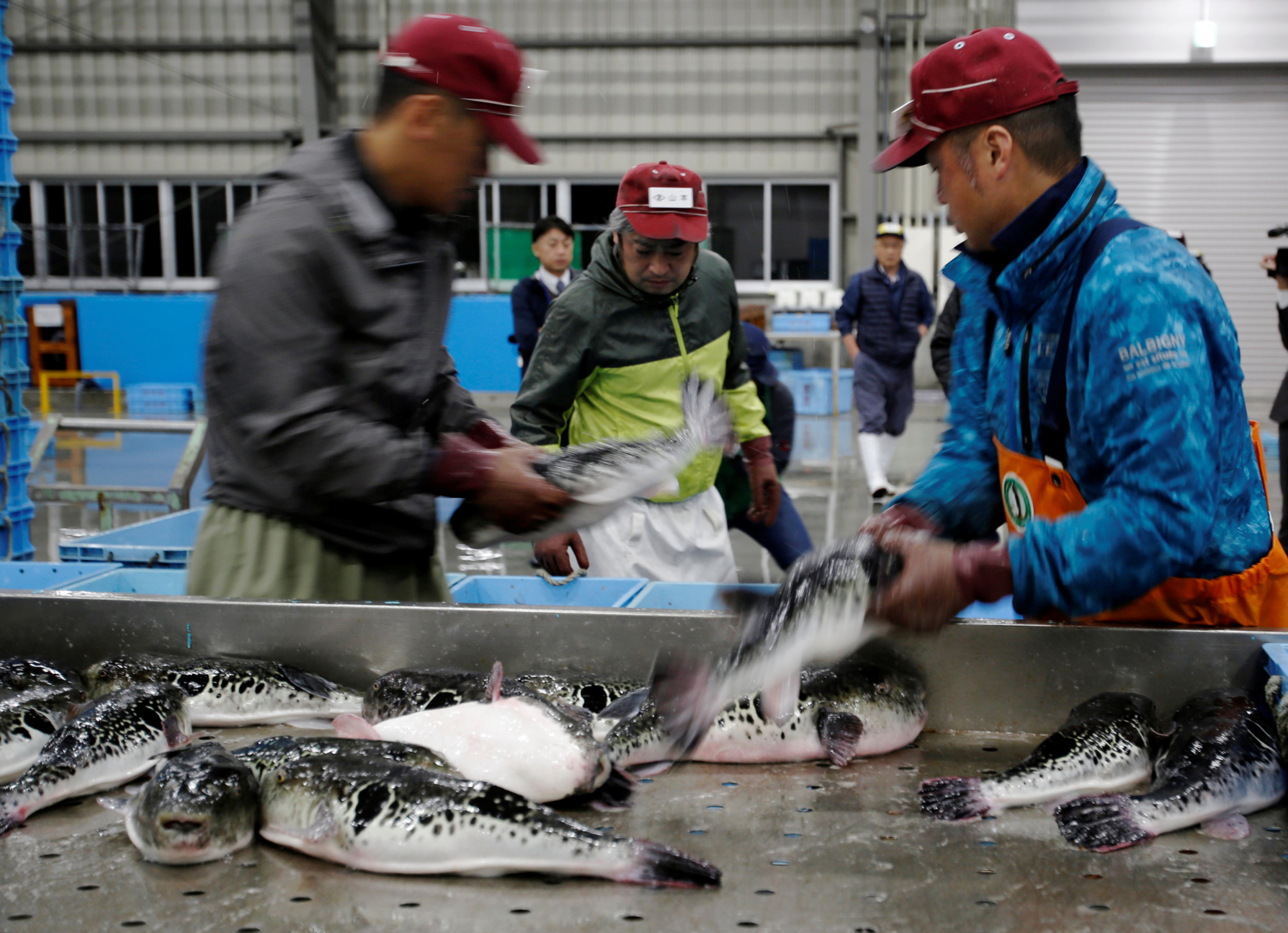
 Like many traditional Japanese foods, fugu has a seasonal identity.
Winter is especially associated with tiger pufferfish, known as torafugu. In colder months, the fish is particularly celebrated in several regions, and restaurants may feature special seasonal menus.
Seasonality is an important part of Japanese food culture. Ingredients are often appreciated when they are at their characteristic best, and menus change to reflect what the season offers. Eating a dish at the right time of year can make a meal feel connected to the weather, landscape, and rhythm of local life.
Fugu fits naturally into this tradition. Its firm flesh works well in warming dishes, making it an appealing choice when temperatures drop.
One classic preparation is fugu sashimi, also called tessa in some regional traditions. The fish is sliced extremely thinly and arranged in an intricate pattern, sometimes resembling a flower. The translucent slices create an elegant display, with the plate itself becoming part of the experience.
Another popular preparation is tecchiri, a hot pot in which fugu is cooked with vegetables and other ingredients in a broth. Diners enjoy the warmth of the shared pot as the meal unfolds. The cooked fish offers a different texture from sashimi, while the broth develops flavor from the ingredients.
Fugu may also be served fried or included in a rice porridge at the end of a hot-pot meal. In some traditional settings, grilled fugu fins are used to flavor hot sake.
These preparations demonstrate that fugu is not a one-dish novelty. It has a place in a broader culinary tradition, with different cooking methods highlighting different aspects of the ingredient.
Although winter is a peak season in many places, fugu is not necessarily unavailable during the rest of the year. Availability depends on the species, location, and restaurant. In Shimonoseki, for example, specialist businesses serve fugu year-round.
What Goes Through a Diner’s Mind?
Fugu has an unusual psychological appeal because people approach it with two ideas in mind: this is a respected delicacy, and it demands serious attention to safety.
For some diners, the first attraction is curiosity. They have heard of the fish and want to understand what makes it special. Others are drawn by the cultural experience: the delicate sashimi, the seasonal hot pot, or the opportunity to try a regional dish in the place most closely associated with it.
There may also be a little apprehension. A food with such a famous reputation naturally inspires questions. Is the flavor really distinctive? Why is specialist preparation necessary? What makes it different from other seafood?
These are reasonable questions, but they do not need to turn the meal into a performance of bravery.
In fact, the most meaningful part of the experience may be the opposite of thrill-seeking. A diner chooses a reputable restaurant, understands that professional preparation matters, and allows the chef to focus on the food. The confidence comes from respecting the safeguards rather than ignoring the risk.
For travelers, this is also a reminder that cultural curiosity should come with sensible boundaries. A traditional dish is not an invitation to experiment with unregulated ingredients or attempt home preparation. The history of fugu is a reason to appreciate the knowledge behind it, not a reason to imitate specialists.
And there is a wonderfully ordinary side to the whole experience, too. Once the beautifully arranged sashimi arrives, the diner still has to decide what to eat first, how much sauce to use, and whether to order another serving.
Even a legendary delicacy eventually comes down to the same question as any other meal: “Is it good?”
More Than a Food With a Fearsome Reputation
Fugu is often introduced to international audiences through its danger, but focusing on the toxin alone misses much of the story.
Its place in Japanese cuisine reflects a long relationship between food, regional identity, seasonal traditions, technical skill, and regulation. From the historical association with Shimonoseki to the delicate presentation of sashimi and the warmth of winter hot pot, fugu offers several ways to understand Japanese dining culture.
Its reputation also illustrates a broader principle: a celebrated food can demand respect without requiring reckless behavior. The best dining experiences are not necessarily the ones that make people feel fearless. They are the ones that allow people to appreciate craftsmanship, flavor, and tradition while taking safety seriously.
Fugu may look like an unlikely culinary celebrity. When threatened, a pufferfish can inflate into a spiky-looking ball, which is hardly the usual image of an elegant restaurant ingredient. Yet on a carefully prepared plate, it becomes something altogether different: a subtle, seasonal delicacy with a remarkable history.
So if you ever encounter fugu on a Japanese menu, think beyond its dramatic reputation. Think of the chef’s training, the seasonal traditions, the regional pride, and the quiet precision that makes the meal possible.
The real story is not about daring danger to win.
It is about how a culture turned a challenging ingredient into a respected culinary tradition — and why, with fugu, knowing what not to serve is just as important as knowing what belongs on the plate.