






I went to Singapore with a simple plan: eat lunch.
One meal. A reasonable amount of food. Perhaps a little dessert if I behaved myself.
An hour later, I was standing in the middle of a crowded food centre, clutching a drink, staring at seventeen different menus, and experiencing the kind of decision-making crisis usually reserved for buying a house.
Chicken rice? Laksa? Satay? Char kway teow? Roti prata?
Why did every stall look as though it was serving the best food on Earth?
And more importantly, why had nobody warned me that lunch in Singapore required the strategic planning of a military operation?
Welcome to Singapore's hawker centres, where the food is incredible, the choices are overwhelming, and your stomach will almost certainly file a formal complaint about your ambition.
Welcome to the Hunger Games. The Prize Is Lunch.
My first mistake was arriving hungry.
My second mistake was assuming I could simply walk around, pick something that looked good, and sit down to eat.
Technically, I could. But after five minutes of wandering between stalls, I had discovered approximately twelve things I desperately wanted to try and absolutely no way to fit them all into one lunch.
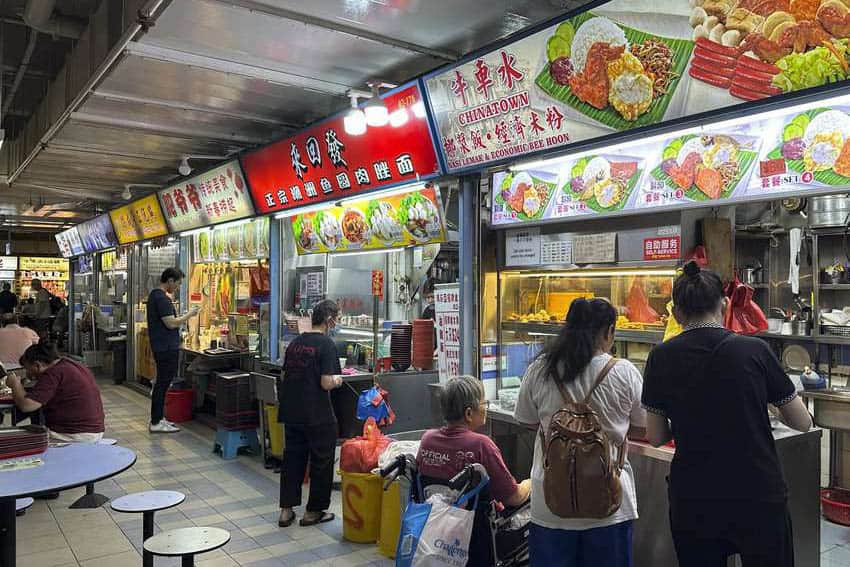
A hawker centre is essentially a large communal food space filled with independent stalls selling freshly prepared meals. Think of it as a food court, except the stalls often specialize in particular dishes, the atmosphere is wonderfully local, and the person making your noodles may have spent years perfecting that one recipe.
There are tables in the middle, food everywhere, and the delicious smell of garlic, grilled meat, spices, and sizzling woks floating through the air.
Some stalls have long queues. Others have menus that make you stop walking mid-step. Somewhere nearby, somebody is eating a bowl of noodles so enthusiastically that you immediately regret your current order.
The hardest part is choosing.
At a restaurant, you usually have a menu and a reasonable expectation that you will eventually make a decision. At a hawker centre, every direction presents a new temptation.
I walked past a chicken rice stall.
Then a laksa stall.
Then a stall selling fried noodles that looked like they had been sent directly from heaven.
I circled back to the chicken rice.
A dangerous thought entered my mind: What if I just have a little of everything?
My stomach, a small and practical organ, remained silent.
It knew better than to encourage me.
The Great Tissue-Packet Mystery
Just when I thought I had mastered the art of choosing lunch, I encountered another challenge.
Finding a seat.
The tables were busy. People were eating, chatting, sharing dishes, and moving around with the confidence of people who had done this thousands of times.
I spotted an empty seat.
Victory!
I took two steps towards it.
Then I noticed a small packet of tissues sitting on the table.
I looked at the tissues. I looked at the empty chair. I looked around for the person who had apparently abandoned a perfectly good packet of tissues in the middle of a food centre.
Nobody was there.
Had someone forgotten them? Were they free? Was this Singapore's most confusing public-service announcement?
I was about to sit down when I learned about a local practice called chope-ing.
In Singapore, people commonly reserve seats at hawker centres by leaving a small item, often a packet of tissues, on the table. It is a familiar part of the local dining routine.
In other words, those tissues weren't lost.
They had a job.
A very important job.
Somewhere, a packet of tissues was doing more to protect its owner's lunchtime plans than I had done to protect my own.
I suddenly felt underqualified to sit in a chair.
Of course, not every unattended item means a seat is reserved, and you should use common sense and respect other diners. But once you understand the custom, it becomes one of those little cultural details that makes traveling interesting.
In some places, you reserve a table with a booking app.
In Singapore, sometimes you reserve it with tissues.
Civilization takes many forms.
Five Dishes That Made Me Forget I Had a Plan
Eventually, I found a seat and began the serious business of eating.
By "serious," I mean that I immediately started planning my next meal before finishing the first one.
1. Hainanese Chicken Rice: The Quiet Overachiever
 At first glance, Hainanese chicken rice looks almost too simple to be exciting: tender chicken, fragrant rice, cucumber, and dipping sauces.
Where are the mountains of cheese? The dramatic sauces? The edible decorations that require a culinary degree to understand?
Then you take a bite.
The rice is aromatic and full of flavor, often cooked with chicken stock and fat. The chicken is delicate, and the chili sauce brings a lively kick. Every part of the dish has a purpose.
It is the kind of meal that doesn't need to shout to get your attention.
Chicken rice has roots in Hainanese food traditions and has developed its own distinctive identity in Singapore. Today, it is one of the country's best-known dishes, served everywhere from humble hawker stalls to more formal restaurants.
My only problem was that I had underestimated it.
I thought I was ordering a simple lunch.
I was actually meeting a dish that could ruin ordinary chicken and rice for me forever.
2. Laksa: A Bowl of Delicious Decisions
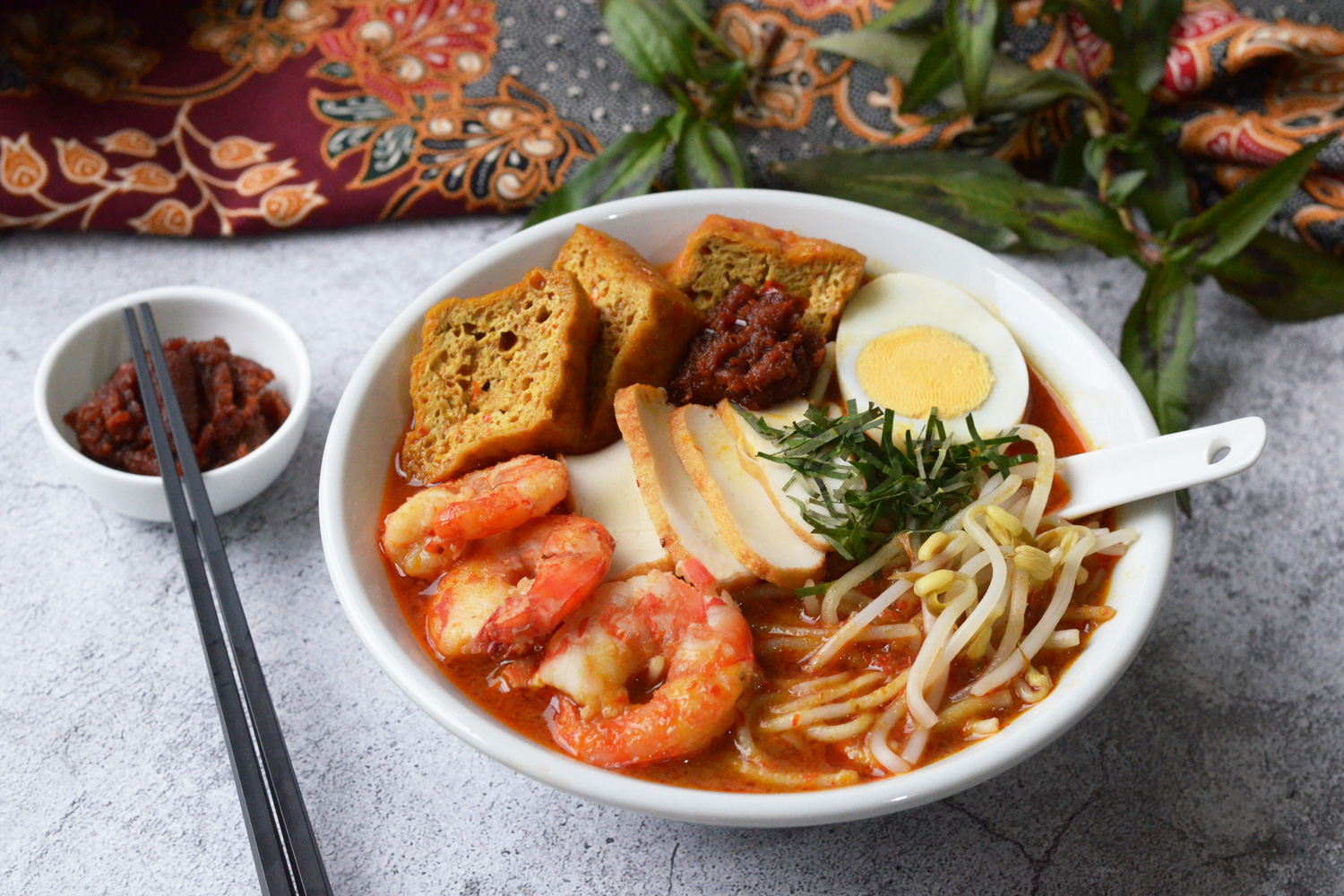 Laksa is what happens when noodles decide they want to swim in something spectacular.
Singapore's well-known curry laksa features a rich, spicy broth often made with coconut milk, noodles, and toppings such as prawns, fish cake, tofu puffs, or other seafood.
The aroma reaches you before the bowl does.
Then comes the first spoonful: creamy, fragrant, spicy, and wonderfully comforting.
It is not a subtle dish.
Laksa enters your day like a friend who arrives unannounced, brings an enormous amount of food, and somehow improves everything.
There are different laksa styles across the region, reflecting different culinary traditions, so the exact ingredients and flavors vary. In Singapore, the coconut-rich curry version is a popular favorite.
My strategy was to take a careful first bite.
My actual strategy was to keep eating until I remembered I had ordered something else.
3. Char Kway Teow: The Noodles With Main-Character Energy

Char kway teow is a dish of flat rice noodles stir-fried with ingredients such as egg, soy sauce, prawns, cockles, and Chinese sausage, depending on the recipe.
Its magic lies partly in the intense heat of the wok, which gives the noodles a smoky, savory character known as wok hei.
That smoky aroma is difficult to ignore.
You might be walking past the stall with absolutely no intention of ordering anything.
Then the cook tosses a batch of noodles in the wok.
Suddenly, your plans change.
Your budget changes.
Your entire afternoon changes.
You are no longer a tourist exploring Singapore. You are a person who needs those noodles.
Char kway teow reflects the Chinese culinary traditions that have helped shape Singapore's food culture, evolving into a beloved local dish over time.
It's also a reminder that simple ingredients can become extraordinary when someone knows exactly what they're doing.
I could probably fry noodles at home.
But I suspect my version would taste like noodles that had recently received disappointing news.
4. Satay: Small Skewers, Enormous Confidence
 Satay consists of seasoned meat grilled on skewers, often served with a rich peanut sauce and accompaniments such as cucumber or rice cakes.
It looks manageable.
One skewer. Two skewers. Perhaps three.
This is how the trap begins.
The smoky smell is irresistible, the meat is tender, and the peanut sauce adds a delicious combination of sweetness and savory richness.
Satay is associated with culinary traditions found across Southeast Asia, including Malay food culture, and is a familiar sight at Singapore's hawker centres.
The danger is that you keep telling yourself you're only having a small snack.
Then the plate is empty.
You order another.
Then you notice someone carrying a bowl of laksa.
Suddenly, you are making decisions based on food you haven't even finished imagining.
At this point, your stomach is no longer a reliable adviser.
5. Roti Prata: The Art of Eating One More Thing
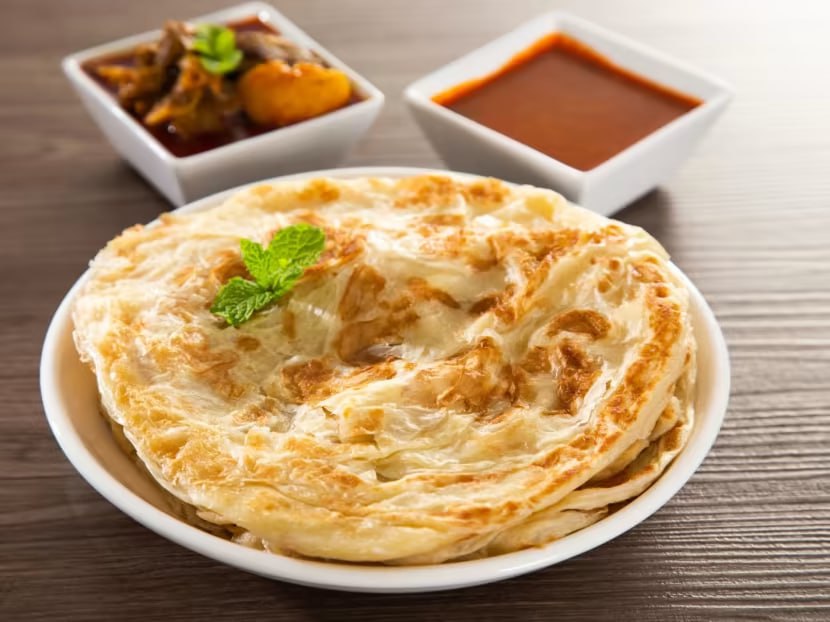 Roti prata is a flaky, pan-fried flatbread commonly enjoyed with curry. Its dough is stretched, folded, and cooked until the outside becomes crisp while the inside remains soft and layered.
It can be eaten for breakfast, as a snack, or whenever your body decides that an additional carbohydrate is a reasonable life choice.
I watched someone tear off a piece and dip it into curry.
Simple. Elegant. Perfect.
I told myself I would just have a little.
This sentence should probably be printed on a warning sign at every hawker centre.
Roti prata has strong links to Indian culinary traditions and is now firmly woven into Singapore's diverse food culture.
The combination of flaky bread and flavorful curry is wonderfully satisfying. It also makes you wonder why you ever considered eating a plain sandwich for lunch.
A plain sandwich has never looked so emotionally unprepared.
A Tiny Country With a Very Big Appetite
By now, you might be wondering why Singapore takes its hawker centres so seriously.
The answer goes beyond the food.
Singapore is a multicultural society, and its hawker cuisine reflects the many communities that have shaped the country, including Chinese, Malay, Indian, and other culinary traditions.
Over generations, recipes and techniques have travelled, adapted, and become part of a shared local food culture. Different traditions sit side by side, sometimes even influencing one another in the same dish.
That diversity is visible in a single hawker centre.
One person might be eating chicken rice. Another is enjoying nasi lemak. A family is sharing roti prata, while a nearby table has a steaming bowl of noodles and a cold drink.
People from different backgrounds gather in the same space, often returning to familiar stalls and favorite dishes.
For some, it's a quick lunch between work meetings. For others, it's a regular family meal or a weekend ritual.
The food is important, but so is the setting.
Hawker centres are often described as Singapore's community dining rooms because they bring people together over everyday meals. In 2020, Singapore's hawker culture was inscribed on UNESCO's Representative List of the Intangible Cultural Heritage of Humanity.
That recognition celebrates more than a collection of recipes. It recognizes a living culture built around food, culinary skills, shared spaces, and community.
And honestly, I think that's rather wonderful.
You don't need to book a fancy restaurant or dress up for the occasion. You can sit beside strangers, enjoy an affordable meal, and experience a small part of daily life in Singapore.
Of course, you may also spend twenty minutes deciding between two noodle dishes.
Cultural immersion comes in many forms.