
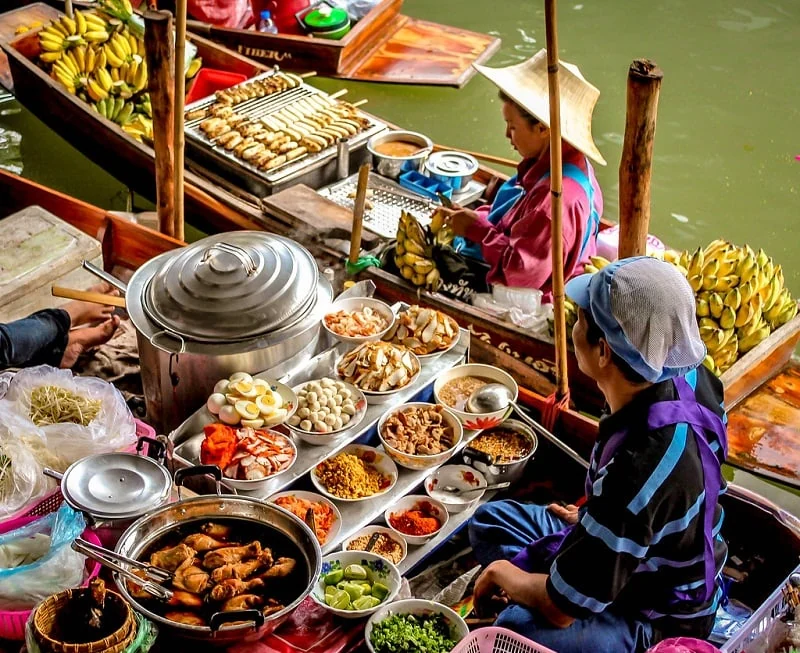
Imagine having breakfast while sitting beside a canal, watching wooden boats glide past with steaming bowls of noodles, piles of tropical fruit and sizzling seafood. Instead of walking up to a food stall, you simply wave at a vendor paddling by. Your food arrives from a boat. Your table is beside the water. And your morning suddenly feels like an adventure.
Welcome to Thailand's floating markets – places where shopping, eating and exploring happen along the canals.
For a first-time visitor, the scene can be almost surreal. Boats squeeze past one another, vendors call out to customers, colourful fruit fills baskets, and the smell of grilled seafood drifts through the warm morning air. You might come looking for breakfast and leave with a bag of mangoes, a coconut pancake, three mystery snacks and absolutely no idea how you managed to eat so much.
But floating markets are more than photogenic places to grab a meal. They grew out of a way of life in which canals were once the roads, boats were the delivery vans and the water was the centre of everyday business.
So, grab your sun hat, bring an appetite and prepare to explore a very different side of Bangkok.
When the Canals Were the Highways
 Before Bangkok became the busy city of roads, motorbikes and traffic jams we know today, its waterways played a much bigger role in everyday life.
Rivers and canals, known in Thai as khlongs, connected communities, farms and trading areas. People travelled by boat, transported produce by water and built homes along the banks. For many riverside communities, a boat was not a holiday accessory. It was simply how you got around.
Naturally, markets developed around these waterways.
Farmers and traders could paddle in with vegetables, fruit, fish and other goods, selling directly to people living nearby. Some customers bought from boats, while others visited markets along the canal banks. It was practical, convenient and closely connected to local life.
Bangkok was once nicknamed the “Venice of the East” by European visitors because of its extensive network of waterways. Although roads and modern transport eventually took over much of the city's daily traffic, the canals never disappeared – and neither did every tradition associated with them.
Today, floating markets offer a glimpse of this older water-based lifestyle. Some remain connected to local communities, while others have developed into popular tourist attractions. Many combine boat vendors with stalls and restaurants on the riverbanks.
In other words, the floating market has evolved. It is no longer just a place to buy vegetables on the way home. It can also be a weekend food adventure.
Damnoen Saduak: The Floating Market You've Probably Seen in Photos
 If you've ever searched for pictures of Thailand's floating markets, chances are you've seen Damnoen Saduak.
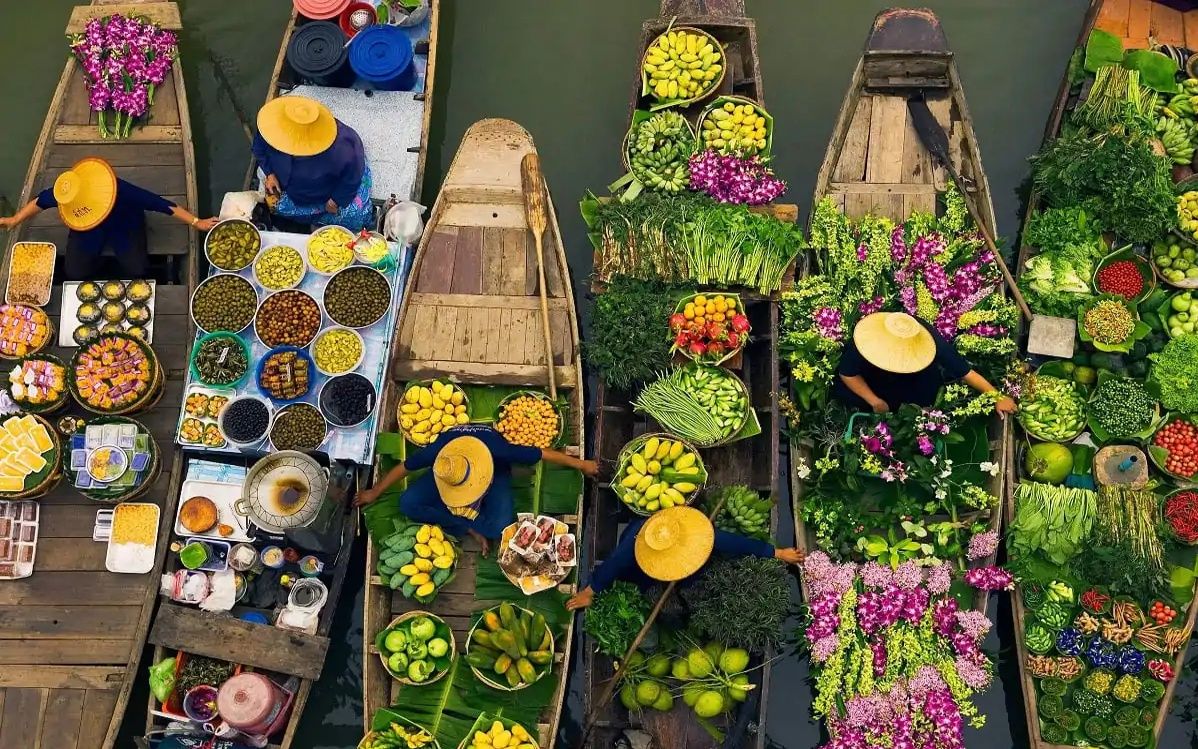
Located in Ratchaburi Province, southwest of Bangkok, this is one of the country's most famous floating markets. Its colourful boats, fruit-filled baskets and vendors wearing traditional-style hats have appeared in countless travel photographs.
But there's an interesting story behind the canal itself.
Damnoen Saduak Canal was built during the reign of King Rama IV to connect the Mae Klong and Tha Chin river systems. The project was completed during the reign of King Rama V. Stretching for around 32 kilometres, the canal has more than 200 branches.
Originally, it served a practical purpose: improving transportation and trade in an area where waterways were essential. Over time, the market became a major attraction for visitors who wanted to experience Thailand's canal-side culture.
Imagine arriving early in the morning. The sunlight is still soft, the air is warm but not yet unbearable, and boats are already moving through the narrow waterways.
One carries coconuts. Another is piled with mangoes and bananas. Somewhere nearby, a vendor is preparing noodles while balancing a cooking setup on a boat. It looks like a kitchen, a grocery shop and a delivery service have all been squeezed into one wooden vessel.
The most entertaining part is watching the boat traffic. Everyone seems to know exactly where to go, even when the canal looks like a floating traffic jam.
If you want to take a boat ride, agree on the price, duration and route before boarding. Some rides include stops at shops, so it's worth checking what you're paying for. Damnoen Saduak is a famous tourist destination, and the experience can be quite commercialised.
Still, if you want that classic postcard view of Thailand's floating markets, this is the place many people imagine.
Khlong Lat Mayom: Come Hungry, Leave Wondering How You Ate So Much
 Not every floating market needs to look like a movie scene to be worth visiting.
Khlong Lat Mayom, in Bangkok's Taling Chan District, offers a different kind of experience. It combines canal-side vendors with a larger market area full of food stalls, fresh produce, desserts and local products.
The atmosphere is more relaxed and food-focused than the famous postcard-style markets.
This is where I imagine my self-control would begin to disappear.
First, there's grilled fish. Then grilled chicken. Then papaya salad, seafood, traditional Thai sweets and fresh fruit. Every few steps seem to reveal another dish that deserves at least one bite.
The market has several zones where visitors can walk around, shop, eat and relax. Boat trips along nearby canals also offer a chance to see the surrounding community from the water.
Rather than spending the whole visit trying to capture the perfect photograph, you can simply wander, stop for a snack and watch the vendors preparing food.
And here's a useful detail: Khlong Lat Mayom is a weekend and public-holiday destination, not a market to assume will be bustling every weekday. Check its opening schedule before making the trip.
My imaginary game plan would be simple: arrive hungry, share several dishes with friends and avoid saying, “I'm just going to have one little snack.”
That sentence has ruined many food adventures.
Taling Chan: A Little Waterway Escape Inside Bangkok
 If travelling far outside the city doesn't sound appealing, Taling Chan Floating Market is another option.
Located on Bangkok's western side, it offers a more compact canal-side experience. Local vendors sell food, fruit, vegetables and other goods, while boats gather around the market area.
One of the pleasures here is the chance to sit near the water and enjoy a meal while watching the boats move along the canal.
You can also take a long-tail boat trip to explore the surrounding waterways and nearby communities. From the water, the city can feel surprisingly different. Instead of skyscrapers and traffic, you see houses, gardens and everyday life along the canal banks.
It's a reminder that Bangkok has more than one personality. The city may be famous for its shopping malls and busy streets, but quieter waterways still exist just beyond the urban rush.
Taling Chan is generally a weekend and public-holiday market, so check the schedule before heading over.
For travellers who want a taste of the floating-market atmosphere without committing to a long excursion, it can be a convenient choice.
Amphawa: When the Market Comes Alive in the Afternoon
 Here's a twist: not every floating market is a breakfast destination.
Amphawa, in Samut Songkhram Province, is especially popular later in the day. Unlike the early-morning energy of Damnoen Saduak, Amphawa has an afternoon-to-evening rhythm.
Wooden houses line the canal, and vendors sell food and drinks from boats and riverside stalls. The menu often includes grilled seafood, noodles, sweets and refreshing drinks.
Imagine arriving as the afternoon light begins to soften. The canal is busy, people are browsing the shops, and the smell of seafood cooking over charcoal seems to follow you everywhere.
You find a place beside the water and order something grilled. A boat passes, someone calls out to a customer, and the whole scene feels wonderfully alive.
As evening approaches, the atmosphere changes again. The lights come on, the canal becomes more atmospheric and visitors can take boat trips to see fireflies in nearby areas when conditions allow.
It's a lovely contrast to the early-morning markets. At Damnoen Saduak, you might be chasing breakfast. At Amphawa, you're more likely to be looking for dinner – and perhaps a little river adventure after dark.
Amphawa is typically a Friday-to-Sunday market, but check current operating times before visiting.
What Should You Eat at a Floating Market?
 The short answer? Follow your nose.
The longer answer? There are a few treats worth keeping an eye out for.
Boat noodles are a classic choice. These small, flavour-packed bowls are closely associated with Thailand's waterways and floating-market culture. Their compact size makes them ideal for trying alongside other dishes.
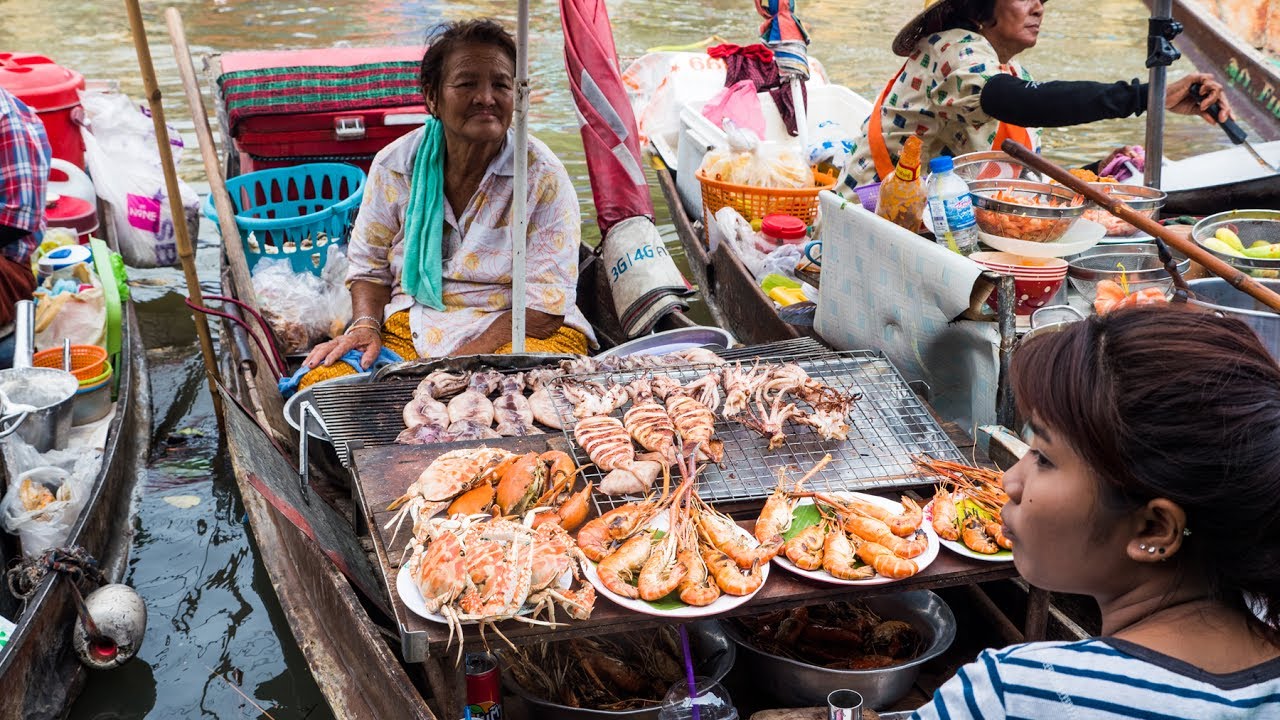
Grilled seafood is another tempting option, particularly at markets such as Amphawa. Look out for prawns, squid and fish cooked over charcoal.
Pad Thai may be familiar, but eating it beside a canal, with boats passing nearby, gives the experience a different atmosphere.
Som tam, or Thai green papaya salad, brings a punchy combination of sour, sweet, salty and spicy flavours. If you're not used to Thai chilli levels, you may want to ask for a milder version.
And don't forget dessert. Thai markets are wonderful places to discover coconut-based sweets, sticky rice treats, pancakes and colourful traditional snacks.
Fresh coconut water is also an excellent companion for a warm day. It is refreshing, easy to find and requires absolutely no complicated ordering strategy.
One tip: don't buy everything you see in the first five minutes. Walk around first, compare the stalls and save some space for the snacks you haven't discovered yet.
Is a Floating Market Still a Traditional Experience?

This is where things get interesting.
Today's floating markets are not all the same. Some have retained strong connections to local communities and everyday riverside life. Others are now heavily shaped by tourism.
Damnoen Saduak, for example, is famous internationally and attracts large numbers of visitors. Its colourful boat scenes are part of the appeal, but the market is also a commercial attraction.
Markets such as Khlong Lat Mayom and Taling Chan offer a different atmosphere, with a mixture of food stalls, local products and canal-side activities. Amphawa has its own character, particularly in the afternoon and evening.
Rather than expecting every market to be an untouched piece of history, it's more interesting to see them as living places that have changed with the times.
The boats may now carry tourists as well as produce. The stalls may sell souvenirs alongside traditional food. But the waterways still provide a setting for trade, social life and community activities.
And perhaps that's the real charm: the floating market isn't a museum exhibit. It's a tradition that has adapted to a modern world.
More Than a Meal on the Water
Thailand's floating markets offer something that is becoming increasingly rare in modern cities: the chance to experience a place where water, food and everyday life are closely connected.
They tell the story of a time when canals were essential transport routes, when farmers brought their produce to market by boat and when riverside communities shaped the rhythm of daily life.
Today, the markets have changed, but they still offer a memorable way to explore Thai food and culture.
So, if you're visiting Bangkok, why not trade the usual shopping mall breakfast for something a little more adventurous?
You might find yourself eating noodles beside a canal, bargaining for tropical fruit or trying to photograph a boat full of grilled seafood without accidentally capturing your own hungry face in the picture.
And if someone asks what you had for breakfast, you can simply say: “A little bit of everything – and most of it arrived by boat.”