






I thought I was a reasonably adventurous eater. I had survived spicy food, suspicious-looking street snacks, and at least one airport sandwich that tested my faith in humanity.
Then I met natto.
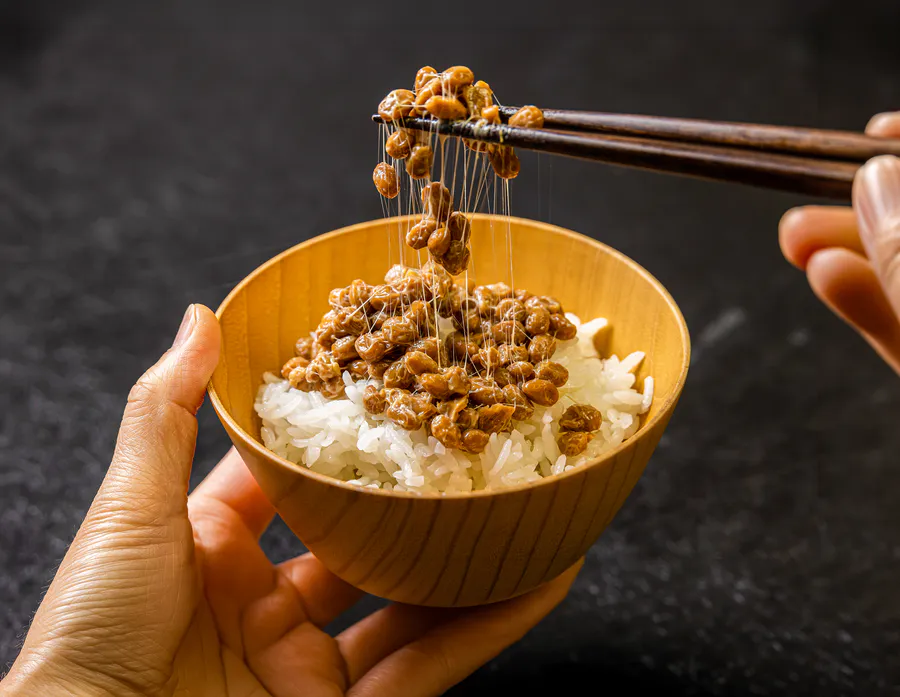
Imagine opening a small container of soybeans and discovering that they have somehow turned into a science experiment. The beans are shiny, sticky, and connected by long, stretchy strings. The smell is strong enough to make you pause and reconsider every decision that led you to this breakfast table.
Welcome to Japan, where breakfast can be delicious, nutritious, and just a little bit terrifying.
So, What Exactly Is Natto?
Natto is made from soybeans fermented with a special bacterium. The process gives the beans their distinctive smell, rich flavor, and famously sticky texture. It is a traditional Japanese food, commonly eaten with a bowl of rice, sometimes with mustard, soy sauce, chopped spring onions, or a raw egg yolk. Source: Japan’s Ministry of Agriculture
On paper, it sounds harmless. Soybeans? Fine. Fermentation? Cheese does that. Sticky texture? Honey is sticky.
But natto combines all three in a way that makes first-time eaters wonder whether their breakfast is trying to escape.
The smell is earthy and pungent, often compared to strong cheese or overripe food. The texture is the real plot twist: stir the beans and they produce long, stretchy threads that cling to your chopsticks like tiny edible spiderwebs.
You lift one bean, and suddenly half the container appears to be coming with it.
Congratulations. Your breakfast has developed special effects.
The First Bite: A Test of Character
 Picture yourself in a small Japanese hotel, sitting down to a traditional breakfast. There is steamed rice, miso soup, grilled fish, pickles, and several neatly arranged little dishes.
Everything looks calm and beautiful. Then you notice the natto.
It sits quietly in its container, looking innocent. This is how it gets you.
You peel back the lid, add the little packet of sauce, and stir. The beans become increasingly stringy. You stir harder, hoping this is somehow going to improve the situation.
It does not. It simply creates more strings.
Now comes the moment of truth.
The first bite is surprisingly complex. Natto has a savory, earthy flavor, with a slight bitterness and plenty of umami. If you can get past the smell and texture, it may begin to make sense. Some people love it immediately; others need several attempts—or decide that once was enough.
There is no shame in either reaction. Food preferences are personal, and nobody should have to prove their bravery by finishing a bowl of fermented beans.
Still, if you enjoy discovering unfamiliar flavors while traveling, natto is an experience worth approaching with curiosity.
Why Do Japanese People Eat This for Breakfast?
For many Japanese households, natto is not an extreme food challenge. It is simply breakfast.
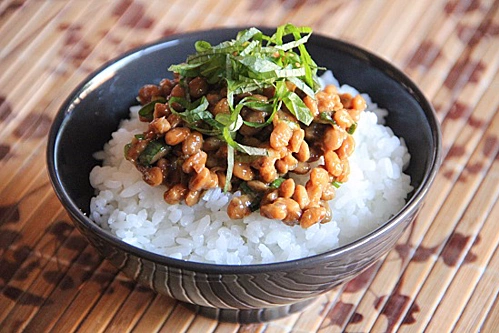
A common way to eat it is to spoon the beans over hot rice, add a little soy sauce or mustard, and mix everything together. The warm rice softens the overall experience, while the seasoning balances natto’s distinctive flavor.
It is also convenient. Packaged natto is widely available in Japanese supermarkets, making it an easy addition to a meal at home.
And natto is not some strange new food invented to shock tourists. It has a long history in Japan. The city of Mito, in Ibaraki Prefecture, is particularly famous for it. The Japanese Ministry of Agriculture describes several regional varieties, including natto made with small soybeans and traditional versions wrapped in rice straw. Source: Traditional Foods in Japan
There is even a traditional story linking natto’s discovery to boiled soybeans wrapped in straw that became sticky during a journey. Like many food-origin stories, the details belong partly to legend—but it makes a memorable explanation for a food that looks as though nature got creative with breakfast.
The Travel Adventure Behind the Beans
If you are visiting Japan, breakfast is a wonderful way to experience everyday food culture beyond sushi and ramen.
At a traditional inn, known as a ryokan, breakfast may arrive as a collection of small dishes rather than one enormous plate. Rice, miso soup, fish, vegetables, pickles, tofu, and egg dishes can all appear together. Natto may be one of the options, depending on the establishment. Source: Japan National Tourism Organization
The experience is less about conquering one unusual ingredient and more about noticing how different foods work together. A little dish of fermented soybeans becomes part of a meal built around rice, soup, and other carefully prepared ingredients.
Of course, the practical reality is that you might be sitting there in your hotel pajamas, holding chopsticks in one hand and silently negotiating with a soybean in the other.
Cultural appreciation is beautiful. So is having a backup breakfast plan.
If you want to explore natto beyond the hotel buffet, Mito is a natural destination to consider. You can look for local natto shops and regional varieties, turning a simple breakfast ingredient into a small food-focused excursion.
And if you discover that you love it, you have a very easy souvenir story to tell: you went to Japan and fell in love with fermented beans. Your friends may need a moment.
How to Try Natto Without Turning Breakfast Into a Wrestling Match
If this is your first encounter, keep things simple.
Start with rice. Natto is commonly served over warm rice, which helps balance its strong flavor and unusual texture.
Use the seasoning. Many packaged varieties come with sauce and mustard. Try a little first, then adjust to your taste.
Mix gently. Stirring combines the beans with the seasoning and creates their characteristic strings. You do not need to whip them into a foam worthy of a coffee shop.
Try a small portion. You do not need to order a giant bowl for your first attempt. A few bites are enough to decide what you think.
Keep an open mind—but trust your taste buds. You might discover a new favorite, or you might decide that natto is better admired from a respectful distance.
Both outcomes make a perfectly good travel story.
Is Natto Actually Good for You?
Natto is a source of plant protein and contains nutrients including vitamin K2. Like other fermented soybean foods, it has an important place in Japan's food traditions. Its nutritional profile is one reason it is often described as a wholesome addition to a meal. Source: Japan National Tourism Organization
But here is the important part: a food does not have to be a miracle ingredient to deserve a place on the table. Natto can be nutritious without being everyone's favorite, and eating it does not guarantee perfect health.
If you take medication or have a medical condition that requires you to monitor vitamin K intake, check with a healthcare professional before making major dietary changes.
For the rest of us, the simplest approach is to treat natto as one part of a varied diet—and perhaps one of the most memorable breakfast challenges Japan has to offer.
Would I Eat It Again?
Here is the thing about traveling for food: the goal is not to like everything. It is to discover something you would never have encountered at home.
Natto might win you over with its deep savory flavor. You might learn to appreciate its texture, find a favorite seasoning, or even start craving it over rice.
Or you might take one bite, nod thoughtfully, and conclude that you have learned enough about fermented soybeans for one lifetime.
Either way, you have stepped outside your culinary comfort zone, and that is part of the fun.
Japan has countless dishes worth exploring, from delicate sushi to sizzling street food. Natto simply offers a different kind of adventure: one that starts with a tiny container, a pair of chopsticks, and a surprisingly large number of sticky strings.
So, if you ever find yourself facing natto at breakfast in Japan, take a breath, grab some rice, and give it a try.
Just be prepared for one thing.
You may leave Japan with wonderful memories, beautiful photos, and a new appreciation for Japanese food culture.
You may also spend the flight home wondering how a soybean managed to defeat your chopsticks.