
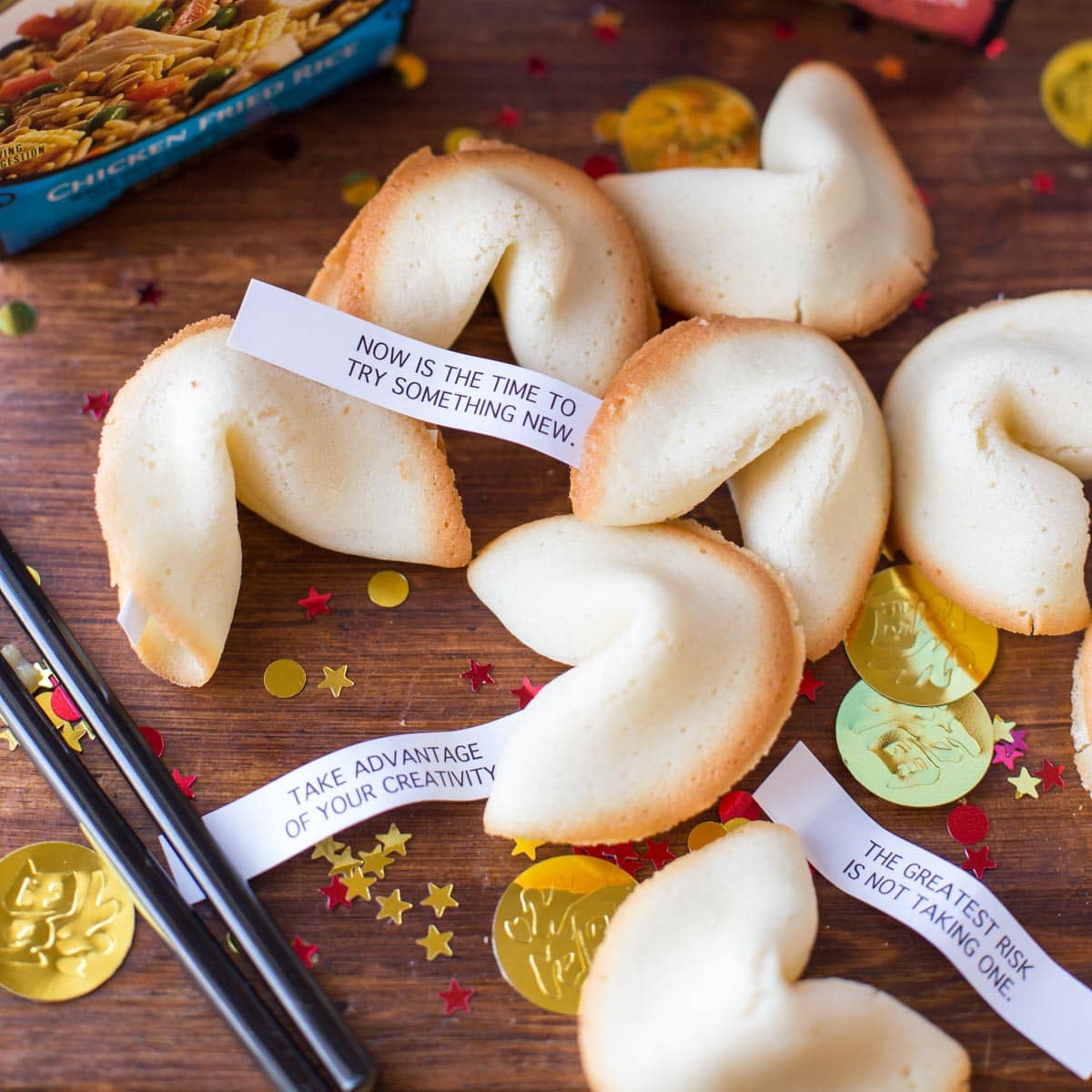






Picture this: you've just finished a delicious meal at a Chinese restaurant in America. The waiter brings the bill, followed by a small, golden, crescent-shaped cookie. You crack it open, pull out a tiny piece of paper and read:
“Good things are coming your way.”
Wonderful! You were hoping for a free dessert, but apparently the universe has sent you a motivational speech instead.
This little cookie has become almost as familiar as fried rice and takeout boxes in Chinese restaurants across the United States. But here's the surprise: despite its strong Chinese restaurant association, the fortune cookie probably has Japanese roots and became the treat we know today in America.
In other words, this cookie has a more complicated travel history than most tourists.
A Little Cookie With Japanese Roots
Long before fortune cookies became a familiar sight in American Chinese restaurants, Japan had its own version of a fortune-filled cracker.
It's known as tsujiura senbei, often translated as “fortune crackers”. These traditional Japanese treats are believed to date back to at least the 19th century, particularly around Kyoto.
Unlike the pale, sweet cookies served in American restaurants, the Japanese version was larger, darker and more savoury. Its ingredients included sesame and miso, giving it a rather different flavour from the vanilla-and-butter sweetness we're used to today.
There was another interesting difference: the fortune wasn't necessarily tucked inside the hollow centre. Instead, a small strip of paper was traditionally folded into the cookie's outer bend.
So, if you opened one expecting a sweet American-style biscuit, you might have been surprised by something that looked more like a crunchy snack with a secret attached.
Evidence for this Japanese connection includes an illustrated Japanese book from 1878, which depicts an apprentice making fortune crackers. Researchers have also traced similar treats to traditional bakeries near Kyoto.
This makes the Japanese origin story quite convincing, although the exact journey from traditional Japanese cracker to modern American fortune cookie remains a subject of historical debate.
How Did It Arrive in America?
 The fortune cookie's journey across the Pacific is closely connected to Japanese immigration.
During the late 19th and early 20th centuries, many Japanese immigrants settled in California and other parts of the United States. They brought their food traditions with them, opening bakeries and small businesses that sold familiar Japanese sweets and snacks.
One important name in this story is Benkyodo, a Japanese confectionery shop founded by Suyeichi Okamura in San Francisco in 1906.
According to the Smithsonian National Museum of American History, Benkyodo supplied fortune cookies to Makoto Hagiwara, who managed the Japanese Tea Garden in Golden Gate Park.
Hagiwara is one of the people most frequently credited with introducing fortune cookies to American customers. The cookies were reportedly served alongside tea at the garden in the early 20th century.
Imagine sitting in a peaceful Japanese garden, enjoying a cup of tea and receiving a little message about your future. It sounds rather charming — and considerably more relaxing than checking your phone for life advice.
But Hagiwara wasn't the only person connected to the cookie's early American history.
So, Who Actually Invented It?
This is where the story gets a little messy.
Several people and businesses have been credited with creating or popularising the American fortune cookie. And, like many food-history mysteries, everyone seems to have a slightly different version.
One major claim centres on Makoto Hagiwara in San Francisco. Another belongs to David Jung, a Chinese immigrant and founder of the Hong Kong Noodle Company in Los Angeles.
According to Jung's account, he introduced fortune cookies in 1918, reportedly filling them with inspirational messages and giving them to people in need.
There are also claims involving Japanese-American bakeries in Los Angeles, including Fugetsu-Do, a family business established in 1903.
So, was it San Francisco or Los Angeles? Hagiwara or Jung? A Japanese baker or a Chinese-American businessman?
There isn't a universally accepted answer.
The most plausible explanation is that the cookie developed through several contributions. The traditional Japanese cracker provided an important model, while immigrant bakers and restaurant owners in California helped shape and popularise the version that Americans recognise today.
Perhaps the fortune cookie's first fortune should simply have read: “Your origin story will cause historians many headaches.”
The Plot Twist: World War II Changed Everything
One of the most important turning points in the fortune cookie's history came during World War II.
Before the war, Japanese-American bakeries played a major role in producing these treats. They supplied cookies to tea gardens and restaurants, helping the snack gain popularity in California.
Then came a terrible chapter in American history.
Following Japan's attack on Pearl Harbor in December 1941, the United States government forcibly removed and incarcerated Japanese Americans under wartime policies. Many Japanese-American families lost their homes, businesses and livelihoods.
Japanese-American bakeries were among the businesses affected. Some closed, and the production of fortune cookies was disrupted.
As a result, Chinese-American businesses increasingly took over the manufacturing of fortune cookies. Chinese restaurants also became the main places where American diners encountered them.
Over time, the connection between the cookie and Chinese-American cuisine became so strong that many people simply assumed it had originated in China.
This wasn't a sudden change made by one restaurant. It was part of a much wider shift in American food culture, shaped by immigration, wartime discrimination and the changing fortunes of small businesses.
It's a reminder that even a cheerful little dessert can carry a surprisingly complicated history.
Why Don't You Usually Find Them in China?
Here's another amusing twist: fortune cookies are not a traditional everyday dessert in China.
Many Chinese diners are more familiar with them as an American invention than as something from their own culinary heritage. The cookie became especially popular in Chinese-American restaurants, where it developed into a familiar end-of-meal ritual.
Its appeal was simple. It was inexpensive, easy to distribute and offered something more entertaining than an ordinary sweet.
And it gave restaurant owners a little extra way to make customers remember their meal.
The tradition eventually travelled beyond the United States. Fortune cookies can now be found in restaurants and shops in various countries, including places where people may have no idea about their Japanese-American history.
In a way, the cookie has become a cultural ambassador — even if it occasionally gives rather questionable career advice.
How Does a Fortune Cookie Get Its Message?
 The modern fortune cookie looks delicate, but making one involves a surprisingly clever little process.
The batter is baked into thin, round wafers. While the cookies are still warm and flexible, a small printed message is placed inside. The wafer is then folded into its familiar curved shape before it cools and hardens.
The timing matters. Once the cookie becomes crisp, trying to fold it would be a recipe for crumbs.
Today, machines can produce large quantities of fortune cookies, making the process much faster than the traditional hand-folding methods.
The messages themselves are usually short and cheerful. Some offer general encouragement, others make predictions, and a few sound suspiciously like advice from someone who has read too many inspirational posters.
You might receive:
- “A pleasant surprise is waiting for you.”
- “Your hard work will soon be rewarded.”
- “A new opportunity is closer than you think.”
Of course, not every message is profound. Sometimes the universe seems to have run out of ideas and sends you something like “You enjoy good food.”
Well, thank you. That was hardly a difficult prediction.
More Than Just a Dessert
Fortune cookies are now a small but recognisable part of American food culture. Their popularity has even inspired collectors, museums and researchers to investigate their unusual history.
Some people keep particularly memorable fortunes in wallets or on desks. Others enjoy sharing them with friends, comparing predictions or joking about whether the messages might actually come true.
And then there are people who immediately look for the lucky numbers printed on some fortune slips, apparently hoping that destiny might also help with their maths.
But perhaps the most interesting thing about fortune cookies isn't the message inside. It's the journey that brought them to the table.
A traditional Japanese cracker travelled to America with immigrants, developed through the work of Japanese-American and Chinese-American businesses, and eventually became a familiar symbol of Chinese-American dining.
That's quite a journey for something that can disappear in three bites.
The Final Fortune
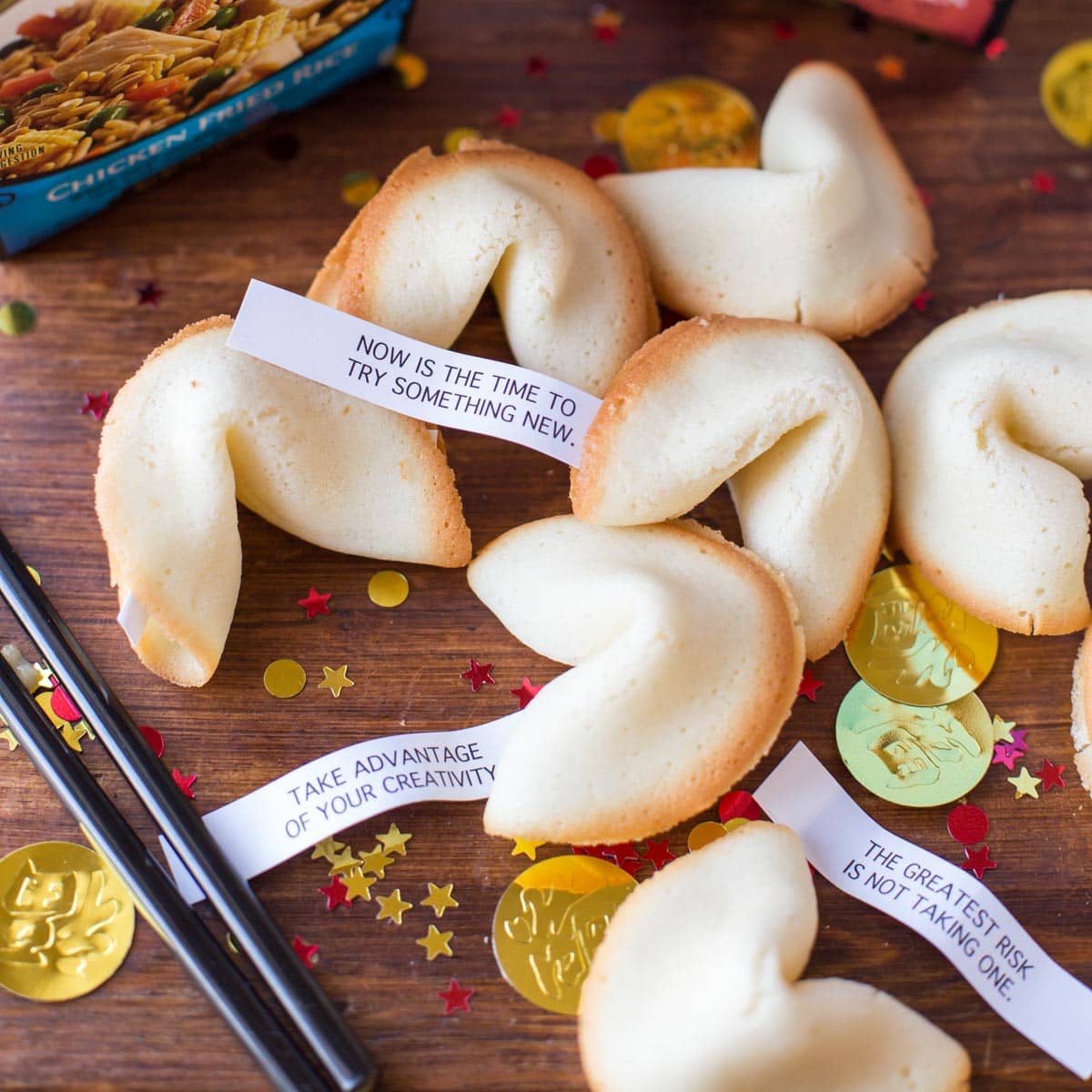
So, the next time someone hands you a fortune cookie at the end of a Chinese meal in America, remember that you're holding a little piece of cross-cultural history.
It isn't quite Chinese, not entirely Japanese, and certainly not just an ordinary biscuit.
It's a reminder of how food changes as people move, communities meet and traditions adapt to new surroundings.
And if your fortune says you're about to become rich, successful and wonderfully lucky, enjoy the moment.
Just don't forget to pay the restaurant bill first. Even destiny doesn't cover dinner.