

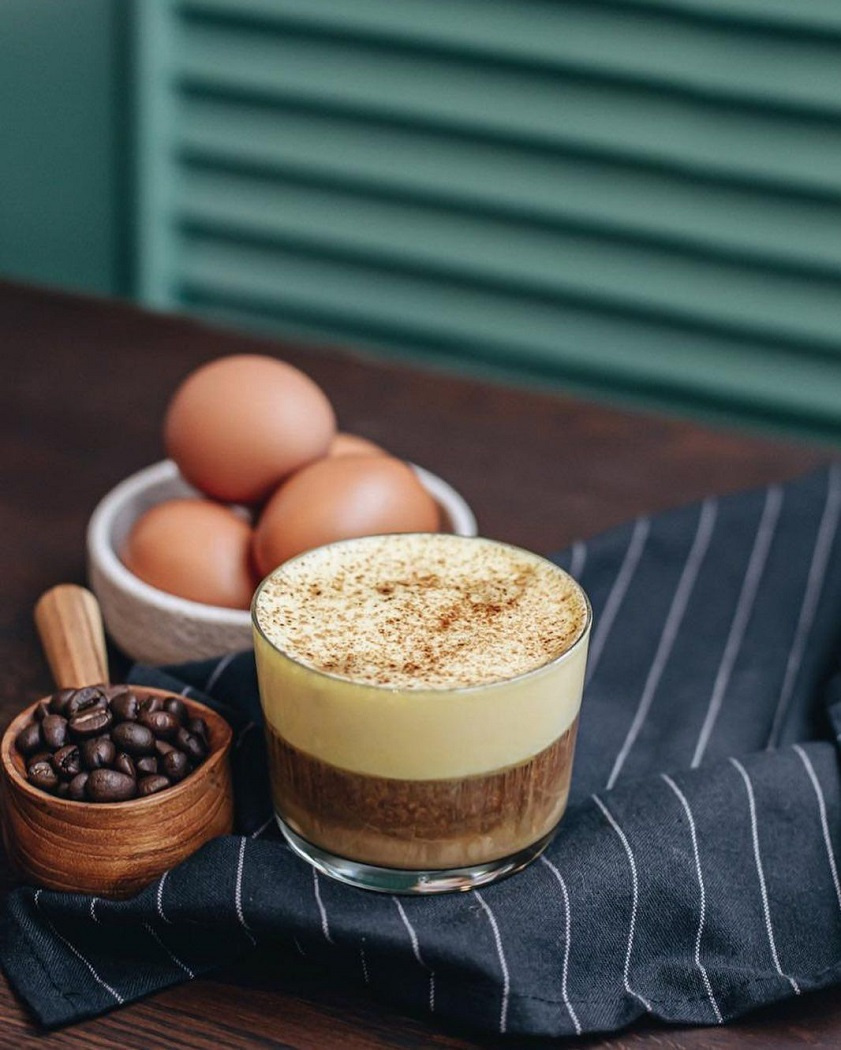

I thought I was looking at a dinosaur egg. Then someone told me it was a delicacy. Welcome to the wonderful, slightly confusing world of Chinese century eggs.
Some foods look delicious before you even take a bite. A golden croissant, a bowl of steaming noodles, a slice of chocolate cake—your stomach starts making decisions before your brain gets involved.
And then there is the Chinese century egg.
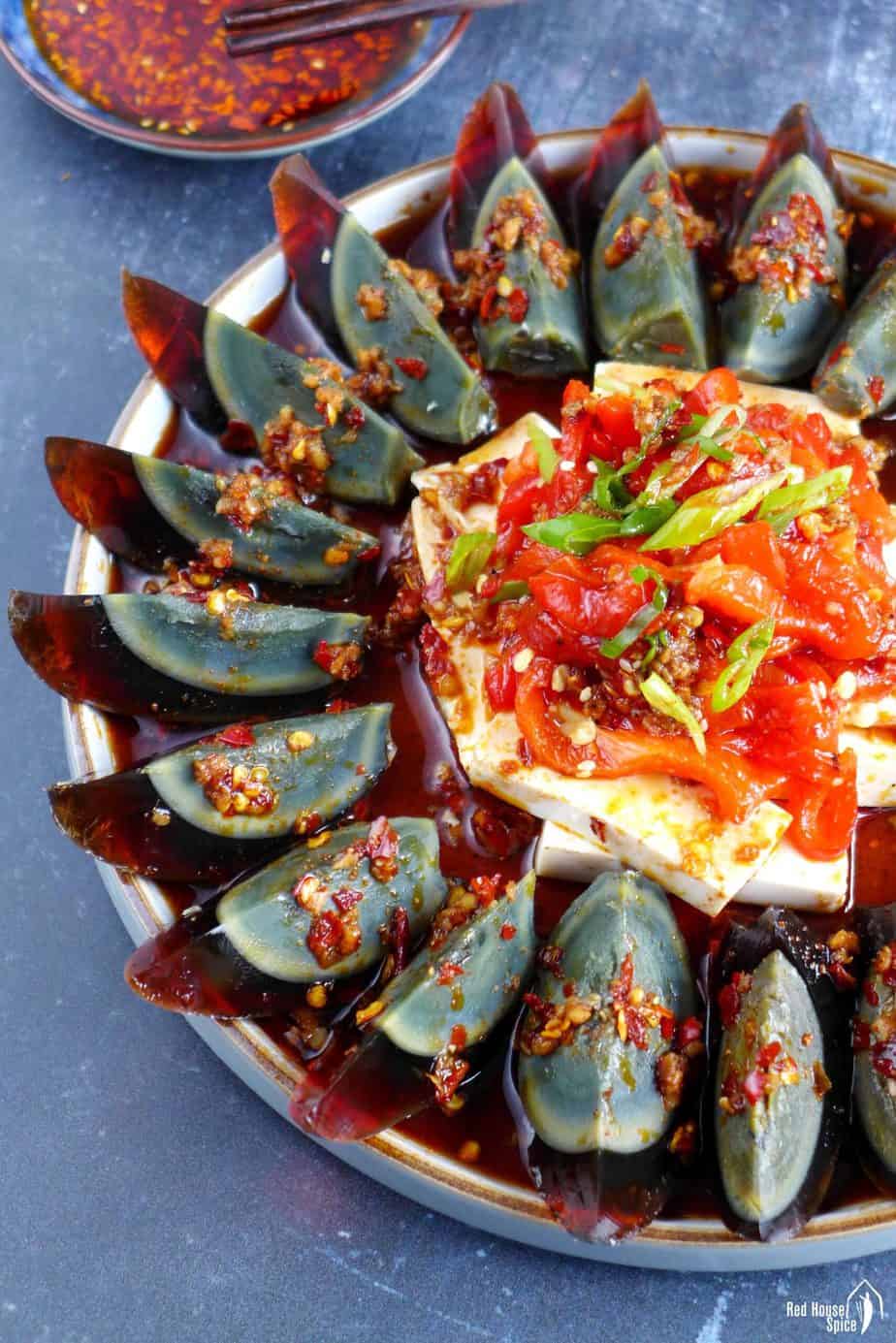
Its egg white is dark, translucent, and jelly-like. Its yolk can be deep green, grey, or almost black. Sometimes, delicate patterns resembling frost-covered branches spread across the surface.
It looks less like breakfast and more like something discovered inside a mysterious cave.
Naturally, my first question was: Who looked at this egg and thought, “Yes, absolutely. Put it on the menu”?
My second question was whether it had actually been sitting around for 100 years.
Thankfully, century eggs have a much more interesting story than their dramatic appearance suggests. They are a traditional Chinese delicacy created through a preservation process that transforms an ordinary egg into something extraordinary.
And no, you do not need to wait until your great-great-grandchildren retire to eat one.
1. First Things First: Is This Egg Actually 100 Years Old?
 Let's clear up the biggest mystery.
No. Century eggs are not normally a century old.
Also known as pidan (皮蛋), these preserved eggs are commonly made from duck eggs, although chicken and quail eggs can also be used. The name “century egg” is a wonderfully effective piece of marketing, even if it makes the product sound like something archaeologists should handle with gloves.
Depending on the production method, the preservation process generally takes several weeks to a few months—not 100 years.
Imagine buying a cake labelled “Thousand-Year Cake” and discovering that the baker made it last month. You might feel slightly disappointed, but you would probably still eat it.
Century eggs are similar, except the baker has apparently been replaced by a very patient food scientist.
The technique has a long history in China, with evidence of the tradition dating back centuries. Popular stories describe century eggs being discovered accidentally, but the exact origin of the method is uncertain.
One thing is clear: somebody figured out how to preserve eggs while dramatically changing their texture, colour, and flavour.
And that discovery eventually gave the world one of its most recognisable—and misunderstood—traditional foods.
2. How Does an Ordinary Egg Turn Into This?
The transformation sounds almost magical, but the explanation is surprisingly scientific.
Traditionally, century eggs are made by treating fresh eggs with an alkaline mixture. Depending on the method, this may involve ingredients such as lime, salt, ash, and other alkaline substances. The eggs are then left to cure for a period of time.
During this process, alkaline compounds gradually pass through the shell and change the proteins inside the egg.
The result? An egg that looks as though it has undergone a complete personality change.
The egg white becomes a firm, translucent gel, often ranging from amber-brown to dark brown. The yolk develops a creamy or semi-solid texture and turns greenish-grey to nearly black.
The colour changes happen because the egg's proteins and other compounds undergo chemical reactions during curing. Some of the darker pigments form through reactions involving amino acids and sugars, while sulphur compounds contribute to the characteristic colour of the yolk.
In other words, this is not an egg that has simply been left to rot in the back of a forgotten refrigerator.
It is an egg that has been deliberately transformed through a traditional preservation technique.
There is one important distinction, though: century eggs are not made by ordinary microbial fermentation in the same way as foods such as kimchi. Their transformation primarily involves alkaline chemistry.
Which means your chemistry teacher was technically right when they said chemistry would be useful in everyday life.
They just forgot to mention the alien-looking breakfast.
3. Why Does It Look Like Something From Another Planet?
Let's be honest: appearance is a major reason century eggs attract so much attention.
Cut one open, and the contrast can be striking. The white may look like a dark, translucent jelly, while the yolk can resemble a smooth green-black paste.
Some eggs also develop beautiful, branching patterns on the surface of the white. These are sometimes described as “pine flower” patterns because they resemble delicate frost or tiny branches.
They are part of the chemical changes that occur during preservation, rather than evidence that a miniature forest has somehow grown inside your breakfast.
Although the colours may look alarming to an unfamiliar diner, they are characteristic features of a properly made century egg.
The smell can be surprising, too. Century eggs may have a strong, distinctive aroma, sometimes described as sulphurous or reminiscent of ammonia. This develops as proteins and sulphur-containing compounds change during curing.
For someone trying one for the first time, the experience can be confusing.
Your eyes say, “This belongs in a science museum.”
Your nose says, “We should discuss this.”
And the person beside you says, “Just try it.”
Suddenly, lunch has become a test of personal courage.
But unusual does not automatically mean unpleasant. People who enjoy century eggs often appreciate precisely those distinctive flavours and textures that make newcomers hesitate.
Sometimes the strangest-looking foods have simply been waiting for you to get past the introduction.
4. What Does a Century Egg Actually Taste Like?
If you expect a century egg to taste like a regular boiled egg, prepare for a surprise.
The flavour is richer and more complex, particularly in the yolk. Depending on the egg and how it is served, people describe its taste as savoury, earthy, slightly sulphurous, and sometimes reminiscent of mature cheese.
The white has a firm, jelly-like texture and a relatively mild flavour, while the yolk is often creamier and more intense.
That contrast is part of the appeal.
Of course, taste is personal. Someone who loves century eggs may find their aroma comforting, while someone trying one for the first time may need a little encouragement.
There is no need to pretend you love a food simply because it is traditional. Food adventures should involve curiosity, not compulsory enthusiasm.
If you are new to century eggs, trying a small amount alongside other ingredients can be a gentler introduction than eating a whole egg on its own.
And please remember: you are allowed to like the noodles more than the egg. Nobody needs to award you a medal for finishing every unusual thing on the table.
5. How Do People Eat Century Eggs in China?
One of the easiest ways to understand a traditional ingredient is to see how people actually use it in everyday meals.
Century eggs are not always served as the dramatic centrepiece of a dish. They can be sliced, seasoned, mixed with other ingredients, or used to add depth to a larger meal.
Here are a few familiar ways to enjoy them.
Century egg congee
One well-known preparation is century egg congee, often made with rice porridge and pieces of preserved egg. Depending on the recipe, it may also include lean pork, ginger, spring onions, or other seasonings.
The soft, warm porridge balances the egg's distinctive flavour and texture. Instead of confronting the diner with a whole dark egg, the dish incorporates it into a comforting bowl of food.
It is a useful reminder that traditional cuisine is not always about showing off an unusual ingredient. Sometimes, it is about finding the right partner for it.
The century egg brings character; the porridge keeps everything cosy.
Think of it as the culinary equivalent of inviting an eccentric friend to dinner and discovering that everyone gets along surprisingly well.
Century egg with tofu
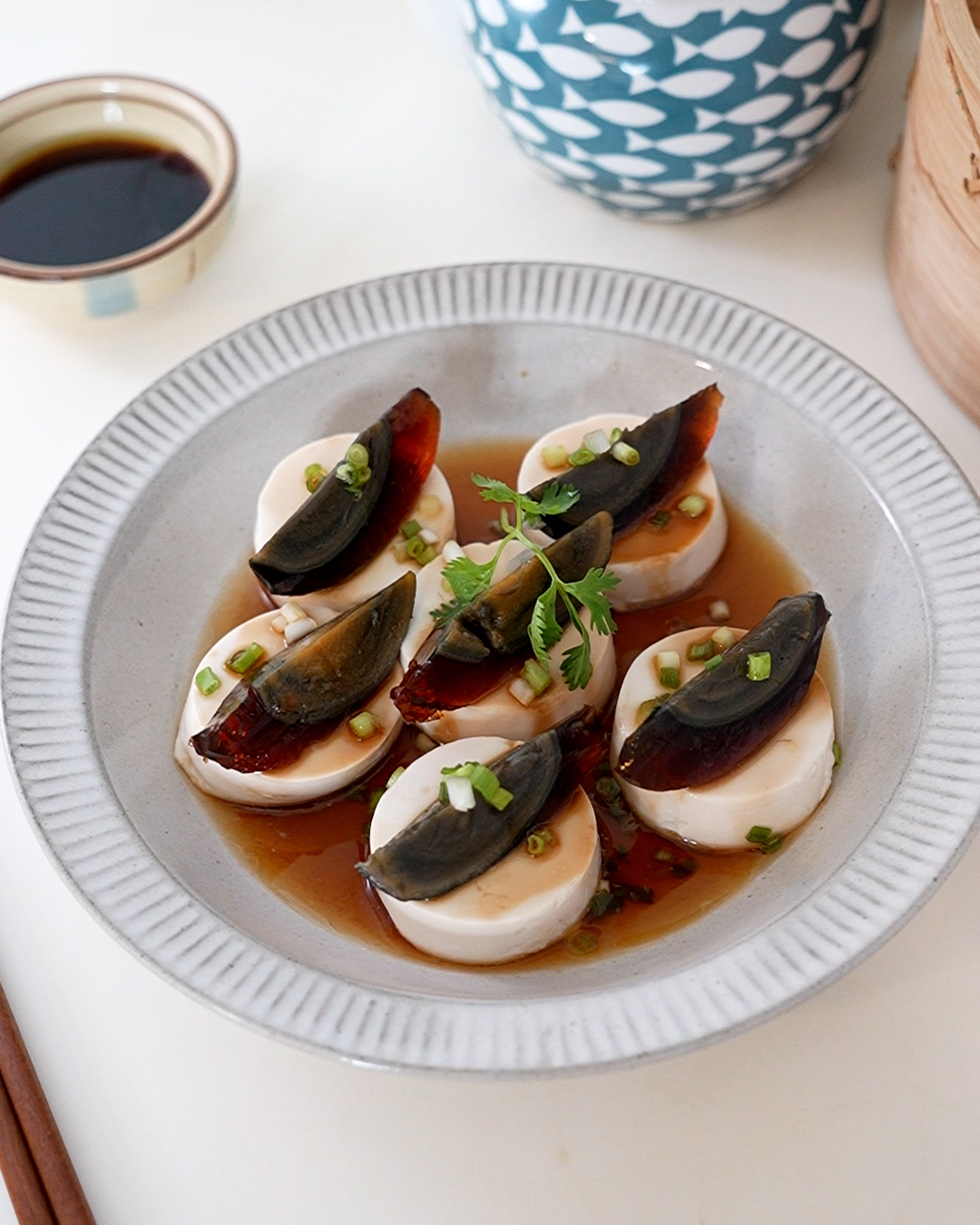
Another popular preparation pairs sliced century egg with soft tofu, often accompanied by seasonings such as soy sauce, sesame oil, vinegar, or spring onions.
The tofu is delicate and smooth, while the egg contributes a stronger savoury flavour. The contrast makes the combination interesting without requiring a complicated recipe.
It is also a good example of how texture matters in Chinese cooking. Food is not judged by flavour alone; softness, firmness, temperature, and the way ingredients work together all contribute to the experience.
Sliced century egg with simple seasonings
Century eggs can also be served in slices with seasonings or accompaniments such as pickled ginger, vinegar, or soy sauce, depending on regional and personal preferences.
Sometimes, the simplest presentation lets the ingredient speak for itself.
Although “let the ingredient speak for itself” sounds elegant, I suspect the egg's opening statement would be: “I know what I look like. Let's move on.”
6. Is It Safe to Eat?
A natural question, especially when the food looks so unusual.
Century eggs made using appropriate methods and sold by reputable producers are intended to be eaten as food. Their distinctive appearance is a result of preservation, not automatically a sign that they have spoiled.
However, production quality matters. Some unsafe or poorly controlled manufacturing methods have involved heavy-metal compounds, including lead, to speed up or influence curing. Lead exposure is harmful, so it is important to choose products from reputable manufacturers that meet applicable food-safety standards.
Do not judge safety by colour alone, and do not assume that every product is safe simply because it is traditional.
If you want to try century eggs, buy properly labelled products from a trusted seller and follow the storage instructions on the packaging. Avoid eggs with damaged packaging, an unexpectedly broken shell, or signs of spoilage.
And unless you are trained in food preservation, this is not the moment to improvise a home experiment using strong alkaline chemicals. The traditional technique involves chemistry that deserves proper knowledge and controls.
Curiosity is excellent. An avoidable food-safety problem is not a necessary part of the adventure.
7. Why Century Eggs Deserve More Respect Than Their Appearance Suggests
It is easy to turn century eggs into an internet joke. Their colours are dramatic, their smell can be challenging, and their name sounds like a dare.
But reducing them to a strange-looking food misses the point.
Century eggs are part of a long tradition of preserving food and making ingredients last longer. They also demonstrate how changing an ingredient's texture and chemistry can create a completely different eating experience.
Their place in Chinese cuisine is not based on trying to shock visitors. They are an established ingredient used in familiar dishes, from congee to tofu preparations.
For many people, they are simply food—not a challenge, a prank, or an edible science experiment.
And that is perhaps the most interesting lesson for travellers: a food that seems strange to you may be perfectly ordinary to someone else.
The same thing happens everywhere. People grow up with particular ingredients, textures, smells, and cooking methods. What feels adventurous to one person may remind another of home.
So the next time you encounter a dish that looks unfamiliar, take a moment before deciding what it must taste like.
Ask how it is made. Learn how people eat it. Try a small portion if you feel comfortable.
You might discover a new favourite.
Or you might decide that one taste was enough for a lifetime.
Both outcomes are perfectly respectable.