
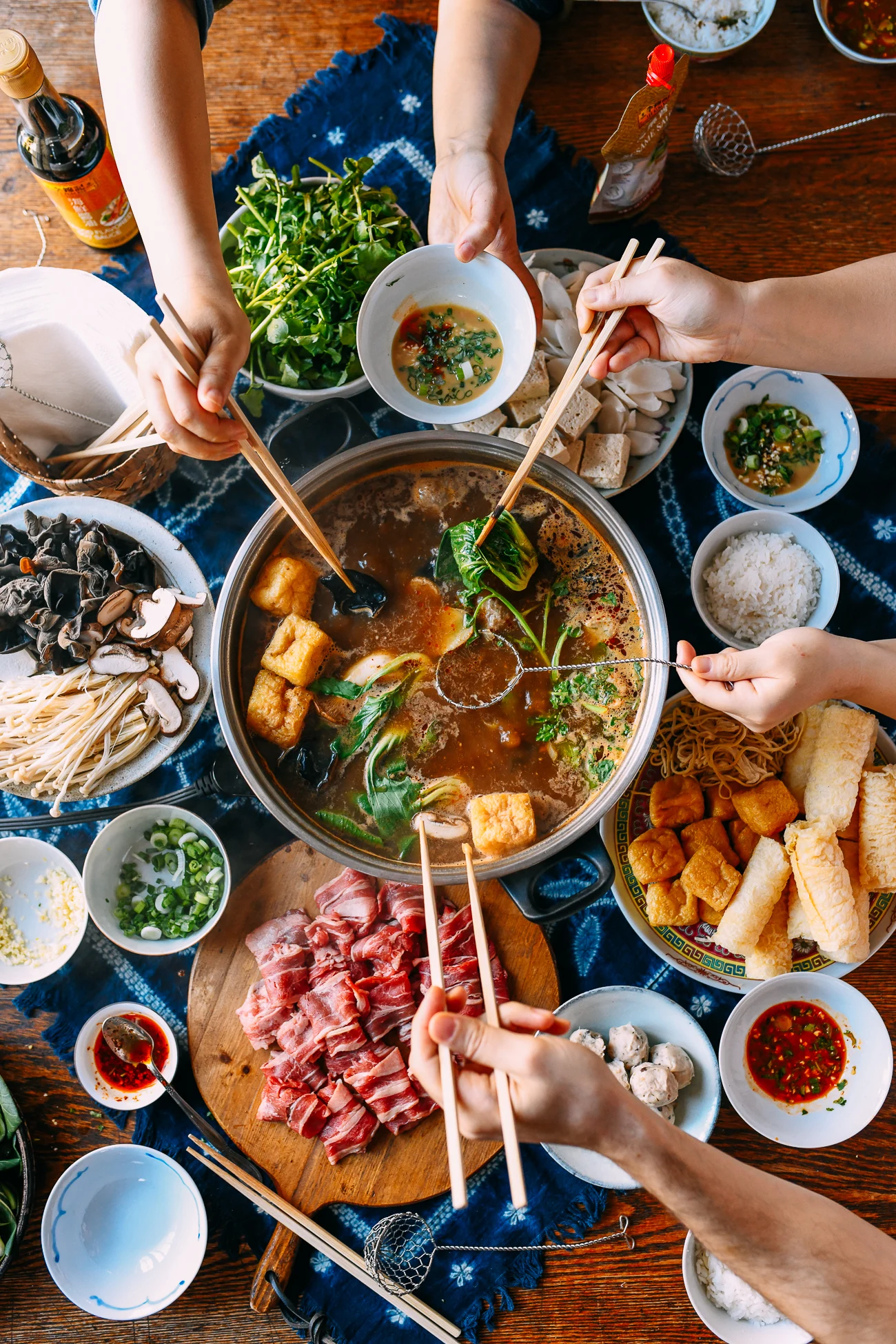






Who stole the last beef ball? Who turned the soup into a volcano? And who has been eating for 40 minutes without cooking a single thing? Welcome to hot pot night.
There are two ways to discover someone's true personality.
The first is to travel with them for a week and see how they behave when the flight is delayed, the hotel loses the reservation, and everyone is hungry.
The second is much cheaper.
Invite them to eat hot pot.
At first, everything seems wonderful. A steaming pot of broth bubbles in the middle of the table. Plates of thinly sliced beef, seafood, mushrooms, tofu, vegetables, and noodles surround it. Everyone is smiling. Someone orders extra dumplings. Someone else announces that they are absolutely starving.
Then the soup starts boiling.
Within minutes, the table transforms into a competitive cooking arena. Chopsticks are flying. People are shouting instructions. A mysterious beef ball disappears, and three friends suddenly become amateur detectives.
Welcome to hot pot: the meal that brings people together, fills their stomachs, and occasionally makes them question the entire friendship.
1. The Last Beef Ball: A Test of Character
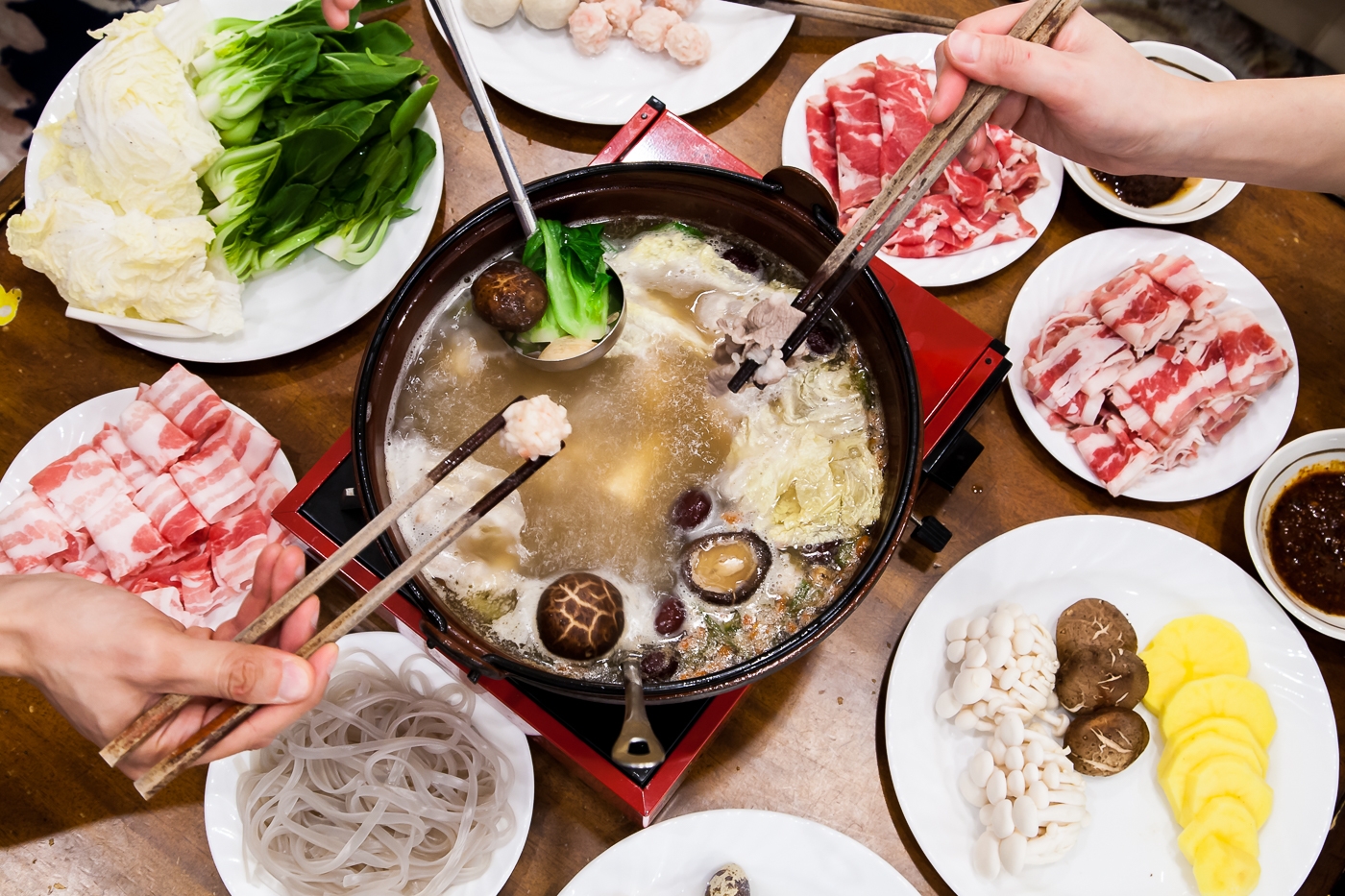
Every hot pot meal eventually reaches this moment.
There is one beef ball left.
Not two. Not three. Just one beautiful, perfectly cooked ball of meat floating peacefully in the broth, completely unaware that it is about to cause an international incident.
Everyone has seen it.
Nobody admits to wanting it.
“Does anyone want the last one?” someone asks politely.
Silence.
“I’m full,” says the person who has eaten approximately 70% of the meal.
“No, you take it,” says another, while positioning their chopsticks suspiciously close to the pot.
A third person announces that they are saving room for dessert, despite having spent the previous 20 minutes eating beef directly from the cooking basket.
Then someone strikes.
One swift movement. A pair of chopsticks. The beef ball is gone.
Suddenly, the atmosphere changes.
“That was mine!”
“You said you didn't want it!”
“I was being polite!”
And just like that, a friendship that survived university exams, terrible roommates, and questionable holiday decisions is hanging by a single meatball.
The funny thing is that nobody really needs that final beef ball. Everyone has eaten enough to require a short nap and possibly a new wardrobe.
But the last piece of food is different. It is no longer food. It is a matter of principle.
Hot pot teaches us that sharing is caring—unless there is only one beef ball left.
2. The Spice Criminal: Who Put THAT Much Chili in the Soup?
Hot pot offers something beautiful: choice.
You can have a mild broth, a rich mushroom soup, a tomato-based broth, or a fiery Sichuan-style soup packed with chili and spices.
Some restaurants even offer divided pots, allowing people with different spice preferences to eat together.
In theory, this is an excellent arrangement.
In practice, there is always someone who believes that the entire group needs to experience the full power of chili.
“I'll just add a little more,” they announce.
That little more becomes another spoonful.
Then another.
Before anyone can intervene, the broth has turned a deep shade of red, and the steam rising from the pot looks like a warning from the universe.
“Isn't this delicious?” the spice enthusiast asks happily.
Across the table, someone is sweating so much that the restaurant might consider charging them for a complimentary sauna session.
Another friend is drinking water, which provides temporary emotional comfort but does little to solve the underlying problem.
Meanwhile, the person responsible for the chili is dipping another slice of beef into the bubbling red liquid.
They look peaceful. Almost spiritual.
You begin to wonder whether they can even taste food anymore, or whether their entire personality has become chili oil.
Of course, enjoying spicy food is perfectly fine. The real crime is making the decision on behalf of everyone else.
If your friends prefer mild food, ask before turning the shared pot into a volcanic experiment. A divided broth or a separate spicy dipping sauce can keep everyone happy.
Because friendship means accepting people's differences.
Even when those differences involve a person who thinks black pepper is dangerously adventurous.
3. The Food Thief Who Insists They Were “Just Helping”
Every hot pot table has a self-appointed food manager.
This person watches the pot carefully, moves ingredients around, and announces when everything is ready.
At first, they seem helpful.
“Your beef is cooked.”
“Those mushrooms need another minute.”
“Don't forget the tofu!”
Then you realize something strange.
Every time they announce that an ingredient is ready, it somehow ends up in their own bowl.
Your shrimp? Gone.
Your mushrooms? Missing.
The tofu you carefully placed in a quiet corner of the pot? Apparently, it has accepted a better job elsewhere.
You ask about the disappearance.
“Oh, I thought that was yours. I was just moving it.”
Moving it where? Into your digestive system?
This person may also insist that they are cooking for everyone while somehow eating twice as much as the rest of the table.
They know which ingredients cook quickly, which ones need more time, and exactly how to retrieve a slippery piece of fish without losing it to the broth.
Their technical skills are impressive.
Their commitment to sharing, however, remains under investigation.
Still, hot pot does encourage people to look after one another. Someone has to make sure the food is cooked, remind everyone about the vegetables, and rescue the tofu before it disintegrates into an unidentified substance.
Just remember that being the chef does not automatically grant you ownership of the entire pot.
Helping your friends cook is generous. Helping yourself to all their food is a different career.
4. The Person Who Never Cooks Anything
Meet the most mysterious character at the table.
They arrive hungry.
They admire the ingredients.
They enthusiastically agree to order more food.
Then they sit back and wait.
Someone else puts the beef into the pot. Another person adds the mushrooms. A third watches the timer and fishes out the cooked ingredients.
Our mysterious guest contributes absolutely nothing to the cooking process.
Except commentary.
“Is that ready yet?”
“Can someone get me some beef?”
“Are there any noodles left?”
“Why is the soup taking so long?”
They have somehow transformed a communal meal into a restaurant where every other customer is also an unpaid member of the kitchen staff.
And yet, when the food arrives in their bowl, they eat with the enthusiasm of someone who has personally hunted the cattle, harvested the vegetables, and built the restaurant from scratch.
You might be tempted to complain.
But then you remember that this person is also the one who makes everyone laugh, tells the best stories, and keeps the conversation going.
Perhaps their contribution is not cooking.
Perhaps it is entertainment.
That is the beauty of eating with friends: everyone brings something different to the table.
Some people cook. Some people organize. Some people tell stories.
And some people specialize in asking whether the beef is ready every 45 seconds.
Every group needs a talent.
5. The Secret Life of the Missing Meatball
Hot pot ingredients have an extraordinary ability to disappear.
You place a fish ball into the broth. You look away for five seconds to answer a question. When you look back, it is gone.
Nobody knows where it went.
You search the pot.
You lift the mushrooms.
You inspect the noodles.
Nothing.
“Did anyone take my fish ball?”
Four people shake their heads.
One person looks offended by the accusation.
Another suddenly becomes very interested in their phone.
A fifth person says, “Maybe it sank.”
Sank where? The Mariana Trench?
The truth is that a busy hot pot can become difficult to manage. Ingredients move around, noodles tangle together, and small pieces of food can hide beneath larger ones.
The solution is simple: cook manageable batches, keep an eye on your own ingredients, and accept that the occasional mushroom may enter a new chapter of its life without your permission.
Some groups even develop unofficial systems. One person takes responsibility for the seafood, another watches the meat, and someone else keeps track of the noodles.
It sounds unnecessarily organized for a casual dinner.
But when the table is full of hungry people armed with chopsticks, a little organization can prevent a great deal of emotional damage.
And if you cannot find your missing meatball?
Perhaps let it go.
It may have found happiness in someone else's bowl.
6. Hot Pot Is Basically Group Therapy—with Better Soup

Despite the occasional beef-ball dispute, hot pot remains one of the most enjoyable ways to share a meal.
Part of the magic is that nobody receives a finished plate and immediately disappears into their own world. The pot keeps everyone involved.
You choose ingredients together, cook in small batches, share recommendations, and adjust the meal to suit different tastes.
Someone prefers mushrooms. Someone else wants seafood. One friend is loyal to beef, while another believes vegetables deserve far more respect than they receive.
The conversation moves naturally between food and everything else.
You discuss work, relationships, travel plans, embarrassing memories, and that one person who has been making questionable decisions since 2019.
Meanwhile, the broth keeps bubbling.
In China, hot pot has strong regional identities. Sichuan and Chongqing are famous for bold, spicy broths, while other styles emphasize clearer soups and different dipping sauces. The ingredients and traditions vary by region, restaurant, and family.
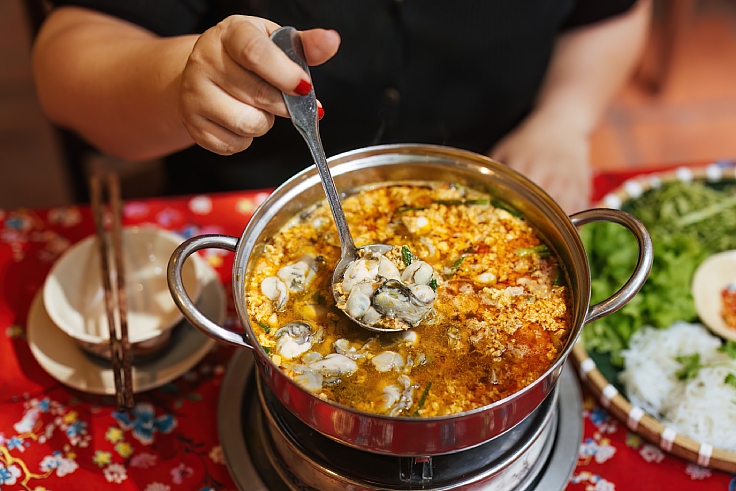
Vietnam has its own rich hot pot culture, known as lẩu. Depending on where you are, you might encounter seafood hot pot, beef hot pot, chicken hot pot, or sour broths served with generous plates of fresh vegetables and herbs.
The flavors differ, but the social appeal is familiar: hot pot gives people a reason to sit around one table for a long time.
There is no need to rush through separate courses. The meal unfolds gradually, with everyone participating at their own pace.
It is dinner, but it is also an activity.
And unlike many group activities, the reward is delicious.
Hot pot may not solve your problems, but it gives you a warm place to talk about them. Sometimes, that is enough.
Just make sure your friends do not steal the last beef ball while you are sharing your feelings.
7. The Great Hot Pot Etiquette Agreement
If you want your next hot pot gathering to end with full stomachs and intact friendships, a few simple rules can help.
Rule one: Ask before adding the chili. Your personal spice tolerance is not a group project.
Rule two: Do not steal food that someone is clearly saving. If you are unsure whether an ingredient belongs to someone, just ask. It is much easier than holding a full investigation over a missing dumpling.
Rule three: Cook food properly. Raw meat and cooked food should be handled with separate utensils to reduce cross-contamination. Make sure ingredients are thoroughly cooked before eating, especially meat and seafood. The broth should return to a boil after new ingredients or liquid are added. <Cite refs={["turn387520search1","turn387520search2"]} />
Rule four: Share the work. You do not have to become a professional chef, but occasionally adding vegetables or helping distribute cooked food would be a lovely gesture.
Rule five: Never underestimate the noodles. They can absorb a surprising amount of broth, occupy half the pot, and create an unexpected logistical challenge if everyone adds them at once.
Rule six: Do not take the last piece without checking. Yes, we are returning to the beef ball. Some lessons must be repeated.
Most importantly, remember that the point is not to control every ingredient or win a competition.
The point is to enjoy the meal together.