






Paris has plenty of ways to make you spend money. There are designer boutiques, charming cafés, luxury hotels, and bakeries capable of convincing you that one more croissant is absolutely necessary.
But if you really want to elevate your dining budget, why not eat inside the Eiffel Tower?
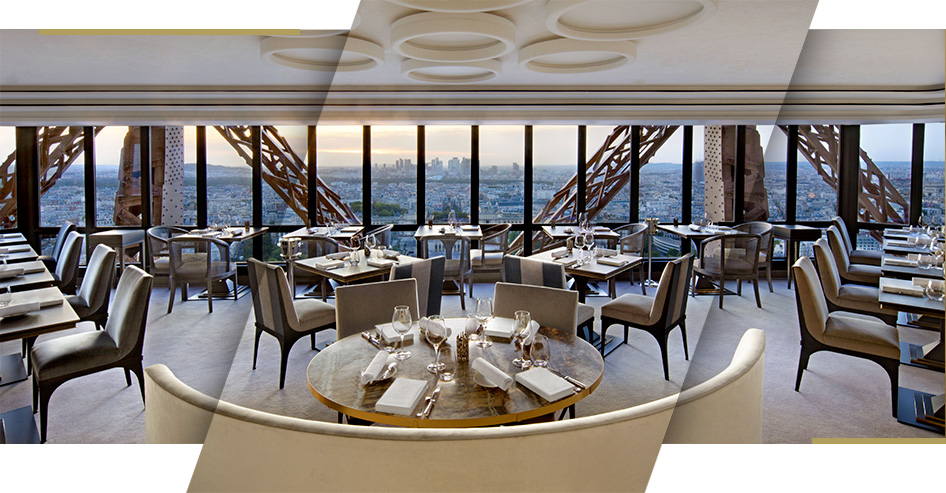
Welcome to Le Jules Verne, a two-Michelin-starred restaurant perched on the tower’s second floor, approximately 125 metres above Paris. Here, French fine dining meets sweeping city views, polished service, and a bill that may make you briefly reconsider every financial decision you have ever made.
The big question is simple: Is Le Jules Verne worth the price, or are you mainly paying for the privilege of eating expensive food while Paris looks pretty outside the window?
The answer depends on what you want from a meal — and how much you are willing to spend to make it memorable.
A Restaurant With a Rather Impressive Address
 Le Jules Verne is not the sort of restaurant you stumble into while looking for somewhere to grab a quick sandwich.
Located on the second floor of the Eiffel Tower, it has one of the most recognisable addresses in the world. The restaurant is named after Jules Verne, the French novelist whose stories took readers on extraordinary journeys. Considering the restaurant’s location, the name feels appropriate: dinner here is intended to be a journey of its own.
Getting there is part of the experience. Guests use a dedicated private lift, giving the arrival a more exclusive feel than joining the ordinary queues for the tower’s observation areas.
Once inside, the atmosphere is refined rather than excessively flashy. The interiors are designed to complement the iron structure and the views beyond the windows, rather than compete with them.
And those views are a serious part of the attraction.
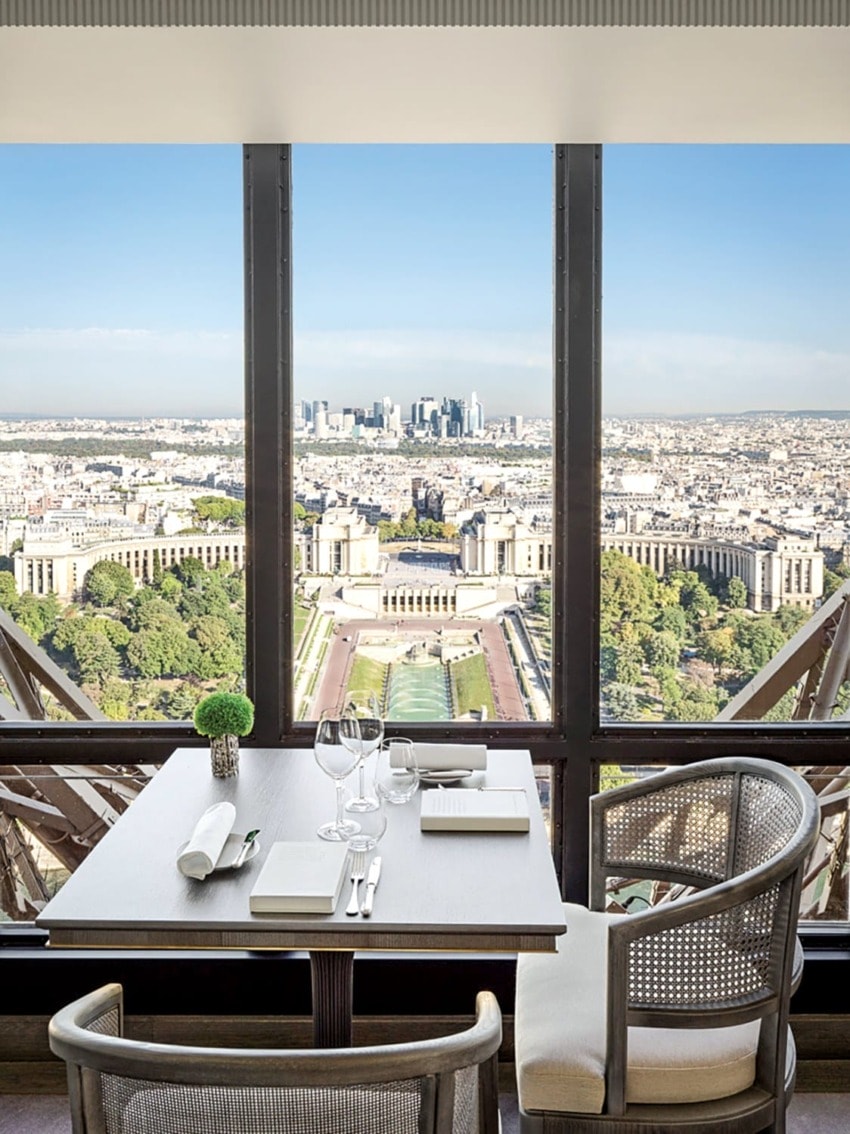
Depending on your table and the direction you face, you may see the Seine, the golden dome of Les Invalides, Montmartre, and other landmarks scattered across the Paris skyline.
It is difficult to complain about the scenery. Even the city’s office buildings seem to have dressed up for the occasion.
Still, there is one important detail to remember: not every table has the same view. If the panorama is a major reason for your visit, mention your preference when booking and ask what seating options are available. A reservation does not automatically guarantee the window seat of your dreams.
What Does Dinner Actually Cost?
Let us address the elephant in the dining room: the price.
Le Jules Verne is firmly in the luxury category, and its current published prices reflect that.
According to the restaurant’s menu information available in October 2026, the options include:
|
Dining option |
Price per person |
|
Weekday lunch à la carte menu |
€190 |
|
Five-course tasting menu |
€305 |
|
Seven-course tasting menu |
€345 |
The weekday lunch à la carte option is available Monday to Friday, excluding public holidays. The five- and seven-course tasting menus are offered at lunch and dinner. Drinks are charged separately, so wine, champagne, and other beverages can increase the final bill.
Prices may change, so check the official menu before making a reservation.
For two people, the five-course tasting menu alone comes to €610. Choose the seven-course option and the food bill reaches €690 for two, before drinks.
That is a considerable amount for a meal, even in Paris.
At these prices, Le Jules Verne is not simply competing with neighbourhood bistros. It is selling a complete fine-dining occasion: the setting, the service, the culinary techniques, the view, and the feeling of celebrating something special.
The important question is whether those elements matter enough to you to justify the expense.
Is the Food Worth the Money?
 A spectacular location can attract diners once. Excellent cooking is what gives a restaurant a reputation beyond its postcode.
Le Jules Verne is led by chef Frédéric Anton, whose cooking draws on French culinary traditions while presenting ingredients in modern, carefully constructed dishes. The restaurant received its second Michelin star in 2024. <Cite refs={["turn172268search1","turn172268search8"]}/>
The style is sophisticated, but the appeal is not simply about making food look complicated.
Consider some of the dishes highlighted in restaurant reviews and menu descriptions: langoustine ravioli with Parmesan cream and beetroot jelly, crab paired with tarragon and green apple, or caramelised veal sweetbread served with a rich Grenobloise-style sauce.
These combinations bring together different textures, temperatures, and flavours. Delicate seafood can meet a creamy sauce; a sweet ingredient can be balanced by acidity; and a rich dish can be given freshness by herbs or vegetables.
In high-end French cooking, the sauce is often as important as the main ingredient. The precision of the cooking, the balance of flavours, and the timing of each course all contribute to the experience.
The presentation matters, too, but it is not the whole story. A plate can be beautiful without being delicious, just as a delicious meal does not need to look like an architectural model.
At Le Jules Verne, diners are paying for the kitchen's skill and the chance to experience that cooking in an extraordinary setting.
However, two Michelin stars do not mean every guest will love every dish. Fine dining can be subtle, experimental, and sometimes less immediately comforting than familiar food. If your idea of a perfect meal is a giant bowl of pasta followed by an enormous slice of cake, a multi-course tasting menu may not be your natural habitat.
And that is perfectly fine. Not everyone needs a culinary revelation before dessert.
The View: The Most Expensive Side Dish in Paris?
 Now comes the restaurant's most obvious advantage.
Paris is beautiful from street level, but seeing it from inside the Eiffel Tower creates a different perspective. The city stretches beyond the windows, with its rooftops, monuments, and broad avenues forming a living panorama.
During the day, the details of the city are easier to appreciate. In the evening, the changing light can make the experience feel more intimate, especially for a celebration or a romantic occasion.
There is also something unusual about eating inside the structure that so many visitors travel across the world to see. Instead of looking up at the Eiffel Tower from a crowded square, you are inside it, enjoying a meal while the city unfolds around you.
That is a genuine part of the experience, not merely a decorative extra.
But the view raises an interesting question: how much of the price are you willing to pay for the setting?
If you are passionate about food and enjoy tasting menus, the location may be a bonus on top of an already appealing meal. If you mainly want to see Paris from above, you might find the price difficult to justify when there are other ways to enjoy the city’s skyline.
In other words, the scenery is spectacular, but it cannot tell you whether the food suits your taste.
Nor can it make the bill disappear. Sadly, the Eiffel Tower has not yet developed that particular feature.
Le Jules Verne vs. a Traditional Parisian Bistro
To understand the value of Le Jules Verne, it helps to compare it with a more ordinary Parisian meal.
A neighbourhood bistro might offer French onion soup, steak frites, roast chicken, or a daily special in a relaxed atmosphere. You may spend considerably less, enjoy generous portions, and leave with enough money for another pastry stop.
Le Jules Verne offers something different.
|
What matters |
Le Jules Verne |
A traditional Parisian bistro |
|
Setting |
Inside the Eiffel Tower |
Often a street-level dining room |
|
Food |
Refined, multi-course fine dining |
Familiar French dishes and regional favourites |
|
Atmosphere |
Formal, polished, special-occasion feel |
Usually more relaxed |
|
Cost |
Luxury-level pricing |
Often much more affordable |
|
Best suited to |
A major celebration or a food-focused splurge |
Everyday dining and exploring local cuisine |
Neither experience automatically beats the other. They serve different purposes.
A bistro may give you a more casual taste of everyday Parisian life. Le Jules Verne offers a carefully orchestrated occasion in a location few restaurants can match.
If you are visiting Paris for the first time and want to understand the city through its everyday food culture, a bistro crawl may be more rewarding. If you have always dreamed of dining inside the Eiffel Tower, Le Jules Verne offers an experience that an ordinary restaurant simply cannot reproduce.
What to Know Before Booking
 A little planning can make the difference between a memorable evening and an expensive logistical headache.
1. Book well in advance.
Le Jules Verne is a sought-after restaurant, and availability can be limited. Reservations have been offered up to around 90 days ahead, but check the current booking calendar rather than assuming your preferred date will be available.
2. Check the dress code.
This is not the place for sportswear or casual shorts. The restaurant requires elegant attire and states that jackets are mandatory for men. Check the official rules before you go.
3. Choose your menu carefully.
The five-course menu costs less than the seven-course option, while the weekday lunch à la carte menu is another possibility. Consider your appetite, budget, schedule, and interest in tasting menus before choosing.
Most importantly, do not book simply because you feel you should. Paris has countless memorable meals, and there is no rule saying a holiday must include a three-figure dinner.
So, Is Dinner at Le Jules Verne Worth It?
Le Jules Verne makes the most sense when you think of it as a complete experience rather than just a place to eat.
The food offers refined French cooking, the service is designed for a special occasion, and the location gives diners an unusual perspective on one of the world's most recognisable landmarks. For a milestone birthday, anniversary, or long-planned culinary trip, those elements may come together in a way that feels worth the splurge.
But if you judge a restaurant primarily by how much food you get for your money, the price will probably be harder to accept. You can eat very well in Paris for considerably less, and a wonderful meal does not need an Eiffel Tower address.
The best reason to book Le Jules Verne is not to prove that you can afford it or to collect a prestigious restaurant name for your travel checklist. It is to enjoy an experience that genuinely matches your interests.
If you love fine dining, appreciate carefully prepared food, and want to celebrate Paris from an extraordinary vantage point, it may be a memorable choice.
If you would rather spend that money exploring markets, cafés, bakeries, and small restaurants across the city, that can be just as rewarding.
After all, Paris does not run out of delicious things to eat just because you decline to dine 125 metres above the pavement.
And if you do choose Le Jules Verne, remember to savour the food, enjoy the view, and take a moment to appreciate the remarkable engineering holding the whole evening in place.
Just try not to calculate the cost of each bite while looking down at the city. Dinner is much more enjoyable when your mental calculator is off duty.