
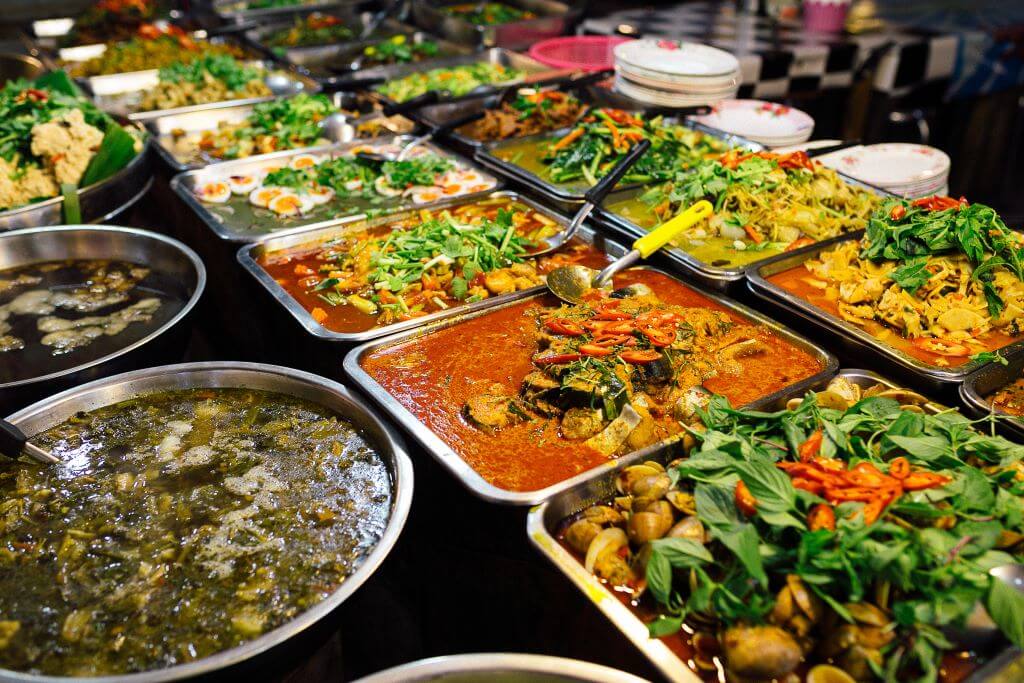






Bangkok is a dangerous city for anyone who loves food.
Not because the food is bad. Quite the opposite. The danger is that every few metres, something smells incredible. A sizzling wok sends fragrant smoke into the air. Someone is grilling pork skewers over glowing charcoal. A vendor is pouring iced Thai tea into a plastic cup, and a nearby stall is displaying mango sticky rice like it belongs in a jewellery shop.
Meanwhile, your wallet is whispering, “We agreed to be sensible today.”
Sorry, wallet. We have plans.
For this food adventure, I set myself a budget of 400 Thai baht for one entire day of eating. That is roughly US$12, depending on the exchange rate. The challenge: breakfast, lunch, snacks, dinner, and dessert without spending the sort of money usually reserved for airport sandwiches.
The itinerary below uses estimated street-food prices, rather than claiming to be a record of actual purchases. Prices vary by neighbourhood, vendor, portion size, and season, but 400 baht gives a budget-conscious traveller a realistic target for a day of eating mostly local food.
Ready? Let's go before I spend the entire budget on something wrapped in banana leaves.
7:30 AM — Breakfast: The Pork Skewer Situation
Budget: 55 baht
My imaginary Bangkok food adventure begins early, because some of the best street-food breakfasts are sold before the city has fully woken up.
The first stop is a morning stall selling moo ping, or grilled pork skewers, alongside sticky rice.
The pork is marinated, threaded onto little sticks, and grilled until the edges turn beautifully caramelised. The smell is enough to make me forget every sensible breakfast decision I have ever made.
I order two skewers for around 24 baht and a small bag of sticky rice for 10 baht. To complete the meal, I pick up a small soy milk for about 20 baht.
Breakfast total: 54 baht.
I round that to 55 baht because budgeting should be precise, but life is too short to argue with one baht.
The meal is simple, filling, and wonderfully convenient. There is no elaborate menu, no reservation, and no waiter asking whether I would prefer sparkling water imported from a mountain whose name I cannot pronounce.
Just pork, rice, and the realisation that breakfast can be excellent without involving avocado toast.
One small warning: grilled pork skewers are best eaten fresh from a busy stall where the food is cooked thoroughly. Also, do not buy six skewers simply because the first two disappear before you have found somewhere to sit.
That is not hunger. That is a developing financial problem.
Running total: 55 baht.
10:30 AM — A Snack Before Lunch, Because Apparently I Am Weak
Budget: 25 baht
 By mid-morning, I am wandering through the streets, admiring the temples, watching the traffic, and trying to convince myself that I am not hungry again.
Then I see fresh fruit.
Thailand makes fruit shopping dangerously enjoyable. Depending on the season and the stall, you might find watermelon, pineapple, guava, or other tropical favourites cut into convenient pieces.
I choose a small bag of pineapple for around 25 baht.
It is cold, juicy, refreshing, and exactly what I need in Bangkok's heat.
It also feels wonderfully virtuous. Fruit! Hydration! Vitamins!
I have almost forgotten that I ate pork skewers less than three hours ago.
The problem with a budget food tour is that every small purchase looks harmless. Twenty-five baht here, thirty baht there. Before you know it, you have eaten enough snacks to qualify as a walking buffet.
Still, fruit is an excellent way to break up a day of fried food and rich sauces. Just choose a stall where the fruit is handled hygienically and kept appropriately chilled or protected from the heat.
Snack total: 25 baht.
Running total: 80 baht.
12:00 PM — Lunch: Pad Kra Pao, the Hero We Need
Budget: 70 baht
Lunch calls for something substantial, and Bangkok has plenty of options.
I head for a modest local eatery serving pad kra pao, a stir-fry made with holy basil, garlic, chilli, and usually minced pork or chicken. It is commonly served over rice, often with a fried egg.
The ingredients hit the hot wok, the garlic releases its aroma, and suddenly the entire street seems to smell like the best possible decision.
I order minced pork with holy basil, rice, and a fried egg for an estimated 60 baht, then add a bottle of water for around 10 baht.
Lunch total: 70 baht.
The dish is spicy, savoury, fragrant, and wonderfully satisfying. The egg adds a soft richness, while the basil and chilli make every bite feel alive.
This is the sort of meal that reminds me why street food is such a big part of Bangkok's appeal. You do not need a complicated dining experience to enjoy something memorable. Sometimes, all you need is a hot wok, fresh ingredients, and a cook who knows exactly what they are doing.
There is, however, one important lesson for visitors: do not assume that every dish can be made mild just because you ask politely.
If you are sensitive to chilli, say mai phet, meaning “not spicy,” when ordering. Even then, it is worth confirming with the vendor, because recipes and interpretations of spice levels vary.
I take my first bite and feel perfectly happy.
Then the chilli arrives.
My eyes begin watering. My nose develops its own personality. I suddenly understand why people keep tissues in their bags.
But I refuse to panic. I am a food explorer. I am brave.
I am also drinking water with the concentration of someone trying to put out a small kitchen fire.
Running total: 150 baht.
2:30 PM — The Moo Ping Comeback
Budget: 40 baht
I have a little over half my budget left, which seems like a perfectly reasonable situation.
Then I encounter grilled pork skewers again.
This is a test of character.
I could walk away. I could admire the grill from a respectful distance. I could remember that I have already eaten pork today.
Instead, I buy two more skewers for around 24 baht and a small portion of sticky rice for approximately 10 baht.
I reserve the remaining 6 baht as a tiny cushion for price variations elsewhere.
Afternoon snack total: 34 baht.
And now I have a problem: the skewers are so good that I am considering whether a second afternoon snack would be justified.
I decide to keep walking.
This is personal growth.
A useful trick when travelling on a budget is to look at food as a series of small experiences rather than one enormous meal. A few skewers here, a small dessert there, and a modest lunch can add up to a satisfying day without requiring a large restaurant bill.
The secret is not to buy every delicious thing you see.
The secret is to accept that you will see another delicious thing approximately twelve seconds after making that decision.
Running total: 184 baht.
5:30 PM — Dinner: Pad Thai and a Financial Crisis
Budget: 90 baht
 By early evening, the streets are getting busier. Stalls begin serving hungry commuters, and the smell of garlic, noodles, and sizzling oil becomes increasingly difficult to ignore.
Dinner is pad Thai, one of Thailand's most recognisable dishes.
A good plate combines stir-fried rice noodles with ingredients such as egg, tofu, bean sprouts, chives, and a tangy-sweet-savoury sauce. Depending on the vendor, it may also include shrimp or other proteins, with crushed peanuts, lime, and chilli served alongside.
I choose a modest portion for around 60 baht.
The noodles arrive hot, with a satisfying combination of textures and flavours. The lime adds brightness, the peanuts bring crunch, and the sauce balances sweetness with savoury notes.
It is familiar enough to be comforting but still interesting enough to make me want another bite.
I add a small drink for about 30 baht, bringing dinner to 90 baht.
Dinner total: 90 baht.
Running total: 274 baht.
I check my remaining budget and discover that I still have 126 baht.
One hundred and twenty-six baht!
For a brief moment, I feel like a financial genius. I have eaten breakfast, lunch, snacks, and dinner, and I still have enough money for dessert.
Then I remember that dessert is not optional in the mind of someone who has spent the entire day eating.
It is a matter of principle.
7:00 PM — Mango Sticky Rice: The Final Boss
Budget: 80 baht
 There are many ways to end a day in Bangkok, but mango sticky rice is a particularly appealing option when it is available and the fruit is in season.
The dish combines ripe mango with sticky rice and coconut milk. Some vendors add a little salt to balance the sweetness, while toasted mung beans or other toppings may provide extra texture.
It sounds simple, and it is.
But the combination works beautifully. The mango is fragrant and sweet, the rice is soft and chewy, and the coconut milk brings a rich, creamy finish.
I find a modest portion for around 80 baht.
And suddenly, all my earlier budgeting feels worthwhile.
The dessert is refreshing, satisfying, and indulgent without requiring a fancy restaurant. It is the kind of dish that makes you slow down, savour each bite, and briefly consider whether it would be socially acceptable to order another one.
I decide against it.
Not because I do not want another mango sticky rice.
Because I am trying to maintain the illusion that I have self-control.
Dessert total: 80 baht.
Final food total: 354 baht.
That leaves 46 baht from the original 400-baht budget.
I could spend it on another snack, but I decide to keep the change. A little financial breathing room is useful when prices vary, a portion costs more than expected, or a vendor does not have the exact change.
Besides, I have eaten enough to feel as though I should be rolled back to my hotel.
Walking is going to be my final activity.
It is also free.
The Final Bill: Can You Really Eat All Day for 400 Baht?
Here is the budget breakdown for one person.
|
Meal |
What I ate |
Estimated cost |
|
Breakfast |
Moo ping, sticky rice, soy milk |
฿55 |
|
Morning snack |
Fresh pineapple |
฿25 |
|
Lunch |
Pad kra pao with rice and fried egg, water |
฿70 |
|
Afternoon snack |
Moo ping and sticky rice |
฿34 |
|
Dinner |
Pad Thai and a drink |
฿90 |
|
Dessert |
Mango sticky rice |
฿80 |
|
Total |
Six stops, one very happy stomach |
฿354 |
|
Money left |
For price changes or an extra snack |
฿46 |
The prices are illustrative estimates, not fixed menu prices. Eating near major tourist attractions can cost more, and seasonal fruit or premium seafood may push the total higher. A sensible approach is to keep some money aside rather than treating every price as guaranteed.
Also, this budget covers food and the listed drinks only. It does not include transport, sightseeing tickets, accommodation, or any unexpected purchase such as a souvenir shaped like a tuk-tuk.
That last category is particularly dangerous.
How to Make Your Bangkok Food Budget Go Further
A little planning can make a big difference.
Eat where locals eat. Busy neighbourhood stalls and small eateries often offer better value than restaurants directly beside major tourist attractions.
Choose freshly cooked food. Look for stalls with good turnover, food prepared thoroughly, and clean handling practices. Keep bottled or otherwise safe drinking water handy.
Carry small banknotes. Vendors may not have change for large notes, especially when you are buying a small snack.
Be realistic about drinks. Sweet iced teas, smoothies, and fresh juices are delicious, but several drinks can cost as much as a meal. Choose the ones you really want.
Leave room for surprises. The best food discovery of the day may not be on your itinerary. Keeping a small reserve means you can try it without sacrificing dinner.
And remember that you do not need to eat continuously to enjoy Bangkok. A handful of well-chosen dishes can be more satisfying than buying everything in sight.
I say this as someone who has just eaten pork skewers twice in one day.