



There are moments when travelling that make you question your bravery.
You might find yourself standing in front of a bowl of fermented food, wondering whether it smells better than it looks. You might try a mysterious jelly-like dish because everyone around you seems to be enjoying it. Or you might confidently order something from a Japanese menu, only to discover that the main ingredient is something you never expected to eat.
Welcome to shirako.
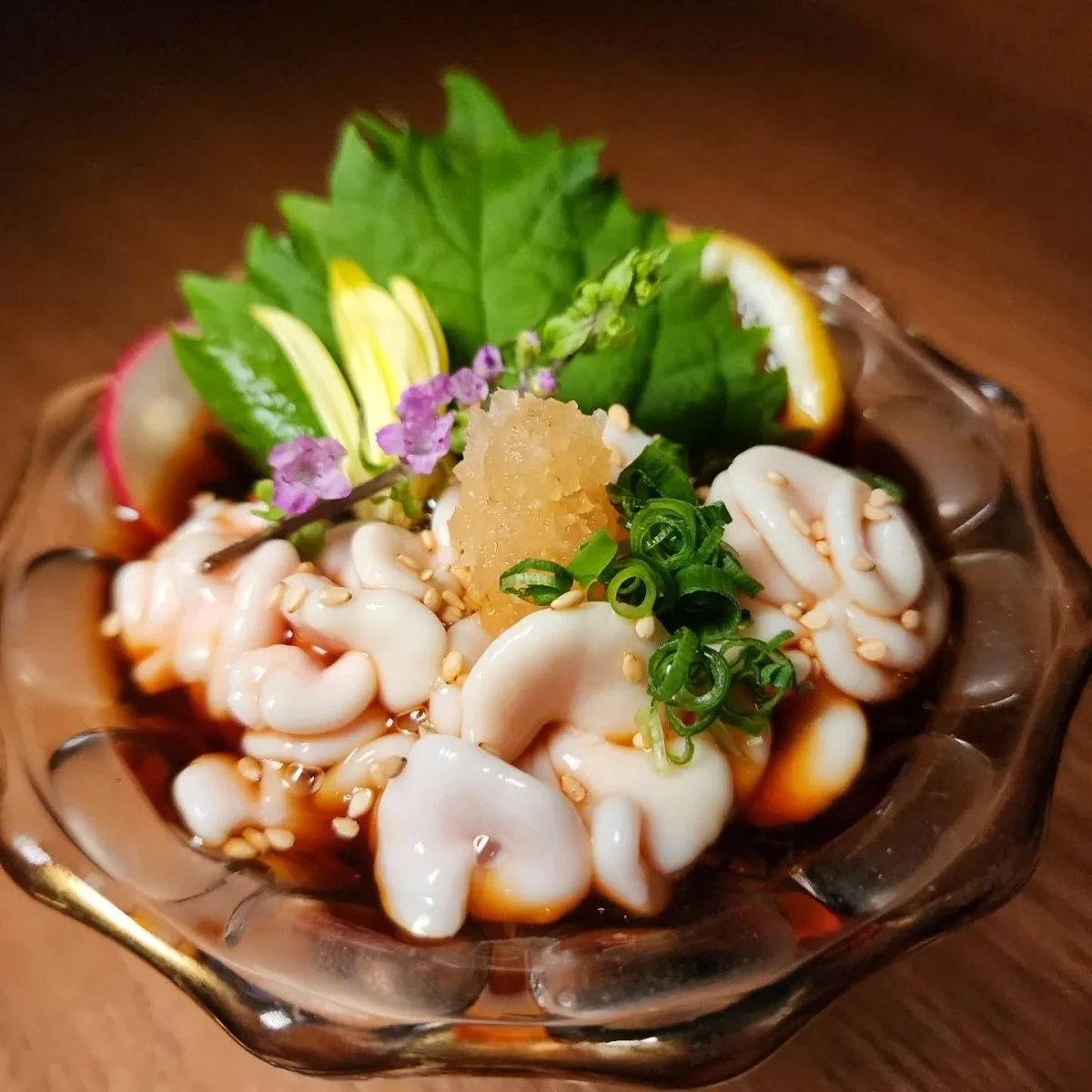
At first glance, it doesn't look particularly threatening. A few soft, pale, creamy-looking pieces are arranged neatly on a small plate, perhaps with a little grated daikon, spring onion and ponzu sauce. It could easily pass for an elegant seafood appetiser.
Then comes the explanation.
Shirako is fish milt — the sperm-producing reproductive sacs of male fish. Yes, you read that correctly. And yes, it is considered a delicacy in Japan.
Suddenly, that innocent-looking plate becomes a much more interesting conversation starter.
But before you decide that Japanese chefs have officially run out of things to put on a menu, there's something worth knowing: shirako has a long-standing place in Japanese seasonal cuisine. And its appeal has much more to do with flavour, texture and freshness than with its unusual identity.
The Moment You Discover What You're Eating
Imagine sitting at a small Japanese restaurant during winter.
The room is warm, the menu is full of seasonal seafood, and the chef recommends a dish called shirako ponzu. You have no idea what it is, but the name sounds rather elegant. You picture something involving fish, citrus and perhaps a little seaweed.
Then your dining companion quietly explains the main ingredient.
There is a pause.
You look at the plate again.
The food hasn't changed, but your relationship with it certainly has.
This is probably why shirako creates such memorable reactions among first-time visitors. The appearance is relatively delicate, the Japanese name sounds harmless, and the explanation is considerably more surprising.
The word shirako (白子) literally translates as "white child". It refers to the milt of male fish, particularly cod, although other fish such as anglerfish, salmon and pufferfish can also be used.
One important distinction: shirako is not fish roe. Roe consists of eggs from female fish, while shirako is the reproductive tissue of male fish. They are two very different ingredients, even though both are prized in seafood cuisine.
In other words, if you thought you were ordering fish eggs, you may want to read the menu a little more carefully next time.
So, What Does It Actually Taste Like?
This is where things get interesting.
You might expect shirako to have a strong, unpleasant or intensely fishy flavour. Surprisingly, good-quality shirako is usually quite mild.
Its most distinctive feature is the texture.
Imagine something between a soft custard, cream cheese and a very delicate seafood mousse. It is smooth, rich and almost melts in your mouth. The flavour is subtly sweet, with a gentle ocean-like taste rather than the powerful fishiness some people expect.
Of course, texture is personal. Some people find it luxurious and comforting. Others need a little time to get used to it.
And that's perfectly understandable.
After all, there are not many foods that require you to overcome both a psychological obstacle and a slightly unusual mouthfeel before you can decide whether you like them.
If you are the kind of person who carefully examines every unfamiliar dish before taking a bite, shirako may provide a particularly interesting afternoon.
The good news is that its flavour is generally much less dramatic than its description.
How Does Japan Turn Fish Milt Into a Delicacy?
The secret is careful preparation.
Shirako is a seasonal ingredient, most commonly enjoyed during the colder months, particularly from late autumn through winter. Cod shirako is especially popular, and its quality is closely associated with the winter seafood season.
Because its texture is delicate, the ingredient needs to be handled gently. A chef who cooks it too aggressively can ruin the very quality that makes it special.
Japanese restaurants prepare shirako in several ways, each offering a different experience.
1. Shirako Ponzu: The Classic Introduction
<PRIVATE_PERSON>One of the most recognisable preparations is shirako ponzu.
The shirako is served raw or briefly blanched, depending on the restaurant's preparation, and dressed with ponzu — a Japanese citrus-soy sauce. It may come with grated daikon, spring onions or other small garnishes.
The citrus acidity helps balance the richness, while the delicate seafood flavour remains the star of the dish.
It is probably the version that looks the most innocent.
Which, considering what it is, is quite an impressive achievement.
2. Yaki Shirako: A Little Time on the Grill
For people who prefer cooked seafood, grilled shirako may be a more approachable choice.
The chef grills it gently until the outside becomes slightly firmer, sometimes with a lightly golden surface. Inside, it remains soft and creamy.
The heat brings out a deeper, richer flavour, while a little salt or citrus can keep the dish from feeling too heavy.
Think of it as seafood comfort food — although perhaps not the kind you would casually mention at a family dinner without first explaining the ingredients.
3. Shirako Tempura: Crispy Outside, Creamy Inside
Now this is an interesting transformation.
Shirako is coated in a light tempura batter and fried until crisp. The outside becomes crunchy, while the inside stays soft and creamy.
The contrast between textures makes it appealing even to diners who might feel uncertain about trying the ingredient in its simpler forms.
A little salt or dipping sauce is often enough.
It is also a useful reminder that almost anything becomes more approachable when wrapped in a beautifully crisp tempura coating.
4. Shirako Chawanmushi: The Quiet Luxury
Chawanmushi is a savoury Japanese steamed egg custard, usually served in a small cup.
It is silky, delicate and often contains ingredients such as mushrooms, seafood or chicken. Shirako can be added to create an even richer version.
Here, the ingredient blends naturally into the soft custard. Rather than appearing as the centre of attention, it becomes part of a gentle combination of flavours.
For someone who is curious but not quite ready for a whole plate of shirako, this preparation may feel less intimidating.
5. Shirako in Hot Pot: Winter Comfort in a Bowl
During cold weather, shirako may also appear in Japanese hot pot dishes.
It is gently cooked in a broth with vegetables, tofu and other seafood ingredients. The warm liquid makes the texture even softer, while the other ingredients add depth to the flavour.
There is something wonderfully Japanese about turning an unusual ingredient into a comforting winter meal.
While some travellers are busy hunting for the country's famous ramen, others are discovering that winter seafood has a few surprises of its own.
Why Is Shirako So Popular in Japan?
The answer is not simply that Japanese people enjoy unusual food.
Japanese cuisine places considerable importance on seasonality. Many ingredients are celebrated during particular times of the year, when they are considered to be at their best.
Shirako fits naturally into this tradition.
Cod milt is especially associated with winter, when it becomes a seasonal feature at sushi restaurants, izakaya and traditional Japanese dining establishments. Rather than being available in exactly the same form all year, it appears as part of the changing winter menu.
For Japanese diners familiar with seasonal seafood, shirako is not necessarily a shocking novelty. It can be a prized winter ingredient, appreciated for its delicate texture and rich flavour.
There is also a broader culinary philosophy at work: different parts of an animal can be valued for their individual qualities rather than automatically discarded.
This approach is not unique to Japan. Many food cultures have long traditions of using ingredients that might seem unfamiliar to outsiders, from liver and sweetbreads to fish heads and various seafood organs.
What one culture considers adventurous, another may consider a perfectly ordinary Tuesday dinner.
Is It Something Every Visitor Should Try?
Not necessarily.
Food is personal, and nobody needs to prove their adventurous spirit by eating something they genuinely don't want to eat.
But if you enjoy exploring local cuisine, shirako can offer an interesting glimpse into Japanese food culture.
If you are curious, a cooked preparation such as grilled shirako or tempura may be a comfortable starting point. If you enjoy delicate seafood and unusual textures, shirako ponzu might be worth exploring.
It is also sensible to ask which fish the shirako comes from and how it is prepared. If the dish uses pufferfish, choose a properly licensed specialist restaurant. Pufferfish requires strict professional handling because some parts of the fish can contain dangerous toxins.
And remember: unusual seafood should always come from reputable restaurants with proper food-handling practices.
The aim is to discover something new, not to turn your holiday into an unexpected medical adventure.
A Small Dish With a Big Story
Perhaps the most interesting thing about shirako is how differently it can be perceived depending on what you know.
Before learning its identity, you might see a delicate seafood dish. After hearing the explanation, you might need a few seconds to reconsider your dinner plans.
But once you understand its place in Japanese cuisine, the picture becomes more interesting.
Shirako is a seasonal delicacy shaped by the Japanese appreciation of fresh ingredients, subtle flavours and careful preparation. Its creamy texture is the reason many people enjoy it, while its unusual origin is what makes it such a memorable discovery for visitors.
Would I recommend trying it? If you're curious about food and comfortable exploring unfamiliar ingredients, why not?
Just perhaps don't ask your waiter for a detailed biological explanation while you're halfway through your first bite.
Some culinary discoveries are best enjoyed one small spoonful at a time.