
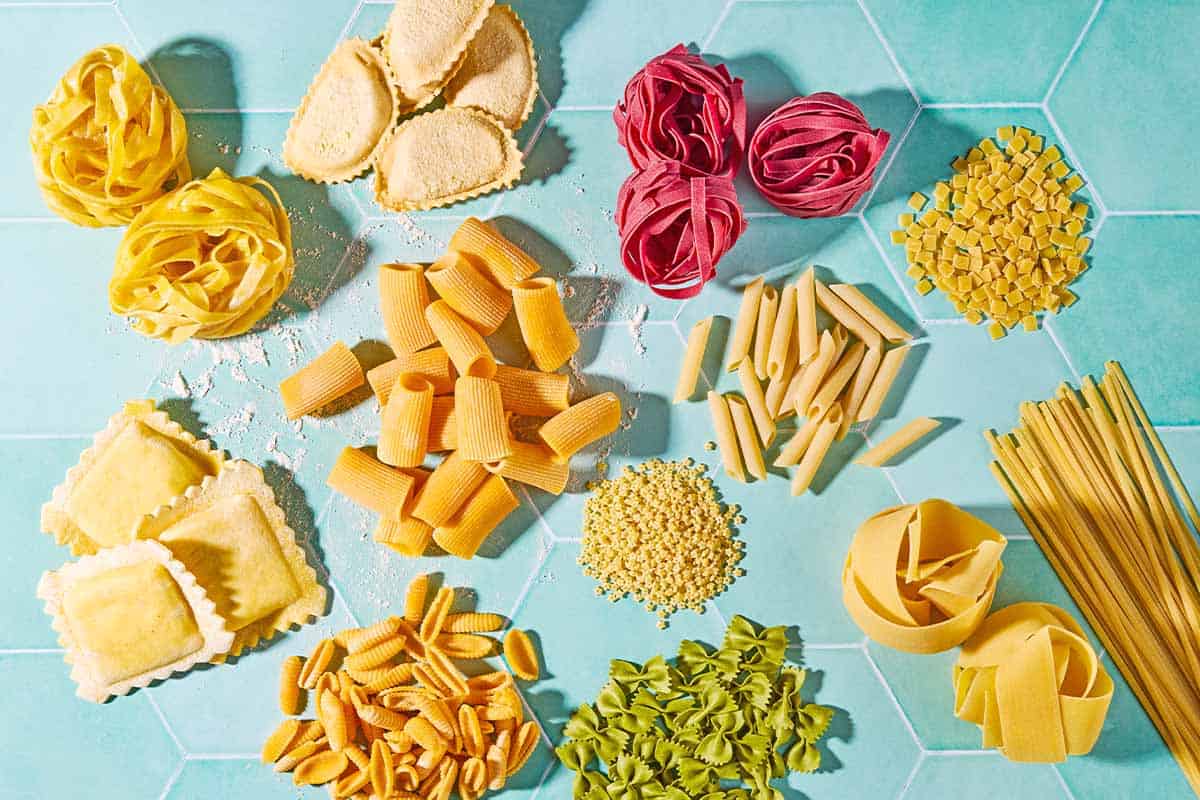






I arrived in Italy believing I understood pasta.
Spaghetti? Easy. Penne? Familiar. Macaroni? A childhood friend. Lasagna? Basically a delicious edible blanket.
I was confident. Perhaps too confident.
Then I looked at an Italian menu and discovered names such as orecchiette, paccheri, bucatini, and trofie. Suddenly, ordering lunch felt less like choosing food and more like sitting an exam I had forgotten to study for.
I pointed at something that looked vaguely familiar and hoped for the best.
But the more I explored Italian pasta, the more I realised something surprising: the shape is not just decoration. It can change how a dish tastes, feels, and carries its sauce.
Italy has hundreds of pasta shapes, with different regions developing their own varieties and traditions. Apparently, the country looked at a handful of ingredients and thought, “Lovely. Now let's make them into 300 different shapes.”
And honestly, I respect the ambition.
1. Spaghetti: The Celebrity Everyone Recognises
Spaghetti is the international superstar of the pasta world. Long, thin, and easy to recognise, it has appeared in countless restaurant menus, home kitchens, and films featuring people dramatically twirling noodles around their forks.
I thought I knew everything about it.
Then I discovered that Italians take the relationship between spaghetti and its sauce rather seriously.
Long strands work beautifully with sauces that can coat them evenly, such as tomato sauce, olive oil-based dressings, and certain seafood preparations. They can also be used in classic Roman dishes such as carbonara.
The trick is that the sauce should cling to the pasta rather than abandon it halfway between the plate and your mouth.
This sounds obvious until you remember how often a forkful of spaghetti can become a slippery, tomato-covered negotiation.
There is also the carbonara question. Traditional Roman carbonara uses ingredients including eggs, pecorino Romano, guanciale, and black pepper. Cream is not part of the classic recipe, although versions vary around the world.
I imagine an Italian grandmother watching some international recipes online and quietly reconsidering the future of humanity.
Still, spaghetti taught me my first lesson: familiar does not necessarily mean simple. Even the pasta I thought I understood has rules I had never considered.
And that was before I met the tubes.
2. Penne and Rigatoni: Tiny Tunnels for Sauce
Penne looks like little tubes cut at an angle. Rigatoni is larger, usually with ridges running along its surface.
Both are excellent at collecting sauce, although their sizes and textures make them suitable for different dishes.
Think about a chunky tomato sauce with pieces of sausage, vegetables, or meat. With a tube-shaped pasta, some of that deliciousness can settle inside the hollow centre. Ridged surfaces also help sauces cling to the outside.
In other words, these shapes are not simply sitting there looking cute. They are working.
Meanwhile, spaghetti is trying to keep everything together using nothing but a long strand and a prayer.
Rigatoni is particularly satisfying with hearty sauces because its substantial shape can stand up to them. Penne works well with tomato-based sauces, vegetables, and many baked pasta dishes.
I began to understand that choosing pasta is a little like choosing the right container for your food. You would not pour soup into a sieve and complain that lunch had become difficult.
Well, you could. But perhaps that is a conversation for another day.
3. Fusilli: The Pasta That Came Prepared
 Fusilli looks like a little spiral, as though someone took a straight piece of pasta and gave it a tiny twist before sending it into the world.
Its curves and grooves help catch sauce, herbs, and small ingredients. That makes it useful for dishes with pesto, vegetables, and chunky dressings.
It is also excellent in pasta salads, where its shape gives every forkful a chance to collect a little bit of everything.
Fusilli seems to understand teamwork.
Every spiral has a purpose. Every curve contributes something. Nothing is wasted.
I, on the other hand, once spent several minutes trying to eat a complicated salad while simultaneously reading a message on my phone. The salad won.
Perhaps I should have been eating fusilli. At least the pasta would have helped organise the situation.
The lesson is simple: when a sauce contains little pieces of vegetables or herbs, a twisted shape can help bring them along for the ride.
It is essentially a tiny edible coat rack.
A delicious one.
4. Orecchiette: Little Ears With Excellent Hearing for Sauce
 Orecchiette comes from Puglia in southern Italy. Its name means “little ears,” and the small, concave pieces look rather like miniature bowls.
This is one of my favourite pasta shapes because it sounds adorable while being surprisingly practical.
The hollow centre helps hold sauce and small ingredients. Orecchiette is famously associated with cime di rapa, or turnip tops, in a traditional Puglian dish.
The greens have a slightly bitter flavour, while olive oil, garlic, and other ingredients help create a balanced dish. The little pasta pieces collect bits of the sauce and vegetables, so you get a combination of flavours in each bite.
Imagine being a piece of pasta and discovering that your life's purpose is to hold tiny vegetables.
Somewhere, an orecchietta is living its dream.
What makes regional pasta especially interesting is that it reflects more than appearance. Local ingredients, cooking traditions, and the techniques used to make pasta all influence which shapes become popular.
Orecchiette is not simply a cute alternative to penne. It is part of Puglia's food identity.
And now I have another reason to visit southern Italy.
My suitcase is going to need more room for all these culinary discoveries.
5. Tagliatelle: When Pasta Decides to Wear a Wide-Brimmed Hat
 Tagliatelle consists of long, flat ribbons, wider than spaghetti and wonderfully suited to rich sauces.
One of its best-known partners is ragù alla Bolognese, the slow-cooked meat sauce associated with Bologna.
The broad ribbons provide plenty of surface area for the sauce to cling to. Their texture and width also make them satisfying alongside a rich, substantial dressing.
This pairing made immediate sense to me.
A delicate strand of spaghetti might struggle to carry a heavy sauce loaded with meat. Tagliatelle, however, arrives looking ready for the responsibility.
It is the pasta equivalent of someone showing up to work with a sensible bag, comfortable shoes, and a fully charged phone.
You know they have their life together.
Tagliatelle also reminded me that Italian food traditions can be highly regional. A dish that seems universally Italian to visitors may have a particularly strong connection to a specific city or area.
So when you visit Bologna, ordering tagliatelle with ragù is not just another pasta dinner. It is a chance to taste a combination deeply associated with the local culinary tradition.
Just be prepared for the possibility that your usual spaghetti Bolognese will never look quite the same again.
6. Bucatini: Spaghetti With a Secret
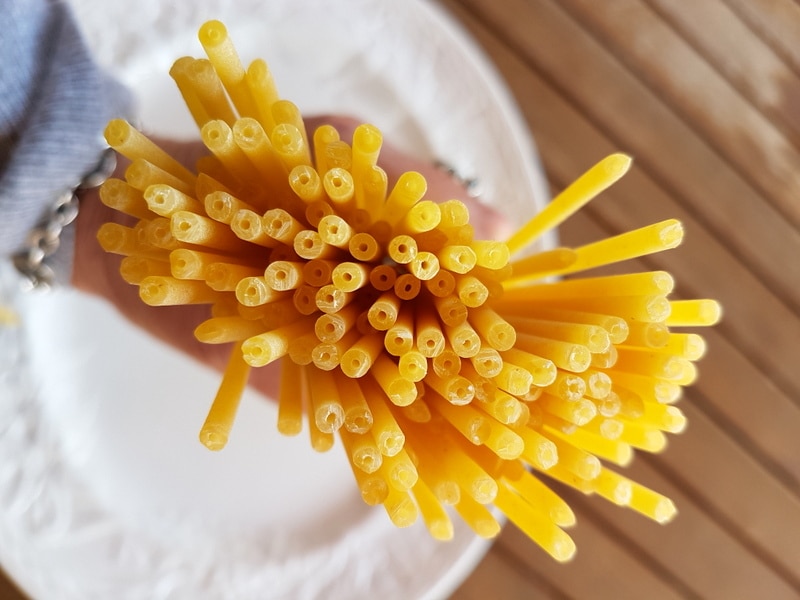 At first glance, bucatini looks like thicker spaghetti.
But there is a twist: each strand has a hole running through its centre.
Yes, the pasta has a tunnel.
Because apparently, regular spaghetti was not complicated enough.
That hollow centre and the pasta's substantial texture make bucatini a natural partner for certain rich, flavourful sauces. In Rome, it is particularly associated with amatriciana, a dish commonly made with guanciale, tomato, pecorino Romano, and other traditional ingredients.
The sauce coats the outside, while the hollow centre adds another dimension to the eating experience.
Bucatini also introduces a practical problem: slurping a long tube of pasta can be messier than expected.
You may begin dinner looking like a sophisticated traveller discovering Roman cuisine. Five minutes later, you are trying to work out whether the sauce on your shirt is an authentic culinary souvenir.
Still, I admire the engineering.
Somebody looked at a strand of spaghetti and thought, “What if we put a hole in it?”
And that decision became part of a famous regional dish.
Human creativity is extraordinary.
7. Farfalle: Pasta With a Social Life

Farfalle means “butterflies” in Italian, and the bow-tie shape is one of the easiest to recognise.
It looks cheerful, slightly formal, and ready for a small pasta-themed party.
Its shape makes it a versatile choice for lighter sauces, vegetables, and pasta salads. The centre is thicker than the delicate edges, which creates a noticeable contrast in texture.
That contrast is part of the fun.
But farfalle also demonstrates why pasta pairings are not a rigid mathematical formula. Different recipes, ingredients, and cooking methods can work with the same shape. A good match depends on the sauce's consistency, the pasta's texture, and how the dish comes together.
There is no pasta police officer standing outside the kitchen with a clipboard.
At least, I hope not.
The point is not to memorise a list of rules and panic every time you see the wrong shape beside a sauce. It is to understand why certain combinations work well, then enjoy experimenting.
Farfalle looks as though it has arrived dressed for a party.
Let it have a little freedom.
8. So, Is There a Correct Way to Eat Pasta?
After learning about all these shapes, I naturally began wondering whether I had been eating pasta incorrectly my entire life.
Should I be matching every sauce with a specific shape? Should I memorise regional traditions before ordering? Would an Italian chef appear from behind a curtain if I asked for the wrong pasta?
The answer is more relaxed than my imagination suggested.
There are traditional pairings worth knowing, and they often make sense once you understand the relationship between shape, texture, and sauce. But pasta cooking is also influenced by local habits, family recipes, available ingredients, and personal preferences.
A useful starting point is to remember three broad ideas:
- Long pasta often works well with smooth sauces that coat the strands.
- Ridged, twisted, and hollow pasta can help hold thicker sauces and small ingredients.
- Broad ribbons and substantial shapes can stand up to richer, more robust sauces.
These are helpful guidelines, not laws carved into a marble wall.
And if you order a pasta dish in Italy that surprises you, try it before deciding it is wrong. You might discover a combination you would never have chosen yourself.
That is part of the pleasure of travelling: realising that your own habits are not the only way to do things.
Even when the subject is noodles.
My Final Conclusion: I Need Another Plate
I began this pasta adventure believing that the main decision was whether I wanted spaghetti or penne.
Now I know that the shape affects texture, the sauce influences the experience, and regional traditions add another layer to the story.
I also know that Italian pasta has a talent for turning a simple meal into an unexpectedly educational experience.
The best part is that you do not need to become a pasta expert to enjoy it. You can learn a few useful combinations, ask questions, try unfamiliar shapes, and follow your appetite.
Just do not expect to master everything in one trip.
Italy has hundreds of pasta varieties. I have only covered a handful, and I am already questioning several of my previous life choices.
My next mission is to explore more regional pasta dishes.
My budget has not yet approved the proposal.
But my stomach has.