
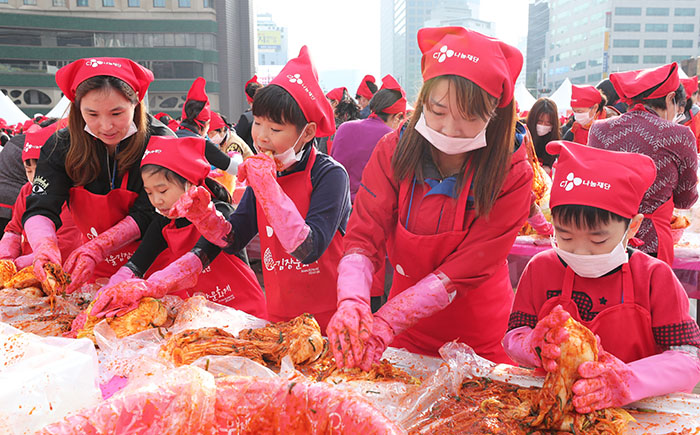






I thought I was going to help make a little kimchi. Then I saw the cabbage mountain.
Imagine being invited to a Korean family gathering in late autumn. You arrive expecting a cosy afternoon, perhaps a little cooking, some friendly conversation and a chance to taste homemade kimchi.
Then someone opens the door.
There are cabbages everywhere.
Not five. Not ten. Enough cabbage to make you wonder whether the family is preparing for winter or opening a small vegetable supermarket. Plastic tubs cover the floor, enormous bowls are waiting on the tables, and someone is already wearing rubber gloves that look suspiciously like they belong in a chemistry laboratory.
Welcome to kimjang.
In Korea, kimjang is the traditional annual event when families, friends and neighbours gather to prepare large quantities of kimchi for the colder months. But calling it a cooking session would be like calling a wedding reception a quick snack. Technically, food is involved, but that description misses the entire point.
I came expecting to learn a recipe. I was about to discover that kimchi has a family tree, a social life and, apparently, a very powerful ability to start arguments.
The Cabbage Situation Is Getting Serious
The first thing you notice is the sheer amount of preparation.
Napa cabbages have already been cut and salted, sometimes hours before the main gathering begins. Radishes are waiting to be shredded, spring onions are being chopped, and bowls of garlic, ginger, chilli powder and fermented seafood are lined up like ingredients for a very spicy science experiment.
Everyone seems to have a job.
One person washes the cabbage. Another prepares the seasoning. Someone checks whether the vegetables have drained properly. Someone else is giving instructions, although nobody seems entirely sure who appointed them head of the operation.
And then there is the person who keeps saying, "A little more garlic."
In a Korean kitchen, apparently, there is no such thing as too much garlic.
The seasoning mixture is a deep, fiery red. It smells intensely savoury, garlicky and slightly funky, thanks to ingredients such as jeotgal, or fermented seafood. If you're new to Korean cooking, the smell might surprise you. If you're already a kimchi fan, you'll probably want to investigate the bowl immediately.
The cabbage leaves are then coated with the mixture, layer by layer. It looks simple when someone experienced does it. Try it yourself, however, and you'll quickly discover that getting seasoning into every fold without making a mess is a surprisingly complicated business.
My imaginary first attempt would probably involve more red paste on my gloves than on the cabbage.
Everyone Has a Recipe. Everyone Thinks Theirs Is Right.
Here comes the interesting part.
You might assume that a traditional family recipe is written down somewhere, perhaps in an old notebook with carefully measured ingredients.
Not necessarily.
Much of the knowledge behind kimjang is passed from one generation to another through observation, practice and conversation. A grandmother might show a younger family member how much seasoning to use. An aunt might insist that the radish needs to be cut differently. A neighbour might recommend adding something extra to improve the flavour.
And nobody needs a cooking app to tell them what to do.
The instructions sound wonderfully vague to an outsider:
"Add a little more."
"Not that much."
"That's enough."
"Actually, add a little more."
How much is a little? Nobody knows. It is apparently a family secret.
This is one reason kimjang is so fascinating. Every household can have its own preferred balance of ingredients, and recipes may vary between regions and families. Some versions are saltier, some are milder, and some use different combinations of seafood or vegetables.
You aren't simply learning how to make kimchi. You're getting a glimpse into a family's food history.
And if you happen to disagree with Grandma about the seasoning, I would recommend choosing your next words very carefully.
The Best Part? Nobody Is Working Alone.
 After a while, the kitchen starts to feel less like a cooking space and more like a busy little festival.
People chat while washing vegetables. Someone tells a story from last year's kimjang. Children wander around, curious about the red mixture. Older relatives share tips with younger ones, while neighbours exchange opinions about which ingredients make the best kimchi.
There is work to do, certainly. Preparing enough kimchi for the winter takes time and plenty of hands. But the social side is just as important as the food.
This is what makes kimjang different from simply buying a few jars of kimchi at the supermarket.
You could buy kimchi in five minutes. You could even order it online while sitting on your sofa. But you wouldn't get the same afternoon of family gossip, friendly disagreements and people laughing over a mountain of cabbage.
Think of it as a group project, except the final grade is something delicious.
And unlike many school or office group projects, everyone actually wants to eat the result.
The Moment Everyone Has Been Waiting For: Bossam
After hours of washing, mixing, spreading and packing, someone finally brings out the food.
And suddenly, everyone looks much happier.
One of the classic treats enjoyed during kimjang is bossam: slices of boiled pork served with fresh kimchi and other accompaniments. You take a piece of pork, add a little freshly seasoned cabbage or kimchi, perhaps some garlic or sauce, wrap everything together and eat it in one glorious bite.
This is the moment when all that hard work starts to make perfect sense.
Fresh kimchi has a different personality from the fully fermented kind. The cabbage is crisp, the seasoning is punchy, and the flavours haven't yet developed the deeper sourness that comes with fermentation.
Paired with tender pork, it is a wonderfully satisfying combination.
I imagine that after spending the afternoon surrounded by chilli, garlic and cabbage, even someone who claimed not to be hungry would suddenly become very interested in lunch.
In fact, the biggest danger of kimjang might not be the workload. It might be eating so much during the celebration that you forget there are still several containers of kimchi waiting to be packed.
Kimchi Is Also a Neighbourhood Delivery Service
Once the kimchi is prepared, the story doesn't necessarily end at the family home.
Traditionally, families share portions with relatives and neighbours. Someone might receive a container from one household and return the favour with another homemade dish or a different variety of kimchi.
This exchange is more than a generous food giveaway. It is part of the social meaning of kimjang.
Think about it: a family has spent hours preparing food for the winter, but some of that effort is intended for other people. The result travels beyond the kitchen, carrying recipes, goodwill and relationships along with it.
In a way, kimjang is an old-fashioned neighbourhood messaging system.
Instead of sending, "Hope you're doing well!" in a group chat, you turn up with a container of homemade kimchi.
And honestly, that message is considerably more delicious.
Does Everyone Still Make Kimchi This Way?
Modern Korean life has changed. Many people live in apartments, work long hours and have smaller households. Supermarkets and online shops make it easy to buy ready-made kimchi, so not every family prepares huge quantities at home anymore.
Still, kimjang hasn't disappeared.
Some families continue to make kimchi together, while community groups and local organisations hold events where people prepare large batches to share with older residents or families in need.
There are also people who join kimjang activities simply to experience the tradition, learn from others or reconnect with Korean food culture.
And perhaps that's the most interesting thing about it: the tradition can adapt without losing its central idea.
You don't necessarily need a huge countryside kitchen, a hundred cabbages or three generations of relatives to understand the spirit of kimjang. What matters is the act of doing something together and sharing what you've made.
So, Why Do Korean Families Take Kimchi So Seriously?
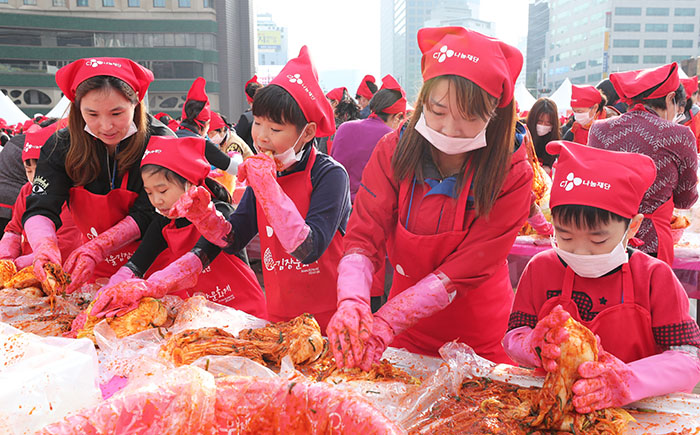
After imagining an afternoon like this, I think the answer becomes easier to understand.
Kimchi is not just another side dish sitting quietly beside a bowl of rice. It represents countless family meals, individual preferences, old recipes and memories of people working together.
Kimjang turns all of that into one annual event.
It is messy. It takes time. Your hands may end up covered in red seasoning, and someone will probably tell you that you're doing it wrong.
But there is something rather lovely about a tradition in which people gather not because they have to attend a formal celebration, but because they have vegetables to prepare, food to preserve and people to share it with.
UNESCO recognised kimjang as an Intangible Cultural Heritage of Humanity in 2013, highlighting its role in strengthening family cooperation and community bonds.
Yet you don't need a UNESCO certificate to understand its appeal.
Just picture a cold autumn day, a crowded kitchen, a mountain of cabbage, a grandmother guarding her secret recipe and a table full of people waiting to eat.
That's kimjang.
And if someone invites you to join, remember three things: wear clothes you don't mind getting messy, listen carefully when Grandma gives instructions, and never underestimate the importance of "just one more spoonful" of seasoning.
Especially when Grandma is holding the spoon.