
Imagine walking through the streets of Oaxaca, Mexico, on a warm afternoon. The air is filled with the smell of roasted cacao, cinnamon and something sweet drifting out of a small chocolate shop.
You step inside, expecting to see rows of beautifully wrapped chocolate bars.
Instead, you find sacks of cacao beans, enormous grinding stones, bowls of spices and someone working a mixture that looks like thick, dark mud.
Welcome to traditional Mexican chocolate-making.
There are no fancy chocolate fountains here. No conveyor belts carrying perfectly identical bars. Just cacao, simple ingredients, traditional tools and people who know exactly what they're doing.
And if you think making chocolate is simply a matter of melting some cocoa and adding sugar, you're about to discover how little you know about your favourite snack.
Before Chocolate Became a Sweet Treat, It Had a Different Life
Most people imagine chocolate as something sweet, creamy and wrapped in colourful packaging. Perhaps it comes with caramel, hazelnuts or a suspiciously generous amount of milk.
But chocolate had a very different beginning in Mesoamerica.
Long before European chocolate factories existed, cacao was already an important part of life among Indigenous communities in what is now Mexico and neighbouring regions. Historical evidence links cacao consumption to ancient Mesoamerican cultures, where it was prepared as a drink and associated with social, ceremonial and sometimes elite settings.
It wasn't necessarily sweet.
Cacao could be mixed with water, spices, chilli or other ingredients to create drinks with strong, complex flavours. Some preparations were bitter, earthy and quite different from the chocolate milk many people drink today.
Cacao beans were also valuable. Historical accounts describe their use as a form of exchange in parts of Mesoamerica.
So, the next time someone tells you that chocolate is just a guilty pleasure, you can remind them that its history is considerably more impressive than its reputation as a midnight snack.
In Mexico, cacao is not simply an ingredient. It is part of a much longer cultural story.
Step One: Meet the Cacao Bean
The journey begins with the cacao tree, which produces large, colourful pods growing directly from its trunk and branches.
Inside each pod are cacao beans surrounded by a sweet, white pulp. They don't look particularly exciting at first. In fact, if someone placed a pile of fresh cacao beans in front of you, you might struggle to guess that they would eventually become chocolate.
Before they can be used, the beans generally go through several important stages, including fermentation and drying.
Fermentation helps develop the flavours that later appear during roasting. Drying reduces moisture and prepares the beans for storage and further processing.
By the time they arrive at a chocolate workshop, they have already been through quite a journey.
And the real transformation is only beginning.
Step Two: Roasting – When the Workshop Starts Smelling Incredible
The cacao beans are roasted to develop their aroma and flavour.
This is one of the most enjoyable moments of the process, at least for someone standing nearby.
As the beans heat up, the room fills with a deep, warm smell that is difficult to describe. It is earthy, nutty and slightly bitter, with the kind of aroma that makes you suddenly remember you haven't eaten anything for several hours.
The beans must be roasted carefully. Too little roasting and their flavour may remain underdeveloped. Too much, and the delicate aromas can be lost.
Once roasted, the beans are cooled and their thin outer shells are removed. The pieces inside are called cacao nibs.
At this point, they look a little like small pieces of dark, crunchy nuts.
You could almost mistake them for a healthy snack.
Almost.
They are bitter, intense and have absolutely no interest in pretending to be a milk chocolate bar.
Step Three: The Stone That Does the Hard Work
Now comes the most fascinating part.
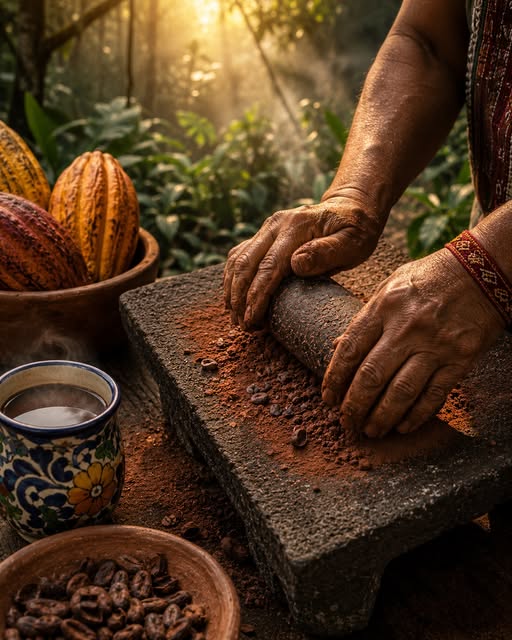
Traditional chocolate-making in parts of Mexico uses a stone grinding tool called a metate. It consists of a flat stone surface and a hand-held grinding stone, often called a mano.
The cacao nibs are placed on the stone and repeatedly ground until they begin to release their natural fat, turning into a thick, dark paste.
This is not a job for someone who considers opening a jar of peanut butter a workout.
The grinding requires repeated movements, pressure and considerable patience. The stone may also be warmed to help soften the cacao fat and make grinding easier.
Watching an experienced chocolate maker work is rather impressive. The movement looks effortless, almost rhythmic.
Now imagine giving the same task to a first-time visitor.
The first few minutes might be enthusiastic. Then the arms begin to complain. The grinding stone suddenly feels much heavier than it looked. And the chocolate paste seems to be taking its sweet time becoming smooth.
At this point, you may start wondering whether buying a chocolate bar from a shop was such a terrible idea after all.
But the process is about more than saving electricity. The metate represents a long tradition of food preparation in Mesoamerica, where stone grinding has been used for generations to process cacao, corn and other ingredients.
And the technique is still remembered and practised in some traditional kitchens and workshops.
Step Four: The Secret Ingredients
Once the cacao has become a paste, other ingredients may be added.
In many traditional Mexican chocolate preparations, sugar and cinnamon are common additions. Depending on the recipe, almonds, vanilla or other spices may also appear.
The exact combination varies between regions, producers and families.
This is where things become particularly interesting.
Unlike mass-produced chocolate, which is often designed to taste exactly the same every time, traditional chocolate can reflect the preferences of the people making it.
One family may prefer a stronger cacao flavour. Another may enjoy more cinnamon. Someone else might add almonds for extra richness.
There is no universal recipe that every Mexican chocolate maker follows.
And if you happen to suggest that Grandma should reduce the cinnamon because you prefer a different flavour, you might want to prepare a very good explanation.
Some recipes are more than recipes. They are family history.
Step Five: From Dark Paste to Chocolate Discs
After the ingredients have been combined, the chocolate mixture is shaped into small discs, rounds or tablets.
They are left to cool and solidify.
These pieces may not look like the glossy chocolate bars displayed in modern supermarkets. They can be slightly rough, rustic and uneven.
But that is part of their charm.
In Oaxaca, chocolate tablets are commonly used to prepare traditional hot chocolate. A piece is added to hot water or milk and stirred until it dissolves.
And here is another interesting detail: Mexican hot chocolate is often served with a layer of foam.
A wooden whisk called a molinillo is traditionally used to beat the drink. The tool is moved rapidly between the hands, creating bubbles and a frothy surface.
It looks simple when someone experienced does it.
Try it yourself and you may discover that making foam is considerably harder than drinking it.
Still, watching the chocolate swirl and develop a thick layer of bubbles is one of those little pleasures that makes the whole process worthwhile.
Chocolate in Oaxaca Is More Than a Sweet Drink
Oaxaca is one of Mexico's most fascinating food destinations, and cacao has an important place in its culinary traditions.
Walk through the markets and chocolate shops, and you'll find different kinds of chocolate products, from drinking chocolate tablets to cacao-based ingredients used in traditional cooking.
One particularly interesting example is tejate, a traditional drink associated with Zapotec communities in the Central Valleys of Oaxaca.
It combines ingredients including maize, cacao and other local components. Its distinctive feature is a thick layer of foam on top.
It may look like a rather unusual drink to someone encountering it for the first time, but it reflects a much broader tradition of cacao-based beverages in Indigenous Mexican food culture.
Cacao also appears in mole, one of Mexico's most famous and complex sauces. Chocolate is not simply added to make the sauce sweet. It contributes depth and helps balance a mixture of ingredients that may include chillies, spices, seeds and nuts.
In other words, chocolate doesn't always need to be dessert.
Sometimes it has a much more serious job to do.
Can You Actually Experience Traditional Chocolate-Making?
Absolutely.
Oaxaca has chocolate shops, markets and cultural workshops where visitors can explore traditional cacao preparation and learn about the ingredients and tools involved.
Rather than simply buying a finished product, a workshop can offer a closer look at the process: smelling roasted cacao, handling the beans, watching the grinding and discovering how different ingredients change the final flavour.
Some experiences also introduce visitors to the traditional preparation of Mexican drinking chocolate.
For a food-loving traveller, this is a particularly rewarding way to explore the city.
You aren't just tasting chocolate. You're learning how a familiar food can carry centuries of cultural knowledge.
And you may also develop a new appreciation for the people who make it.
After all, the next time you unwrap a chocolate bar, spare a thought for the person who once spent hours grinding cacao by hand.
Your only contribution was opening the wrapper.
The Best Part? You Finally Get to Taste It
After all that roasting, grinding, mixing and shaping, the most important question remains:
Does traditional Mexican chocolate taste different?
It certainly can.
Depending on the recipe, it may have a stronger cacao flavour, a noticeable hint of cinnamon and a texture that feels less uniform than modern commercial chocolate.
When prepared as a drink, it can be rich, aromatic and beautifully foamy. Some versions are sweet, while others allow the bitterness of cacao to remain more noticeable.
It may not taste like the chocolate you grew up eating.
And that's precisely the point.
Food traditions are not always designed to match modern expectations. Sometimes, they offer a different way of understanding an ingredient we thought we already knew.
A Little More Respect for Every Square of Chocolate
Perhaps the most surprising thing about traditional Mexican chocolate-making is how much work goes into something that many of us eat without thinking.
A cacao bean passes through the hands of farmers, processors and chocolate makers before becoming a drink or a tablet. Along the way, techniques, ingredients and knowledge are passed from one generation to another.
In places such as Oaxaca, chocolate remains connected to local identity, Indigenous food traditions and everyday social life.
So, if you ever visit a traditional chocolate workshop in Mexico, take your time.
Watch the grinding stone. Smell the roasted cacao. Ask about the spices. Try the hot chocolate with its beautiful layer of foam.
And if the chocolate maker offers you a chance to grind the beans yourself, accept the invitation.
Just remember to stretch your arms first.
You came looking for chocolate. You may leave with a new appreciation for history, craftsmanship and the muscles you never knew you needed.
And that, quite honestly, is a pretty sweet souvenir.