
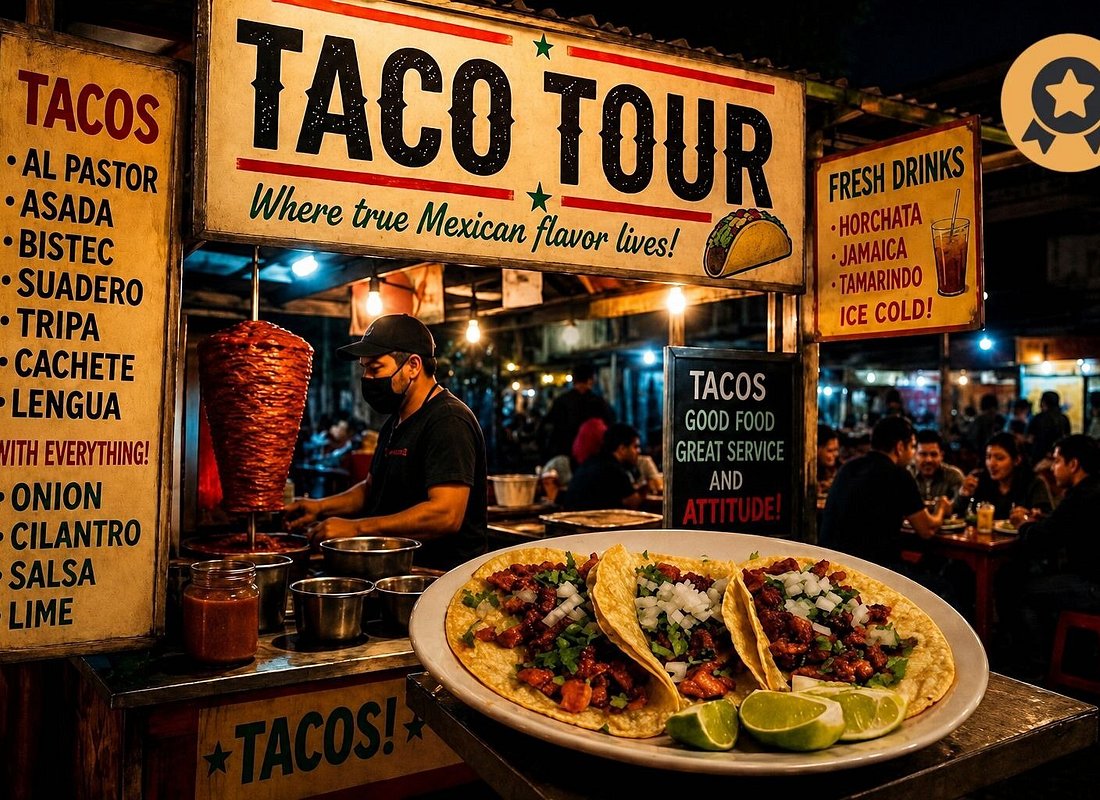
Some cities tempt you with fancy restaurants. Mexico City simply sets a giant spinning tower of pork on fire and lets the smell do the marketing.
By night, the streets fill with sizzling meat, warm tortillas, chopped cilantro, and the smoky perfume of salsa. Suddenly, your dinner plans seem terribly unambitious. A hotel restaurant? Room service? Please. Somewhere nearby, a taco stand is doing much more interesting things with a tortilla.
And my nose, apparently, has become the tour guide.
The Taco That Stole the Night

The star of this delicious chaos is often tacos al pastor: thin slices of marinated pork shaved from a rotating spit called a trompo, then tucked into small corn tortillas with onion, cilantro, salsa, and sometimes pineapple.
The meat is smoky, savory, slightly sweet, and wonderfully crisp around the edges. The pineapple adds a bright, juicy contrast. The salsa brings the kind of excitement that makes you reach for your drink while immediately planning another bite.
The strangest part? These tacos have an international backstory.
Al pastor developed partly from cooking techniques brought to Mexico by Lebanese immigrants, whose vertical-spit-roasted meat inspired local adaptations. Over time, Mexican cooks transformed the idea with pork, local marinades, corn tortillas, and their own unmistakable flavors. The result became one of Mexico City's signature street foods.
In other words, this taco is proof that immigration can change a country's food in spectacularly delicious ways.
Also, whoever decided to put pineapple near spicy pork deserves a very enthusiastic thank-you.
Dinner Is a Street-Side Affair
Forget the idea that a memorable meal needs white tablecloths and a waiter who describes the sauce for seven minutes.
In Mexico City, some of the most exciting food experiences happen beside the pavement. Taquerías—places specializing in tacos—serve workers finishing their day, friends meeting late, families grabbing a quick meal, and hungry night owls who have clearly made some excellent life choices.
One particularly famous destination is Lorenzo Boturini, a street known for its concentration of taco stands and late-night crowds. It has become a beloved stop for people chasing Mexico City's taco culture.
The atmosphere is wonderfully direct. You order, watch the taquero work, and receive your food without unnecessary ceremony. A few ingredients, a hot grill, years of practice—and suddenly you're reconsidering every mediocre meal you've ever paid too much for.
The taco is small, which is both a blessing and a trap.
One seems reasonable. Two feel responsible. Three suggest you're appreciating the local culture. By taco number six, you're conducting serious research.
At least, that's what you tell yourself.
Salsa: A Tiny Spoonful of Trouble
 Then comes the salsa.
Green or red? Mild or spicy? A little or a lot?
These questions sound simple until you discover that your idea of “medium heat” and the cook's idea of “medium heat” may have been raised in entirely different households.
Mexican salsas are not merely decorative sauces. They bring acidity, freshness, heat, and complexity, and different stands have their own combinations. A good salsa can turn an excellent taco into something unforgettable.
My advice? Start with a little. You can always add more.
There is no prize for proving your courage by sweating through your shirt while pretending everything is perfectly fine.
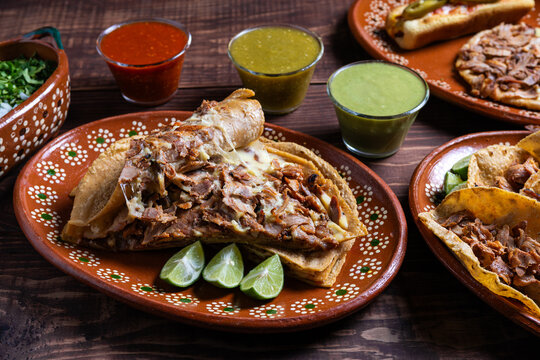
And remember: the lime wedge is there for a reason. Squeeze it over the meat, add a little onion and cilantro, and let the flavors do their thing.
Your taste buds will thank you. Your dignity may need a minute.
More Than Tacos
Of course, Mexico City's night-food scene doesn't end with al pastor.
You might encounter suadero, beef cooked until tender and flavorful; gringas, often made with al pastor and melted cheese in flour tortillas; or other regional and neighborhood specialties. The city's street-food traditions are remarkably varied, shaped by local ingredients, family recipes, and generations of cooks.
And then there are the unexpected discoveries—the stand you hadn't planned to visit, the dish you can't pronounce, or the smell that makes you stop mid-conversation.
That's the joy of eating while traveling. Sometimes the best meal isn't the one on your itinerary. It's the one that interrupts it.
How to Eat Like You Belong There
You don't need to be a taco expert to enjoy Mexico City after dark. A few simple habits help:
- Look for busy stalls. A steady stream of customers is a useful sign that food is being prepared and served regularly.
- Order a couple at a time. This lets you sample different fillings without committing your entire evening to one choice.
- Ask about the salsa. If you're unsure how spicy it is, ask before adding it.
- Bring some flexibility. Street-food stands vary in opening hours, and the best plan is often to follow local recommendations rather than expect every stall to be open.
- Keep small bills handy. They're useful for quick purchases at many casual food stalls.
Most importantly, leave room for one more taco. This is not the place to demonstrate your impressive ability to stick to a rigid dinner schedule.
The City That Feeds You Back
What makes Mexico City's street food special isn't only the flavor. It's the way food connects people to the city.
A taco carries traces of migration, local creativity, everyday routines, and the skill of the person preparing it. Eating at a street stand puts you close to that living culture in a way that a photograph of a famous landmark never quite can.
And after dark, the experience becomes even more memorable: the glow of the grill, the hiss of meat meeting heat, the scent of pineapple and spices, and the cheerful business of people gathering around something delicious.
I came looking for dinner and found a city that takes its tacos seriously—but doesn't need to dress them up to prove it.
By the end of the night, my sightseeing plans had been pushed aside by a much more urgent mission: finding out whether I had room for another taco.
I did, naturally.
Somewhere in Mexico City, a trompo was still spinning. It would have been rude not to investigate.