






I went to Marrakech hoping to discover its hidden corners. I found several. The problem was getting out of them.
Marrakech has a talent for making you forget where you are.
Inside the old medina, narrow alleyways twist between terracotta-colored walls, tiny shops spill into the streets, and the air carries a heady mix of spices, leather, fresh bread, and grilled food. One minute, you’re admiring a beautiful lantern. The next, you’re standing in front of the same lantern shop for the third time, wondering whether the shopkeeper has started recognizing you.
My phone insisted I was going in the right direction. The street signs offered little emotional support.
Eventually, I made a sensible decision: stop trying to conquer Marrakech with a map and find something to eat.
This, as it turned out, was the best decision I made all day.
The Medina: A Maze with Excellent Snacks
Marrakech’s historic medina is a world of winding lanes, lively souks, and workshops where artisans sell everything from leather goods to handmade pottery. It is beautiful, chaotic, and not especially interested in helping you maintain a strict schedule.
The spice stalls were particularly distracting.
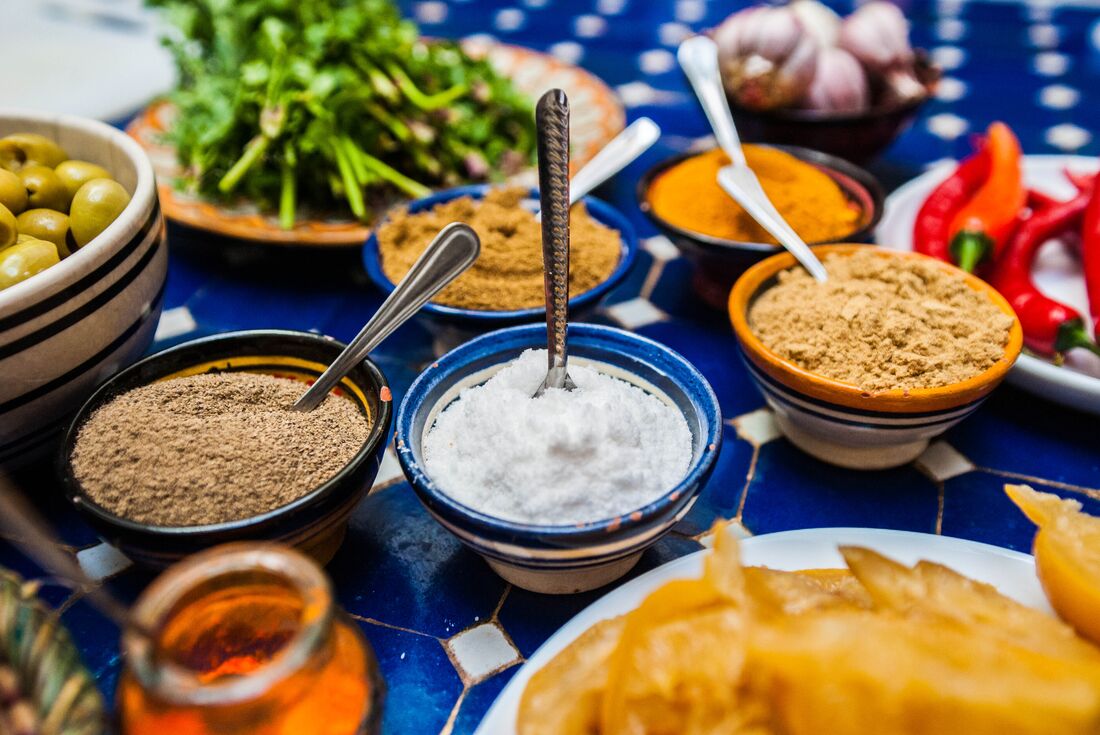
Pyramids of red paprika, golden turmeric, brown cumin, and colorful spice blends filled baskets and covered shop counters. Some aromas were warm and earthy; others were sharp, sweet, or wonderfully mysterious.
I found myself sniffing the air like a detective in a food-related crime drama.
What was that smell? Cinnamon? Cumin? Something grilled nearby? More importantly, where was it coming from?
Moroccan cooking is known for combining aromatic spices in ways that create depth rather than simply heat. Ginger, cumin, turmeric, cinnamon, and saffron all have their place, depending on the dish and the cook. A blend such as ras el hanout can contain a variety of spices, with recipes differing from one seller to another.
Naturally, I wanted to buy everything.
I imagined returning home with a beautiful collection of spices and becoming the sort of person who casually says things like, “This stew needs more cumin.”
Then I remembered that my suitcase had limited space and my cooking skills had limits of their own.
I settled for exploring a little longer — which was how I got lost again.
Following the Smell of Something Wonderful

By lunchtime, I had reached the point where getting lost was no longer an adventure. It was becoming a physical inconvenience.
Then I smelled food.
Not just any food. The kind of rich, savory aroma that makes you suddenly forget every meal you have eaten in the past twenty-four hours.
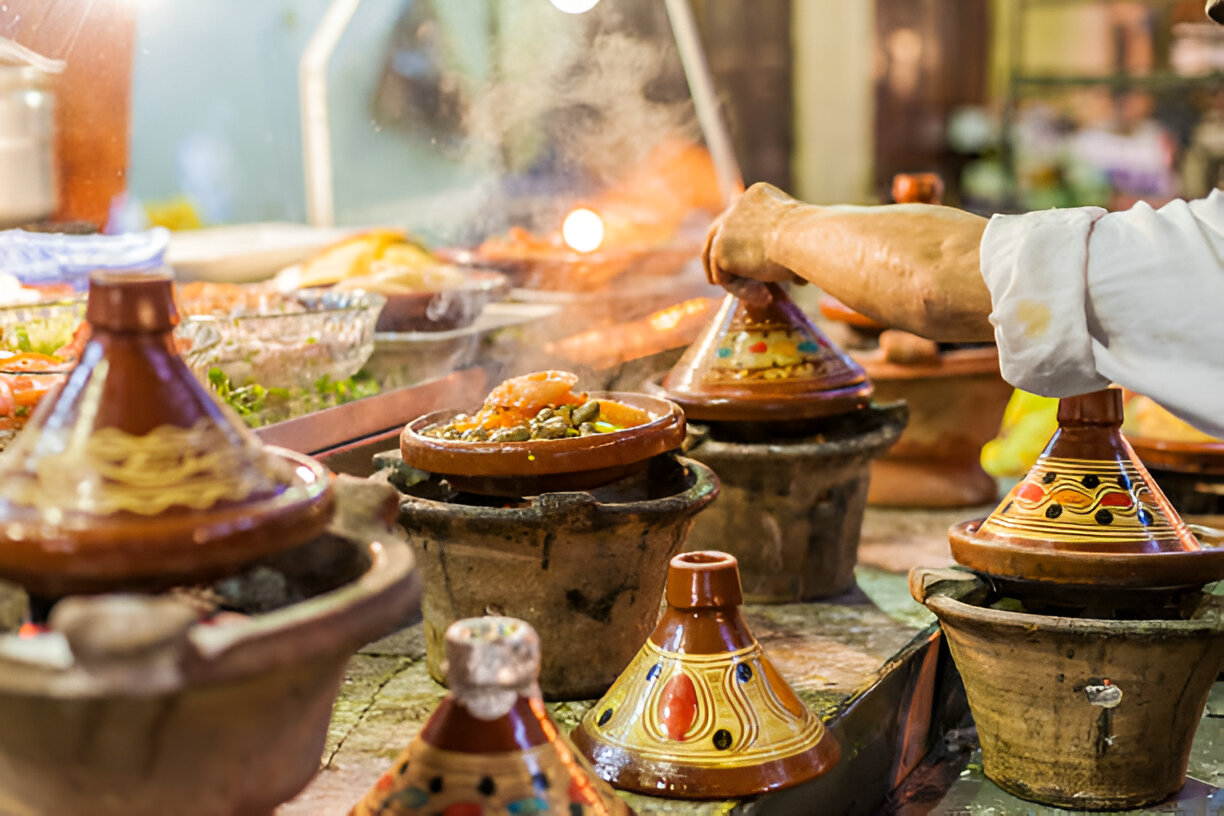
I followed it toward a small restaurant, where a row of traditional clay pots sat waiting to be served.
Tagine.

The word refers to both the distinctive cooking pot, with its broad base and cone-shaped lid, and the slow-cooked dish prepared inside it. The design helps steam circulate and return to the food, keeping the ingredients moist as they cook gently.
In other words, the pot has a better strategy for staying organized than I did.
Tagine comes in many versions. Some feature chicken with preserved lemon and olives; others use lamb, vegetables, dried fruit, or nuts. The combination of savory spices with sweet and tangy ingredients can create a wonderfully balanced flavor.
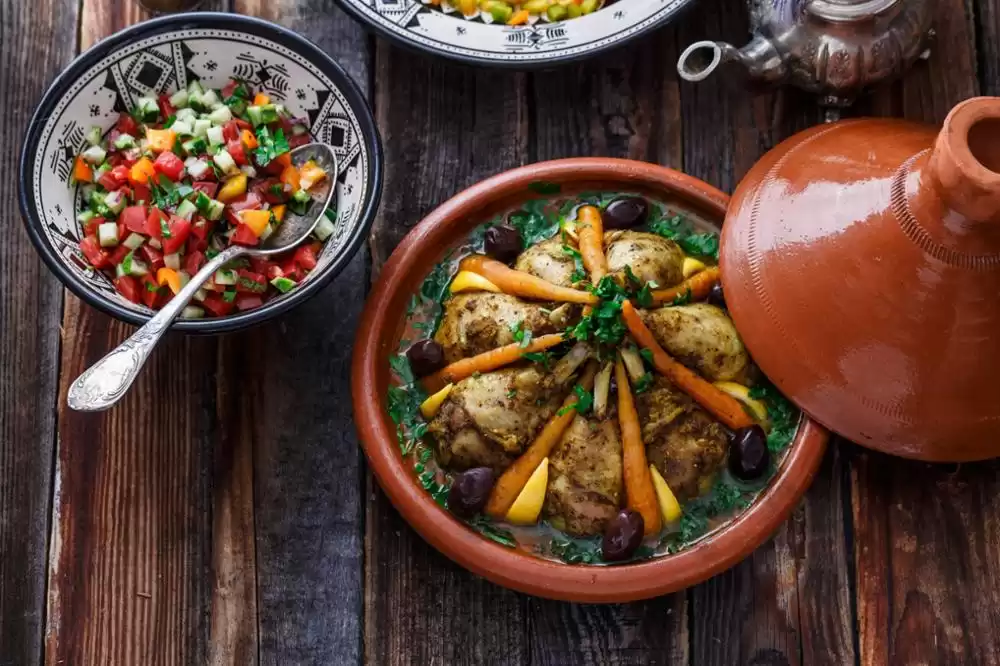
I ordered a chicken tagine with preserved lemon and olives.
Then I waited.
Slow cooking has one small disadvantage for impatient travelers: it requires patience. But after spending the morning wandering through Marrakech, I was ready to sit down and let someone else handle the difficult part of the day.
When the tagine arrived, it was still steaming. The scent of spices rose from the pot, mingling with the rich aroma of chicken and the bright, salty fragrance of preserved lemon.
It looked less like lunch and more like a very persuasive argument for cancelling my afternoon plans.
I lifted the lid.
For a moment, I forgot about the map, the maze of alleyways, and the fact that I had absolutely no idea how to return to my accommodation.
There was only lunch.
One Clay Pot, A Thousand Reasons to Slow Down
 The first bite was everything I had hoped for.
The chicken was tender, the sauce rich and fragrant, and the preserved lemon added a sharp, salty brightness that stopped the dish from feeling too heavy. The olives brought another layer of flavor, while the spices tied everything together.
Nothing tasted as though it had been hurried.
That is the beauty of a good tagine. The ingredients have time to become friends.
I tore off a piece of Moroccan bread and used it to scoop up the sauce. Bread is a natural companion to many Moroccan meals, especially dishes with flavorful sauces that deserve to be collected rather than abandoned at the bottom of a pot.
I briefly considered using a spoon with the efficiency of a civilized person.
The bread won.
Each bite was warm, savory, and comforting, with little bursts of lemon and olive. It was the sort of food that makes you eat more slowly without having to remind yourself. You want to notice the flavors, but you also don't want the meal to end.
I began to understand why tagine is more than a dish to tick off a travel checklist. It represents a style of cooking built around time, layered flavors, and ingredients that work together.
Of course, I was also beginning to suspect that my afternoon sightseeing plans had been unnecessarily ambitious.
Marrakech had offered me winding streets, beautiful architecture, and a lesson in navigation.
The tagine offered me lunch.
At that moment, lunch was winning by a considerable margin.
Why Moroccan Food Feels Like a Story
One of the most interesting things about Moroccan cuisine is its variety.
The food reflects a rich history of cultural exchange, with Amazigh, Arab, Andalusian, Jewish, and other influences contributing to different regional traditions. Spices, preserved ingredients, fresh herbs, bread, and slow-cooked dishes all play important roles, though recipes vary widely between households and regions.
Tagine captures some of that variety particularly well because it is not one fixed recipe.
Chicken with olives and preserved lemon tastes different from lamb with prunes and almonds. A vegetable tagine can be every bit as satisfying, with carrots, potatoes, chickpeas, and other vegetables absorbing the fragrant cooking liquid.
The pot provides a method; the ingredients tell the story.
And every cook has their own version.
That is something I love about discovering food while traveling. A dish can be famous enough to appear on menus everywhere, yet still feel personal when you taste it in the place where it belongs.
You are not just eating a recipe. You are encountering the choices, ingredients, and traditions that have shaped it.
You might not learn all of that from a single meal. But you can certainly begin to appreciate it between bites.
Preferably generous ones.
Getting Lost Was Part of the Plan. Apparently.
After lunch, I returned to the medina with renewed energy and a much more relaxed attitude toward navigation.
I still didn't know exactly where I was going.
But now I understood that perhaps this wasn't the worst thing in the world.
Marrakech rewards curiosity. A wrong turn might reveal a tiny bakery, a courtyard hidden behind an unassuming doorway, or a stall selling something you have never tasted. The city is full of details that are easy to miss when you spend the entire day rushing toward the next famous attraction.
Of course, getting lost is more charming when you have already eaten. Hunger can turn even the most picturesque alley into a personal challenge.
My new strategy was simple: explore, ask for directions when needed, and never underestimate the importance of a good meal.
I also made a mental note to remember the name of the restaurant.
I did not.
But I remembered the tagine.
And honestly, that felt like the more important achievement.
A Bowl of Marrakech to Take Home

When I think about Marrakech, I imagine its terracotta walls glowing in the afternoon light, the colorful spice stalls, and the maze of streets that seemed determined to keep me guessing.
But I also remember the warmth of that clay pot, the tender chicken, the bright preserved lemon, and the last piece of bread used to collect every remaining trace of sauce.
The meal did not solve my navigation problems. It did something better: it reminded me to stop treating travel as a race.
You don't have to see every landmark, follow every recommendation, or turn every hour into a carefully optimized experience. Sometimes, the most memorable moments happen when your plans fall apart and something delicious takes their place.
So if you ever find yourself lost in Marrakech, don't panic.
Look around. Follow the aromas. Find a place serving a slow-cooked tagine, order something that sounds delicious, and give yourself time to enjoy it.
Just remember to save your map before your phone battery dies.
Because getting lost is romantic in a travel story.
Getting lost while hungry, with a dead phone and no idea how to get back, is a very different genre.
And next time, I may bring a compass.
Or just eat lunch first.