






Some foods make you travel across the world. Others make you forget what you were supposed to be doing in the first place.
In Hanoi, the smell of Bún Chả can do both.
Imagine walking down a busy street when a cloud of smoky, caramelized pork suddenly drifts past your nose. Your sightseeing itinerary says “visit a historic temple.” Your stomach says, “We’re going in there.”
Guess which one wins?
Welcome to Hanoi, home of Bún Chả: grilled pork, rice noodles, fresh herbs, and a dipping sauce so good that even a quick lunch can become the highlight of your trip.
The First Encounter: Wait, How Do I Eat This?
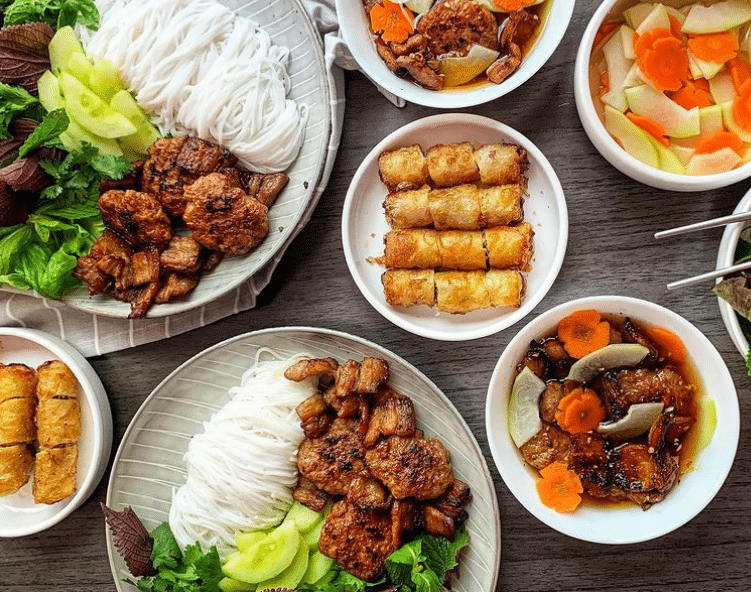
My first Bún Chả arrives looking less like a single dish and more like a small group project.
There is a plate of white rice noodles, a basket of fresh herbs, and a bowl of warm, amber-colored dipping sauce filled with grilled pork and crunchy pickled vegetables.
Nothing is mixed together. Nothing looks particularly complicated.
And yet, for a first-time visitor, the instructions are surprisingly unclear.
Do I pour everything into one bowl? Eat the noodles first? Pick up the pork with chopsticks and hope for the best?
Fortunately, the secret is simple: take some noodles, dip them into the sauce, add a piece of pork and a few herbs, then enjoy the combination.
The sauce is the magic. It balances salty fish sauce, sweetness, acidity, and the rich flavor of grilled meat. Pickled green papaya or other vegetables add a refreshing crunch.
Then there is the pork itself.
Bún Chả usually features two kinds: little minced-pork patties and slices of pork belly, both grilled until fragrant and lightly charred. The smoky edges provide a delicious contrast to the soft noodles and fresh greens.
One bite brings sweetness, saltiness, smoke, freshness, and a little tanginess together.
Suddenly, the mysterious collection of plates makes perfect sense.
My only complaint? The noodles are dangerously easy to eat, and the pork keeps disappearing before I have finished appreciating it.
Follow the Smoke
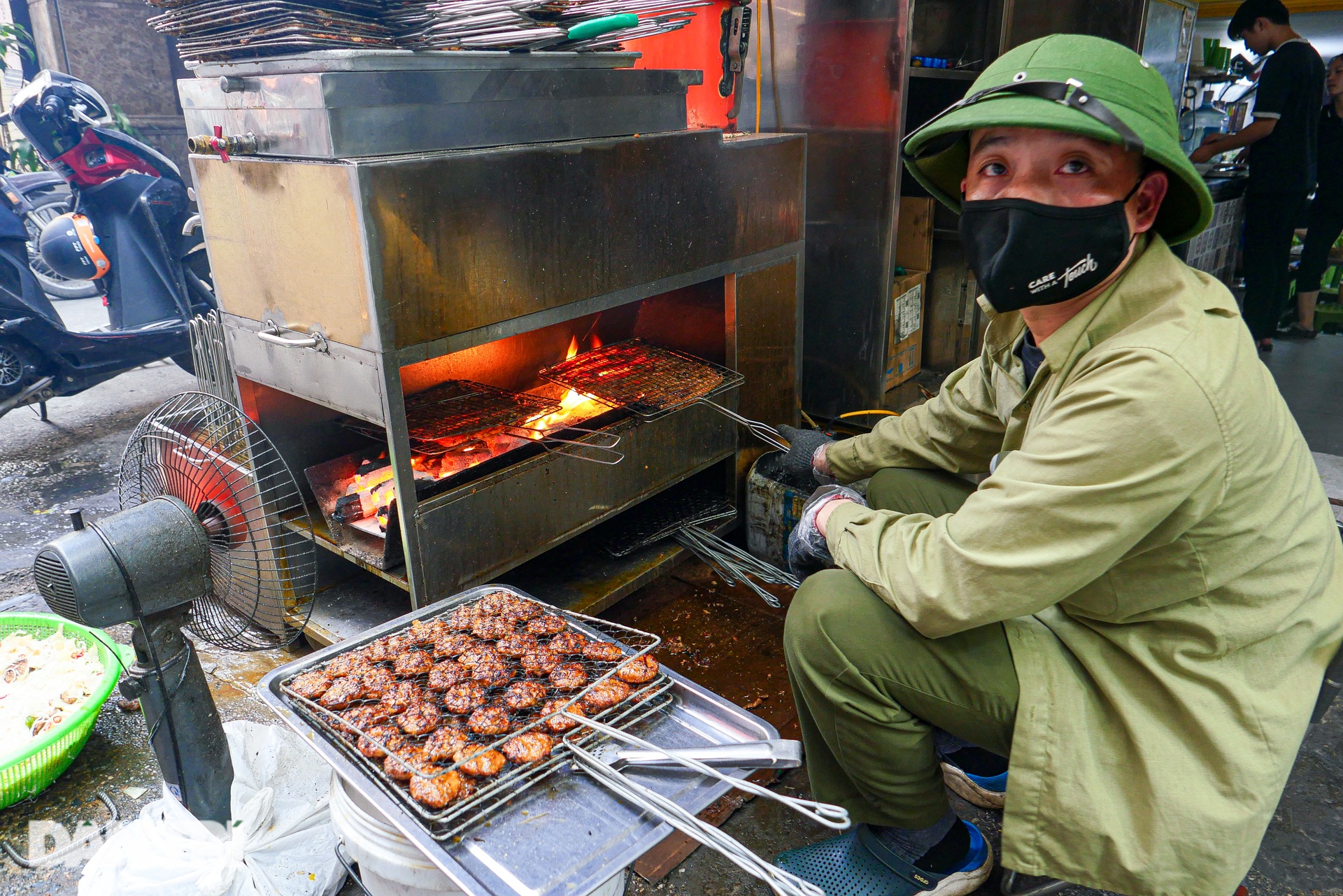
 Bún Chả is deeply associated with Hanoi, where its smoky aroma has long been part of the lunchtime scene.
Forget the idea that every memorable meal requires a beautiful restaurant and a menu printed on thick paper. Some of Hanoi's most satisfying food experiences happen in modest eateries, where grills sit close to the pavement and cooks prepare pork over glowing charcoal.
The smoke drifts into the street. Office workers arrive for lunch. Locals sit on small stools, chatting between mouthfuls. A cook tends the grill with the confidence of someone who has done this thousands of times.
For a visitor, it feels wonderfully immediate. You are not just eating Vietnamese food; you are stepping into an everyday ritual of the city.
Bún Chả is traditionally a lunchtime favorite, and the combination makes sense: grilled meat for flavor, noodles for substance, herbs for freshness, and dipping sauce to tie everything together. It is satisfying without needing a giant bowl of soup.
The exact origins of Bún Chả are uncertain, but the dish has become one of Hanoi's defining culinary specialties. Vietnamese food writer Vũ Bằng also celebrated the city's love of Bún Chả in his writing about Hanoi's food culture.
In other words, this is not a dish invented for tourists. Tourists simply got lucky enough to discover it.
The Lunch That Made Headlines: Obama and Anthony Bourdain
If you have heard of Bún Chả before visiting Vietnam, there is a good chance you have encountered the famous Obama story.
In May 2016, then-U.S. President Barack Obama sat down in Hanoi with chef and television host Anthony Bourdain to eat Bún Chả at Bún Chả Hương Liên.
The scene was wonderfully ordinary: two famous men, a simple meal, and a small restaurant rather than a grand diplomatic banquet. Their lunch was filmed for Bourdain's travel series Parts Unknown, introducing the dish to an enormous international audience.
Think about it. Presidents usually make headlines through speeches, meetings, and official ceremonies. Obama made a memorable food headline by sitting on a small stool and eating grilled pork with noodles.
Honestly, that might be one of the most relatable diplomatic activities ever recorded.
The restaurant became widely known as “Bún Chả Obama,” and food-loving visitors began adding it to their Hanoi itineraries.
But here is the interesting part: the meal made Bún Chả famous around the world; it did not make Bún Chả famous in Hanoi.
Hanoians had already been enjoying it for generations.
The international attention simply gave the rest of the world a delicious reason to catch up.
Should You Visit the Obama Restaurant?
If you are curious, visiting Bún Chả Hương Liên can be a fun stop. You can try the dish at the place associated with that famous lunch and enjoy a small piece of recent food-travel history.
But do not assume that the most famous restaurant automatically serves the only worthwhile bowl in the city.
Bún Chả is part of Hanoi's wider food culture, and many neighborhood eateries serve their own versions. Exploring a local spot recommended by residents can be just as rewarding—sometimes even more memorable—than visiting a place because a celebrity once sat there.
The real adventure is tasting the dish in the city where it belongs.
And if you do visit the Obama restaurant, you can certainly tell your friends you followed in the footsteps of a U.S. president.
Just remember that the pork does not come with presidential powers.
Sadly, no amount of dipping sauce will make your emails answer themselves.
The Little Details That Make It Hanoi
What makes Bún Chả special is not just the grilled pork. It is the balance.
The meat is rich and smoky. The dipping sauce is sweet, salty, and sour. The noodles are soft and mild. The herbs bring freshness, while the pickled vegetables cut through the richness.
Each element has a job, and none needs to shout.
This balance reflects something I love about discovering food in a new place: the simplest-looking meals often reveal the most thought.
There is also a wonderful contrast between the dish and its surroundings. Hanoi can be noisy, crowded, and full of movement, yet a bowl of Bún Chả gives you a reason to stop for a while.
You sit down, dip your noodles, taste the pork, and gradually forget the traffic outside.
At least until a motorbike horn reminds you that Hanoi has not paused its activities just because lunch is excellent.
How to Eat Bún Chả Like a Happy Visitor
You do not need expert chopstick skills or a deep knowledge of Vietnamese cuisine. Just remember a few things:
- Dip rather than drown. Add noodles and herbs to the sauce as you eat, instead of immediately dumping everything together.
- Try both kinds of pork. The patties and sliced pork have different textures, and both contribute to the experience.
- Add herbs gradually. Mint, perilla, and other greens bring freshness to the rich meat.
- Ask about the sauce if needed. Fish sauce is a key ingredient, and the balance of sweetness and acidity varies from place to place.
- Go around lunchtime. That is when Bún Chả is most closely associated with Hanoi's everyday eating culture.
Most importantly, arrive hungry. This is not the ideal meal to schedule immediately after a massive hotel breakfast.
Your stomach deserves at least a little warning.
A Bowl Worth Traveling For

By the end of my imaginary Hanoi lunch adventure, I understand why Bún Chả has won so many fans.
It is comforting without being boring, simple without being plain, and packed with flavor without needing a complicated presentation.
The Obama–Bourdain lunch gave the dish a global spotlight, but the real story belongs to Hanoi: the cooks tending their charcoal grills, the familiar lunchtime crowds, and the generations of diners who knew exactly how good this meal was long before the cameras arrived.
So if you visit Hanoi, follow the smoky smell drifting from the street. Find a little table, order bún chả, and let the noodles, herbs, pork, and dipping sauce introduce themselves.
You might arrive because a president ate it.
You will probably remember it because it tastes that good.
And if you find yourself planning tomorrow's lunch before you have finished today's, don't worry.
You are simply beginning to understand Hanoi.