
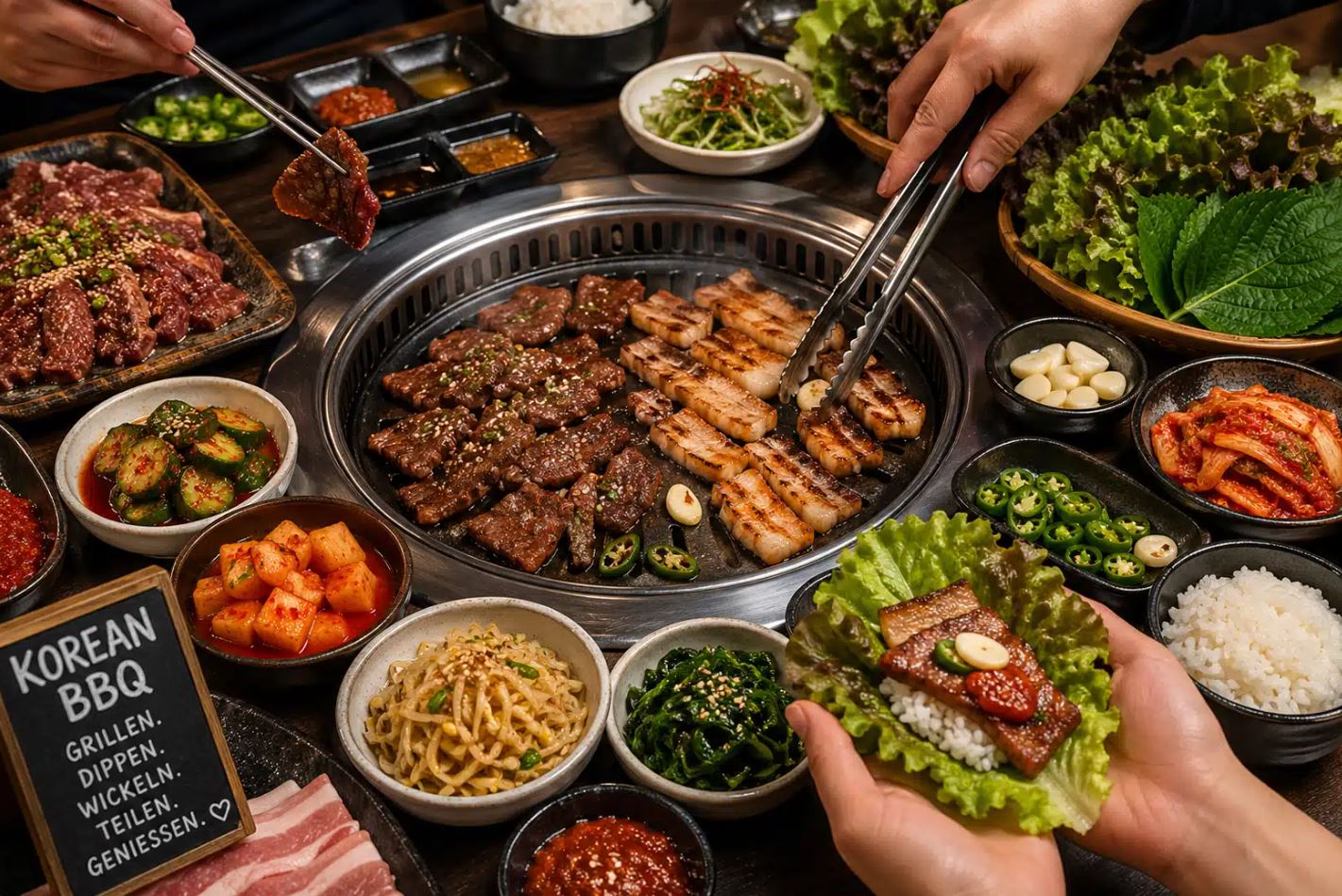






I thought I was going to dinner. Nobody warned me I would also be responsible for cooking, assembling tiny lettuce parcels, and defending my personal space from a pair of very enthusiastic tongs.
My first Korean BBQ experience began with confidence.
I sat down at a restaurant in Seoul, looked at the grill built into the middle of the table, and thought, How difficult can this be? It's just meat.
Five minutes later, I was surrounded by little plates of vegetables, sauces, kimchi, and raw meat, trying to figure out which pair of tongs belonged to which task.
The table looked like a delicious puzzle. I had apparently arrived without the instruction manual.
Then the meat hit the grill.
Suddenly, everyone was paying attention.
The Grill Is the Main Character
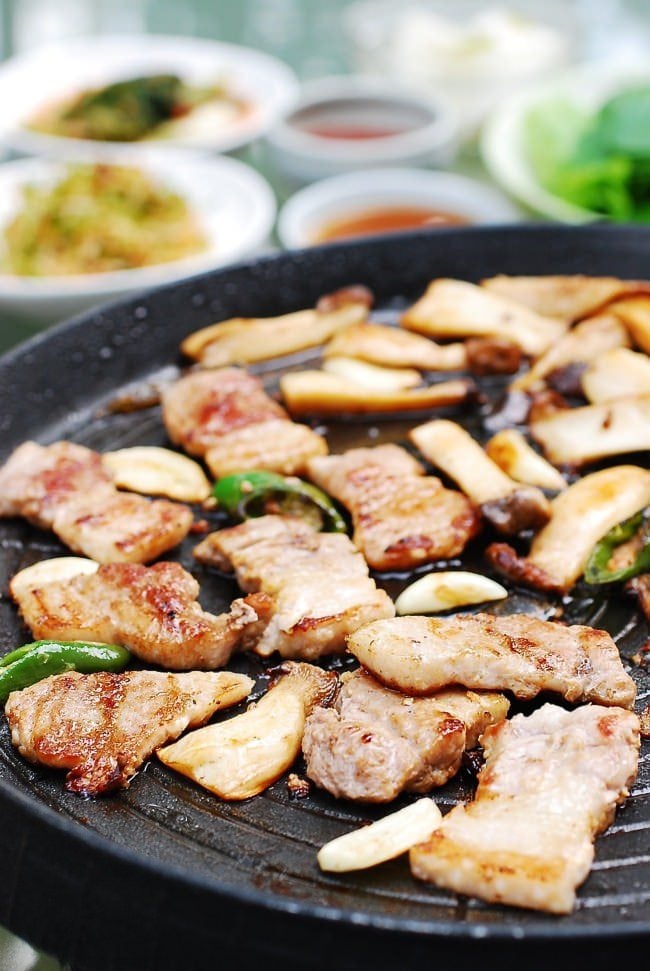 Korean BBQ, or gogi-gui, is a style of dining in which meat is grilled at the table. Depending on the restaurant, you might cook it yourself or let the staff handle the grilling.
One of the most popular choices is samgyeopsal, or pork belly, with its delicious layers of meat and fat. Another favorite is galbi, often made with beef short ribs and served marinated. There are plenty of other options, too, including beef cuts and marinated meats.
I chose pork belly.
The slices landed on the hot grill with a satisfying sizzle. The smell was almost unfairly good: rich, smoky, savory, and powerful enough to make conversation temporarily unnecessary.
I picked up the tongs.
This was my moment.
I turned a piece of meat with the concentration of a surgeon performing a delicate operation. Someone beside me casually flipped three pieces at once. I tried not to take it personally.
The trick, I quickly learned, was not to poke every piece of meat every three seconds. Let it cook, turn it when needed, and follow the restaurant's instructions. Some places have staff who expertly manage the grill, which is excellent news for anyone whose culinary experience consists mainly of pressing buttons on a rice cooker.
And please, use separate utensils for raw meat and cooked food. The goal is a memorable dinner, not an unexpected science experiment.
When the pork finally looked ready, I took a bite.
Crisp around the edges, tender inside, and wonderfully savory. The richness was exactly what I wanted from grilled pork belly.
I was ready to declare myself a barbecue expert.
Then someone handed me a pair of scissors.
Apparently, graduation was still a long way off.
Welcome to the Kingdom of Banchan
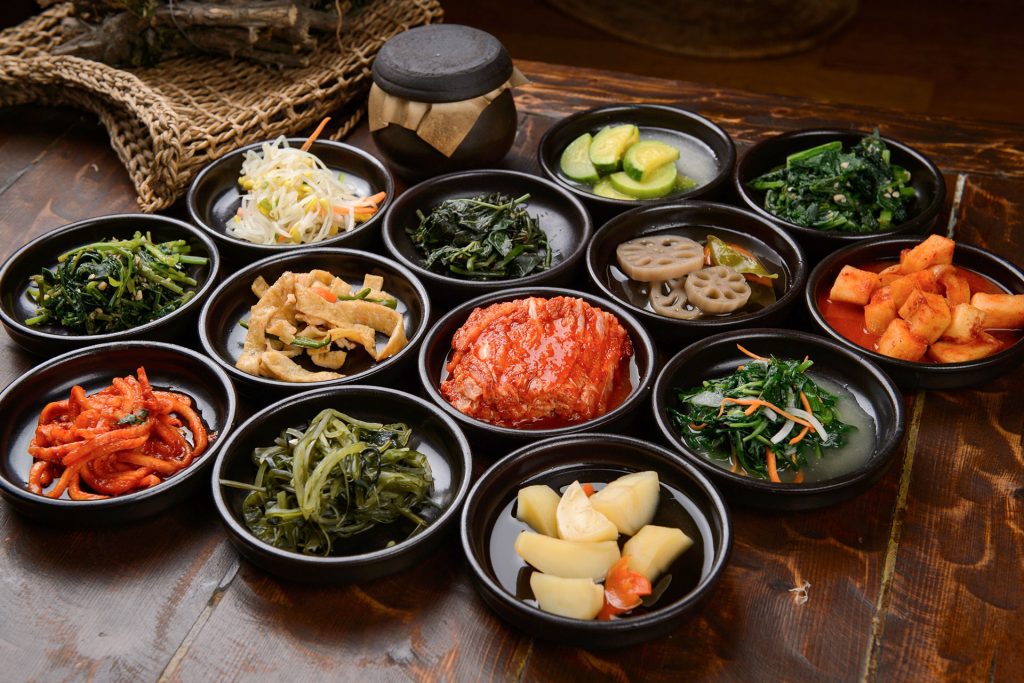 Before I could focus entirely on the meat, the table filled with small dishes.
Kimchi. Pickled vegetables. Seasoned bean sprouts. Spinach. Perhaps some potato salad or other little surprises, depending on the restaurant.
These side dishes are called banchan, and they are an essential part of many Korean meals.
My immediate reaction was to wonder whether I had accidentally ordered a banquet.
I had asked for barbecue. The restaurant seemed determined to provide a complete supporting cast.
Banchan are not merely decorative extras. Their different flavors and textures help balance the richness of grilled meat. Kimchi brings tangy, fermented intensity; fresh or seasoned vegetables add crunch and freshness; pickled sides can offer a sharp contrast to the smoky pork.
The fun is in trying different combinations.
A bite of meat might taste rich and savory on its own, then feel completely different when paired with a little kimchi. Add a fresh vegetable, and suddenly the whole meal has another dimension.
I started sampling everything with the enthusiasm of a food critic who had forgotten to take notes.
The only problem was that the plates kept competing for my attention.
I would reach for the kimchi, spot a bowl of seasoned vegetables, and remember that there was still meat on the grill. It was like trying to watch five excellent television shows at once.
And I hadn't even started wrapping anything.
The Art of the Ssam
 One of the most enjoyable parts of Korean BBQ is ssam: wrapping meat and other ingredients in a leafy vegetable, often lettuce or perilla.
The basic idea sounds simple. Take a leaf, add grilled meat, perhaps a little ssamjang (a savory, rich paste), and include some garlic or vegetables if you like.
Fold it up. Eat. Be happy.
In practice, my first wrap looked like a small green sleeping bag that had lost an argument with its contents.
Too much meat. Too much sauce. Not enough leaf.
I folded one side over, and the other ingredients attempted a dramatic escape.
Meanwhile, everyone else seemed to be assembling perfect little parcels without giving the process a second thought.
I tried again.
This time, I used a smaller piece of meat, a little sauce, and a few vegetables. The wrap was more manageable, although still not something I would submit to an architecture competition.
Then came the important part: eating it.
A well-made ssam brings several flavors together in one bite — the richness of the meat, the freshness of the leaf, the savory sauce, and whatever crunchy or spicy additions you choose.
It is delicious, and it makes the meal interactive. Instead of receiving a finished plate and eating independently, everyone can build their own combinations and share the experience.
There is just one practical warning: make your wrap a reasonable size. Korean food is exciting, but nobody needs to wrestle a lettuce mountain at the dinner table.
Nobody Is Really Eating Alone
The more I ate, the more I understood why Korean BBQ feels like a social event rather than simply a way to cook dinner.
The grill sits in the middle of the table. Everyone can see the meat cooking, offer a piece to someone else, or recommend a combination of sides. The conversation moves naturally around the food.
Someone watches the grill while another person prepares a wrap. Someone notices that the kimchi is running low. Another person suggests ordering noodles or a stew to go with the meat.
There is always something happening, but it rarely feels like a formal performance.
In many Korean dining settings, sharing food is part of the experience. Banchan are placed around the table, and people combine different dishes according to their preferences. Korean BBQ takes that shared approach and gives it a sizzling centerpiece.
It also creates small opportunities to look after one another.
Offering someone a freshly cooked piece of meat is a tiny gesture, but it makes the meal feel collaborative. The person managing the grill is not just cooking; they are helping everyone enjoy dinner.
Of course, this arrangement has its challenges.
There is the question of who controls the tongs. There is the person who flips everything before it is ready. And there is the mysterious individual who somehow manages to eat the best pieces while claiming not to be particularly hungry.
I had met that person before.
Usually, it was me.
The Side Dishes Deserve Their Own Fan Club
 By now, I had developed a healthy respect for the entire table.
The meat was the star, but the supporting dishes were doing an extraordinary amount of work.
Kimchi deserves special mention. Made through fermentation, this Korean staple comes in many varieties, with napa cabbage kimchi being one of the best-known. Its tangy, spicy, savory character can cut through the richness of grilled pork beautifully.
Then there is ssamjang, the thick, savory dipping paste often used in lettuce wraps. A little goes a long way, which is something I learned after an overly enthusiastic first attempt.
Many restaurants also offer garlic, green chilies, seasoned scallions, and other vegetables. The exact selection varies, so every meal can feel a little different.
The result is a table full of contrasts: smoky meat, crisp greens, fermented flavors, spicy sauce, and refreshing vegetables.
It is a clever way to make a rich meal feel varied rather than monotonous.
I had originally planned to focus on trying the meat.
Instead, I found myself emotionally invested in a tiny plate of seasoned bean sprouts.
Travel changes your priorities.
The Grand Finale: There Is Still Room, Apparently
Eventually, the mountain of meat began to shrink.
I leaned back, satisfied, and assumed the meal was approaching its natural conclusion.
Then someone mentioned fried rice.
I looked at the table.
I looked at my stomach.
My stomach declined to comment.
Depending on the restaurant, a Korean BBQ meal may continue with rice, cold noodles, soup, or another dish. Some places prepare fried rice on the grill using leftover ingredients, sauce, and rice, creating a savory finish that is difficult to resist.
The meal does not have to end with a dramatic dessert. Sometimes, another bowl of something warm and comforting is exactly right.
I had come to dinner expecting grilled meat. I was leaving with a much broader appreciation of how the different parts of the meal fit together.
And a strong suspicion that my trousers would appreciate a quieter evening.
More Than a Meal

Korean BBQ taught me something that a simple plate of grilled meat probably could not have.
Food can be an activity as much as a finished dish.
You cook together, share side dishes, build your own wraps, and talk while the next batch sizzles away. The meal has a rhythm, and everyone contributes something — even if that contribution is simply keeping the conversation going while somebody else handles the grill.
You don't need perfect technique to enjoy it. You don't need to know every Korean food term or assemble the world's most elegant lettuce wrap.
You just need curiosity, an appetite, and a willingness to share the table.
As for me, I left with a new appreciation for Korean BBQ, a lingering craving for crispy pork belly, and a personal resolution to improve my tong skills.
Next time, I will arrive prepared.
I will study the menu. I will practice my lettuce wraps.
And I will remember one very important rule: never underestimate the person sitting closest to the grill.
They may look friendly.
But they know exactly when the meat is ready.