

Short Introduction
Roblox: Haikyuu Legends transforms volleyball into a thrilling competitive experience where teamwork, timing, and determination create unforgettable moments.
First Impressions and Atmosphere
The first match in Haikyuu Legends feels deceptively simple.
A volleyball court.
Two teams.
One ball.
One objective.
Then the match begins.
Suddenly, the court feels much smaller than expected. Every movement matters. Every mistake becomes visible. Every successful play creates a burst of excitement that echoes through the entire arena.
Unlike many Roblox sports games that focus heavily on flashy effects, Haikyuu Legends succeeds because it captures tension.
Real tension.
The atmosphere mirrors the emotional energy that makes competitive volleyball so compelling. Long rallies create anticipation. Perfectly timed blocks generate momentum. Last-second saves create panic and excitement simultaneously.
I remember my first genuinely competitive match.
The score was tied.
The rally lasted far longer than expected.
Neither team wanted to make the mistake that would decide the game.
For several seconds, nobody seemed willing to breathe.
When the final point arrived, the reaction felt far more intense than a simple Roblox match had any right to feel.
That emotional investment became one of the game's greatest strengths.
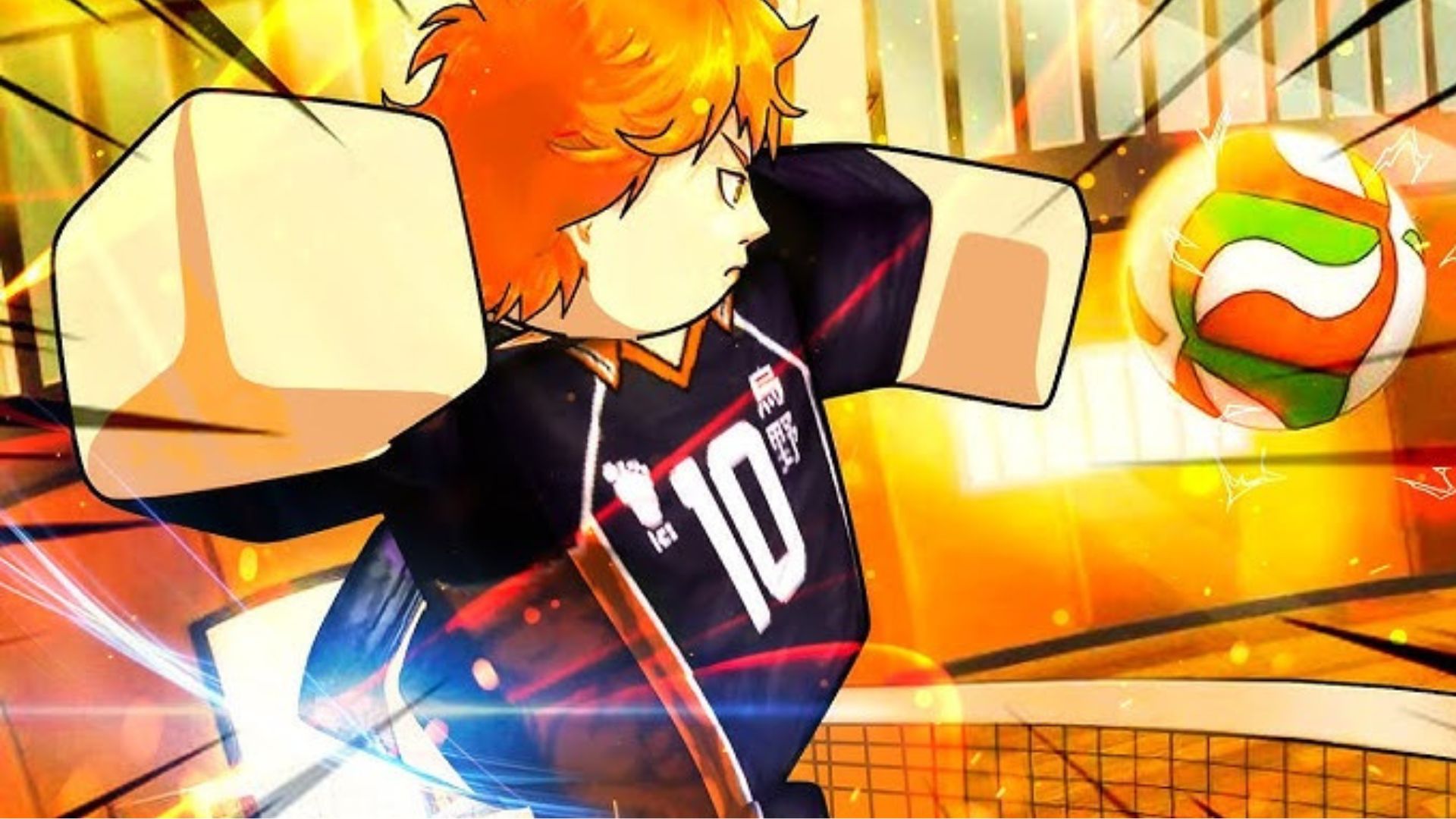
The visual design embraces bright anime-inspired aesthetics without sacrificing readability. Character animations remain expressive, while courts, arenas, and effects create energy without becoming overwhelming.
The world feels competitive.
But also welcoming.
A difficult balance.
Haikyuu Legends manages it surprisingly well.
Gameplay Mechanics and Core Systems
At its core, Haikyuu Legends revolves around a deceptively challenging gameplay loop:
-
Position correctly
-
Receive the ball
-
Coordinate with teammates
-
Execute attacks
-
Defend effectively
-
Score points
-
Improve through repetition
The concept appears straightforward.
The execution isn't.
Timing becomes everything.
Players quickly learn that volleyball mechanics rely on precision rather than brute force. Successful spikes require positioning. Blocks require anticipation. Receives require quick reactions. Sets require awareness.
The game rewards understanding.
Not button mashing.
One aspect that impressed me was how naturally skill progression occurs. Early matches feel chaotic. Players chase the ball without structure. Coordination breaks down constantly.
Then something changes.
You begin recognizing patterns.
Reading opponents.
Anticipating trajectories.
Understanding positioning.
The game becomes deeper with every hour played.
Character progression systems provide additional motivation. Unlockables, customization options, player development, and progression goals create a satisfying sense of growth without overshadowing skill-based gameplay.
The result is a competitive experience where mechanical improvement matters as much as numerical progression.
World Design and Player Immersion
Haikyuu Legends doesn't rely on massive open worlds.
Its immersion comes from focus.
The court becomes the world.
Every section matters.
Every position carries responsibility.
The confined playing area creates remarkable emotional intensity. Players become familiar with every corner of the court because success depends on understanding spatial relationships constantly.
I found myself developing strange attachments to specific positions.
Certain areas felt comfortable.
Others felt dangerous.
Not because the game told me so.
Because experience taught me.
The arenas themselves contribute significantly to immersion. Crowds, visual effects, environmental design, and match presentation create the feeling of participating in meaningful competition rather than casual recreation.
The atmosphere grows stronger during close matches.
Especially late at night.
When every point feels important.
When every mistake feels personal.
When the game stops feeling like a game and starts feeling like a competition.
The Emotional Experience and Player Psychology
Haikyuu Legends understands competitive psychology remarkably well.
The game creates emotional investment through teamwork.
Individual skill matters.
Team coordination matters more.
That distinction changes everything.
Victories feel shared.
Defeats feel collective.
Success becomes more meaningful because players rarely achieve it alone.
One of the most powerful emotional experiences in the game comes from improvement itself.
Early mistakes become future strengths.
Missed receives become successful saves.
Failed blocks become highlight moments.
Players witness their own growth directly.
The progression feels earned.
Not granted.
Another important factor is unpredictability.
Every match feels different.
Different teammates.
Different opponents.
Different situations.
That variety keeps emotional engagement remarkably high.
Real Gameplay Moments and Examples
One match remains particularly memorable.
Our team was losing badly.
Communication felt disorganized.
Mistakes piled up.
Everything suggested an inevitable defeat.
Then momentum shifted.
A successful block led to a point.
That point created confidence.
Confidence improved coordination.
Coordination created opportunities.
Suddenly the match became competitive again.
The comeback wasn't dramatic enough to become a viral clip.
But it remains one of my favorite gaming memories because every player contributed.
Another memorable moment involved a failed spike.
At least, it was supposed to be a failed spike.
I mistimed the attack completely.
The ball bounced awkwardly.
The opposing team hesitated.
Nobody expected it.
The point somehow worked.
Everyone involved seemed equally confused.
The match chat became more entertaining than the point itself.
Sports games thrive on unpredictability.
Haikyuu Legends understands that perfectly.
Strengths and Weaknesses
Strengths
Haikyuu Legends excels in several important areas:
-
Strong volleyball mechanics
-
Meaningful teamwork systems
-
High skill ceiling
-
Competitive depth
-
Excellent replayability
-
Satisfying progression
-
Strong match pacing
Most importantly, success feels earned.
Players improve because they learn.
Not because statistics increase.
Weaknesses
The game isn't flawless.
New players may find the learning curve intimidating. Volleyball mechanics require precision, and early mistakes can feel frustrating.
Match quality depends heavily on teammates. Strong coordination creates incredible experiences, while poor communication can reduce enjoyment significantly.
Balance discussions occasionally emerge regarding specific abilities, roles, or character builds.
Certain progression systems may also feel slow for players seeking immediate rewards.
Patience remains important.
Improvement takes time.
Advanced Perspective and Long-Term Replayability
Haikyuu Legends becomes increasingly rewarding as player skill improves.
The early game teaches mechanics.
The mid-game teaches strategy.
The late game teaches mastery.
These stages feel distinct.
Experienced players begin analyzing positioning, opponent tendencies, timing windows, and advanced team coordination. The game evolves from reaction-based gameplay into strategic competition.
That evolution creates remarkable longevity.
Many sports games become repetitive.
Haikyuu Legends avoids this because no two matches unfold identically.
Human opponents guarantee variety.
The community further strengthens replayability. Competitive discussions, gameplay highlights, strategy guides, team formation, and content creation generate ongoing engagement.
Players don't simply play matches.
They analyze them.
Trends, Popularity, and Community Growth
Haikyuu Legends benefits from several major trends within Roblox gaming:
-
Anime-inspired sports experiences
-
Competitive multiplayer gameplay
-
Skill-based progression
-
Team-focused mechanics
-
Content creator engagement
-
Replay-driven communities
Sports-focused Roblox experiences continue attracting players who want competition without relying exclusively on combat systems.
Haikyuu Legends occupies this niche effectively.
The game's content creation appeal also contributes to growth. Highlight plays, dramatic rallies, clutch saves, and tournament-style matches generate highly shareable moments.
According to broader Roblox competitive gaming trends, skill-based multiplayer experiences continue demonstrating strong player retention through community engagement and repeat match participation. [Source: Roblox Competitive Trends Report, 2025]
Source:
-
The Rise of Competitive Sports Games on Roblox
-
Why Team-Based Gameplay Builds Strong Communities
-
The Psychology of Competitive Improvement
-
How Multiplayer Rivalries Drive Retention
-
The Evolution of Anime-Inspired Sports Experiences
The game's success reflects growing demand for competitive experiences centered around teamwork rather than combat.
Comparison With Similar Games
Compared with Volleyball Legends, Haikyuu Legends often places greater emphasis on anime-inspired presentation and character identity.
Compared with Rocket League, it relies more heavily on team positioning and technical execution rather than constant mechanical chaos.
Compared with many Roblox sports experiences, Haikyuu Legends offers a stronger balance between accessibility and mastery.
The difference lies in emotional design.
The game wants players to care about every point.
And most of the time, they do.
Common Misunderstandings or Criticism
One common misconception is that Haikyuu Legends rewards only individual talent.
Not true.
Individual skill helps.
Teamwork wins matches.
Players who ignore coordination often struggle regardless of mechanical ability.
Another criticism involves pacing.
Some players expect constant action and become frustrated by positioning, setup plays, or defensive sequences.
Yet these moments create tension.
Without them, successful spikes would feel meaningless.
There are also ongoing discussions regarding balance and progression systems.
Such debates are inevitable in competitive games.
The important point is that the core volleyball mechanics remain strong enough to support long-term competition.
Reference:
-
How Teamwork Creates Emotional Investment
-
The Evolution of Competitive Sports Gaming
-
Balancing Skill and Accessibility in Multiplayer Games
-
Why Match Variety Improves Replayability
-
The Psychology of Competitive Mastery
Final Verdict and Closing Thoughts
Haikyuu Legends succeeds because it understands something many competitive games forget.
Players don't remember statistics.
They remember moments.
The impossible save.
The perfect set.
The match-winning spike.
The comeback nobody expected.
The game transforms volleyball into a compelling competitive experience built on teamwork, skill, progression, and emotional investment. Every match creates opportunities for improvement. Every mistake becomes a lesson. Every victory feels genuinely earned.
Its flaws are real. The learning curve can be intimidating. Team quality varies dramatically. Progression occasionally feels slow.
Yet the experience remains remarkably engaging.
For players who enjoy competitive multiplayer gameplay, teamwork-focused mechanics, skill-based progression, and the emotional highs that only sports games can create, Haikyuu Legends stands among Roblox's most rewarding competitive experiences.
And long after the final whistle blows, players continue returning to the court for one simple reason:
Somewhere in the next match, another perfect rally is waiting to become a memory.