

Short Introduction
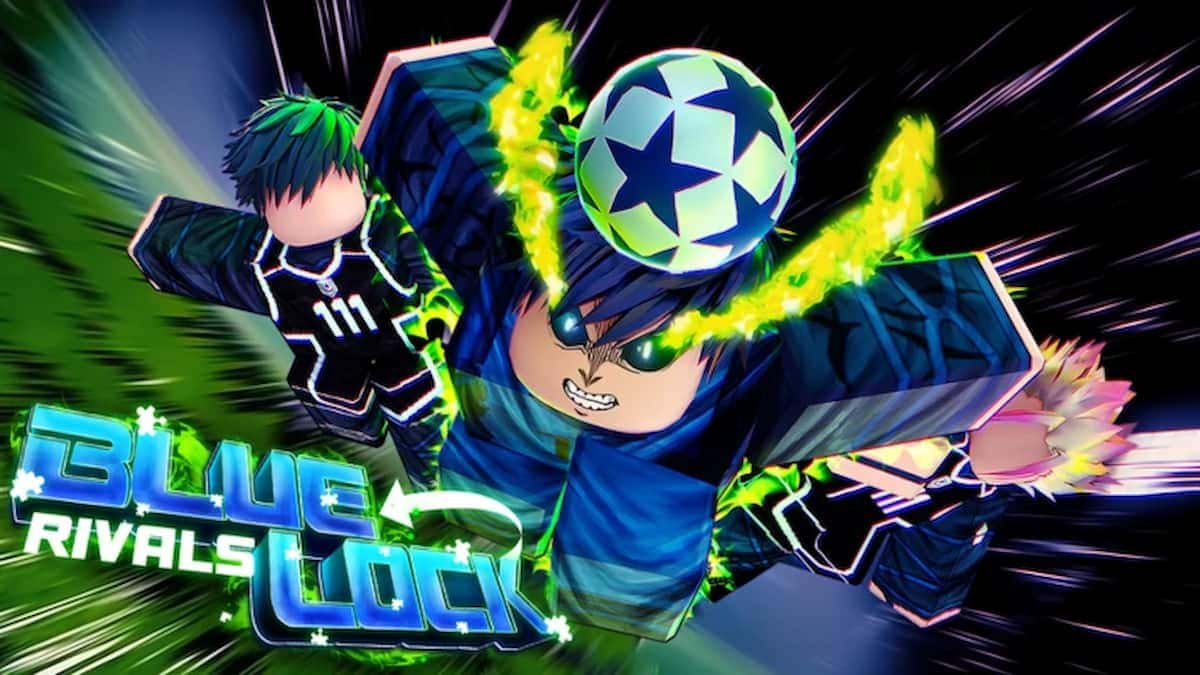
Roblox: Blue Lock Rivals turns soccer into ego, panic, flash, rivalry, and that addictive feeling of chasing one perfect goal.
First Impressions and Atmosphere
The first match in Roblox: Blue Lock Rivals feels loud before it feels deep.
Players sprint across the pitch with glowing effects, sudden dashes, exaggerated shots, and that unmistakable Roblox chaos where half the lobby looks serious and the other half looks like they dressed in a fever dream. At first, it is almost funny. Then someone times a perfect strike, the ball bends past everyone, and the stadium suddenly feels personal.
That is when the game starts working.
Blue Lock Rivals is fan-made and openly described on its Roblox page as an unofficial tribute inspired by the Blue Lock anime, built around high-stakes 5v5 soccer matches where players use character classes and special abilities. (Roblox) The anime influence is obvious, but the appeal is not just imitation. The game understands the fantasy: soccer as ego, pressure, rivalry, and individual brilliance.
The atmosphere is not realistic football. It is emotional football.
Matches feel fast, messy, and dramatic. The pitch becomes a stage for mistakes as much as highlights. One mistimed tackle can open the field. One selfish shot can ruin a team push. One clean pass can feel strangely heroic because nobody expects teamwork in a lobby full of anime strikers.
The lighting, effects, and ability animations create a sharp visual identity. Sometimes too sharp. During chaotic moments, the screen can become a storm of trails, bursts, and impact effects. But when it lands, it sells the fantasy beautifully.
Gameplay Mechanics and Core Systems
At its core, Roblox: Blue Lock Rivals is a competitive soccer experience built around movement, positioning, ability timing, Styles, Flows, and fast multiplayer decision-making.
The main gameplay loop is simple:
Queue into matches.
Choose or roll your build.
Learn your role.
Win possession.
Create space.
Score.
Improve.
Repeat.
The game uses Styles as a major identity system. According to the community wiki, Styles range across different rarities such as Rare, Epic, Legendary, Mythic, World Class, and Master, with different offensive or defensive identities. (Blue Lock: Rivals Wiki) Flows add another layer by giving temporary buffs that affect performance during matches, using similar rarity tiers. (Blue Lock: Rivals Wiki)
That combination gives the game its long-term hook.
You are not only learning soccer positioning. You are also learning how your build changes the rhythm of play. Some Styles encourage direct attacking. Others reward ball control, defense, passing, or explosive finishing.
The combat mechanics here are not combat in the traditional sense, but the game has fighting-game energy. Timing matters. Spacing matters. Reading opponents matters. Good players do not simply chase the ball; they predict where panic will send it next.
The best moments come when the systems overlap naturally. A teammate steals possession, you cut into open space, someone hesitates, the ball arrives, and suddenly the match slows down for half a second before the shot.
Then noise.
That emotional payoff is excellent.
The weakness is repetition. Matches can blur together when teams refuse to pass or when overpowered builds dominate the rhythm. The game can also feel harsh for new players because skill gaps appear quickly. A beginner sees chaos. A veteran sees angles.
World Design and Player Immersion
Blue Lock Rivals does not have open-world gameplay in the traditional sense, but it does have a strong sense of competitive space.
The pitch matters because every meter carries risk. Corners become traps. Midfield becomes a collision zone. Goal areas feel suffocating when too many players crowd the ball.
The best Roblox sports games understand that a small map can still feel dramatic if movement has weight. Blue Lock Rivals succeeds because its world is not about exploration systems or environmental storytelling in a classic RPG sense. It is about pressure.
You start recognizing emotional locations.
The midfield where you lost possession three times. The edge of the box where your first clean goal happened. The defensive line where you panicked and passed directly to the enemy striker.
Small frustrations become strangely memorable.
I remember one match where I stopped chasing the ball for a few seconds and simply watched two skilled players duel near the sideline. No commentary, no cinematic camera, just movement. Sharp turns. Sudden acceleration. A pause before the pass.
It felt like watching confidence become visible.
That is the game’s best kind of immersion.
The Emotional Experience and Player Psychology
Roblox: Blue Lock Rivals is addictive because it turns improvement into emotion.
Every match gives players something to blame and something to chase. Bad positioning. Bad timing. A missed shot. A teammate who refused to pass. A defender who read you perfectly. The game constantly creates tiny emotional wounds, then invites you to heal them with one better play.
That loop is powerful.
The psychology also fits the Blue Lock fantasy extremely well. The game encourages ego without fully abandoning teamwork. You want to be the striker. You want the final shot. You want the highlight.
But selfishness can lose matches.
That tension creates real drama. The best players know when to take over and when to release the ball. The worst players shoot from impossible angles because the anime in their head is louder than the scoreboard.
And yes, we have all been that player once.
Progression psychology also matters. Spins, rarities, Styles, Flows, temporary buffs, and meta discussions create constant long-term motivation. Players stay invested not only because matches are fun, but because their next build might finally match the way they want to play.
Real Gameplay Moments and Examples
One late-night match stayed with me longer than expected.
Our team was losing badly. Nobody passed. Everyone chased the ball like it owed them money. I spent half the match frustrated, drifting into midfield, trying to force structure into a lobby that clearly wanted chaos.
Then, somehow, it clicked.
A teammate stole the ball near our box. I made a run down the side without expecting anything. The pass came late, almost too late. I cut inward, mistimed the first touch, recovered badly, then fired a rushed shot that barely slipped past the keeper.
Not beautiful.
But it felt earned.
Another match was pure comedy. A player spent the entire game trying flashy solo moves and failing every time. Then, in the final minute, they accidentally blocked an enemy shot with their body and triggered the counterattack that won us the match.
The lobby celebrated like it was intentional.
Those are the moments that make Blue Lock Rivals work. Not just the clean goals, but the awkward mistakes, weird saves, accidental assists, and sudden silence after a match ends closer than anyone expected.
Strengths and Weaknesses
The strongest part of Roblox: Blue Lock Rivals is how clearly it understands competitive fantasy. It makes soccer feel exaggerated, emotional, stylish, and personal.
Its strengths include:
-
Fast 5v5 multiplayer pacing
-
Strong anime-inspired identity
-
Meaningful Styles and Flows
-
High replayability
-
Competitive skill expression
-
Strong community discussion around builds and meta
-
Quick match flow for short sessions
But the weaknesses matter.
The game can feel repetitive when lobbies lack teamwork. Balance concerns appear when certain Styles or Flows become too dominant. Visual effects sometimes hurt readability. New players may feel overwhelmed by systems, rolls, rarity tiers, and experienced opponents.
There is also a monetization concern common to many Roblox progression games. When spins, rare abilities, and optimization become central to the experience, players may feel pressure to chase stronger options rather than simply enjoy matches.
That does not ruin the game.
But it does shape the experience.
Advanced Perspective and Long-Term Replayability
After many hours, Blue Lock Rivals becomes less about chasing the ball and more about reading the field.
Advanced players understand spacing. They know when to hold possession, when to pass early, when to bait defenders, and when to save abilities for the exact moment pressure peaks.
That is where the mastery curve becomes rewarding.
The game has a real competitive scene inside its community. Tier lists, Flow rankings, Style debates, update reactions, and PvP clips keep discussion active across Roblox communities and gaming sites. Destructoid, Beebom, Sportskeeda, and other gaming outlets regularly cover Styles, Flows, codes, and meta shifts, showing how active the ecosystem has become around the game. (Destructoid)
Replayability comes from three things:
Matches are short.
Builds change playstyle.
Players are unpredictable.
That last point matters most.
No two lobbies feel exactly alike. Sometimes you get a coordinated team. Sometimes everyone plays like the main character. Sometimes the worst match of the night produces the funniest memory.
Trends, Popularity, and Community Growth
Roblox: Blue Lock Rivals benefits from three major trends: anime gaming, competitive multiplayer, and creator-driven Roblox discovery.
Roblox itself remains enormous. The company reported 97.8 million average daily active users and 21.7 billion hours engaged in Q1 2025. (Roblox) Third-party Roblox tracking site Rolimons lists Blue Lock: Rivals with billions of visits and a very high rating, though those platform statistics should be treated as live estimates rather than audited financial data. (Rolimon's)
The official Roblox listing describes Blue Lock Rivals as 5v5 soccer inspired by the anime, which explains why it fits so naturally into Roblox’s current culture of fast, recognizable, creator-made competitive experiences. (Roblox)
Source:
Its growth makes sense. The game is easy to understand in five seconds, but difficult to master over weeks.
That is a strong formula.
Comparison With Similar Games
Compared with broader Roblox sports experiences, Blue Lock Rivals feels more stylish and emotionally aggressive. It is not trying to simulate soccer realistically. It wants every match to feel like a rivalry scene.
Compared with Roblox anime fighting games, it has more structure. The ball, pitch, and team format prevent matches from becoming pure ability spam, though chaotic lobbies can still drift in that direction.
Compared with traditional soccer games, Blue Lock Rivals is much simpler mechanically but more immediately theatrical. It sacrifices tactical realism for speed, spectacle, and identity.
That trade-off works because the game knows its audience.
Players do not come here for a slow tactical simulation. They come to feel dangerous on the ball.
Common Misunderstandings or Criticism
One misunderstanding is that Blue Lock Rivals is just another anime Roblox game with flashy effects.
It is flashier than it is subtle, yes. But underneath the visual noise, there is real decision-making. Positioning, timing, ability management, and teamwork separate good players from lucky ones.
Another criticism is that the game rewards selfish play.
That is partly true by design. The Blue Lock fantasy celebrates ego. But matches still punish bad selfishness. A player who refuses every pass may look cool for ten seconds and lose the match two minutes later.
Balance complaints are also fair. Like many live Roblox experiences, Styles and Flows can shift the meta quickly. Some builds feel more forgiving than others, and newer players may feel powerless against optimized opponents.
Reference:
The game is best understood as a competitive anime sports sandbox, not a clean sports simulator.
Final Verdict and Closing Thoughts
Roblox: Blue Lock Rivals works because it turns soccer into pressure.
Not realistic pressure. Emotional pressure.
The pressure of taking the shot. The pressure of missing it. The pressure of watching someone better than you move through defenders like they already saw the future.
It has problems. The grind can feel repetitive. The balance can feel uneven. The screen can become too visually noisy. Some matches collapse when nobody wants to pass.
But when Blue Lock Rivals clicks, it creates exactly the feeling its title promises: rivalry.
For players who enjoy anime-inspired competition, fast multiplayer matches, build experimentation, and the constant chase for one cleaner goal, this is one of Roblox’s more memorable sports experiences.
And after a close match ends, when the field goes still for a second and the lobby resets, there is always that familiar thought:
One more game.