

Short Introduction
Roblox: Arise Crossover begins as a simple power fantasy, then slowly becomes a hypnotic loop of shadows, dungeons, upgrades, and late-night grinding.
First Impressions and Atmosphere
The first hour of Roblox: Arise Crossover feels familiar if you have spent time inside anime-inspired Roblox RPGs.
Bright islands. Flashy attacks. Busy menus. Players sprinting past with companions floating behind them like they already know secrets you have not earned yet.
Then the shadow system starts to click.
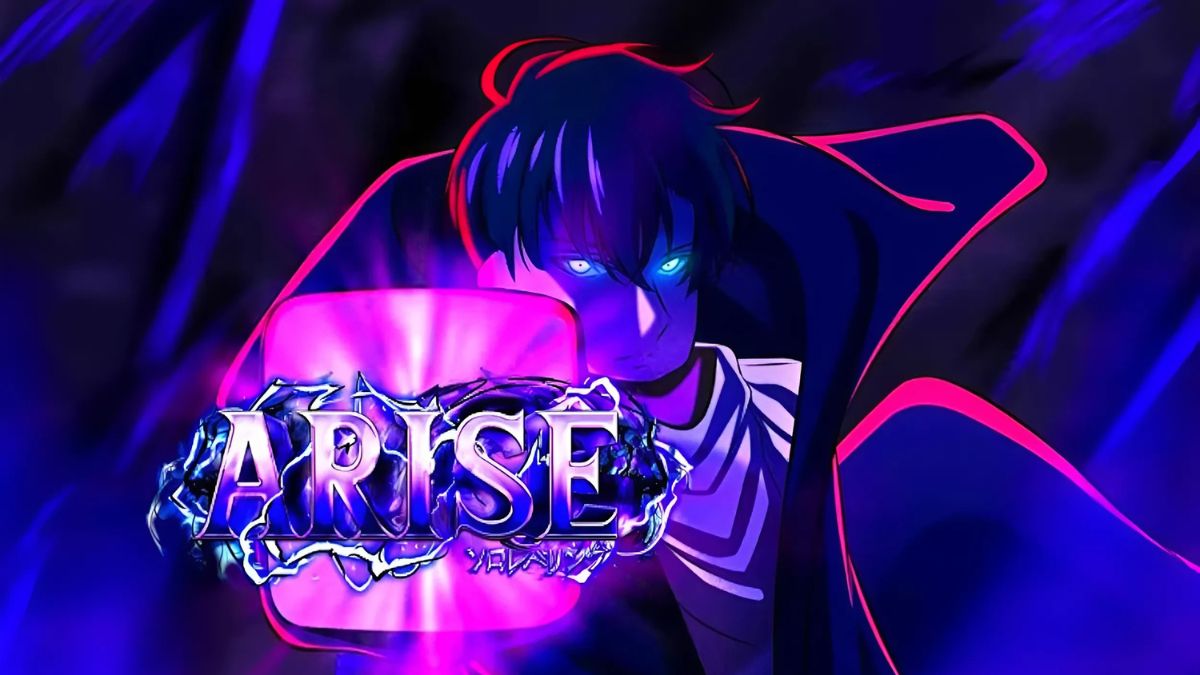
Arise Crossover is built around a clear fantasy: defeat enemies, turn them into Shadows, and gradually build an army that fights beside you. The official Roblox listing describes the game as inspired by Solo Leveling, with Shadows, dungeons, ships, flying mounts, and cooperative play as core features. (Roblox)
The atmosphere is not subtle, but it has pull.
There is something satisfying about watching your first weak companion follow you across the map. At first, it feels almost silly. Then, after enough battles, that little shadow becomes part of your rhythm. You stop seeing it as a cosmetic follower and start seeing it as proof that the grind is working.
The world has that Roblox-anime energy: oversized enemies, glowing effects, fast travel moments, and islands that feel like combat arenas stitched together by progression. It is not deeply atmospheric in the traditional open-world sense, but it creates a strong mood through momentum.
You are always chasing the next stronger thing.
Gameplay Mechanics and Core Systems
At its core, Roblox: Arise Crossover is an action RPG built around farming enemies, collecting Shadows, upgrading power, clearing dungeons, and pushing into harder zones.
The loop is direct:
Fight enemies.
Raise Shadows.
Earn resources.
Enter dungeons.
Upgrade your team.
Move to stronger areas.
Repeat.
It sounds repetitive because it is.
But repetition is not automatically failure. In Arise Crossover, the grind works when the reward curve feels visible. Every stronger Shadow changes your confidence slightly. Every dungeon clear pushes the fantasy forward. Every upgrade makes the next farming route feel less painful.
The Shadow system gives the game its identity. Community guides describe Shadows as recruitable units gained from enemies and bosses, with dungeons offering access to stronger or rarer units. (The Escapist)
That creates a strong collection loop.
Combat itself is simple, but readable. You attack, reposition, manage enemy groups, and rely heavily on your Shadows to increase damage output. The game is less about technical fighting-game precision and more about team power, progression efficiency, and resource management.
Dungeons are where the pacing improves. According to The Escapist’s beginner guide, dungeon portals spawn on timers and offer stronger recruitment opportunities, making them central to meaningful progression. (The Escapist)
That timer-based structure adds tension.
You are not just grinding endlessly. You are waiting, preparing, watching for opportunities, and sometimes rushing across the map because a portal appeared and you do not want to miss it.
World Design and Player Immersion
Arise Crossover does not offer a richly simulated open world, but it does create a layered progression map.
Its islands function like milestones. Each area represents a new level of confidence, danger, and farming efficiency. Early zones feel almost disposable after a while, but returning to them later creates a quiet sense of growth.
That matters.
There is a specific feeling in Roblox RPGs when an enemy that once destroyed you suddenly melts in seconds. Arise Crossover understands that feeling and builds most of its emotional progression around it.
The inclusion of ships and flying mounts helps the world feel broader than a simple arena chain. The official game description highlights exploration through ships and flying mounts, which gives movement a stronger adventure flavor than many static Roblox grinders. (Roblox)
Still, immersion has limits.
Some areas feel more functional than memorable. Environmental storytelling is thin. The world often exists mainly to support farming routes, dungeon access, and enemy spawns.
But after enough hours, certain places become personal anyway.
A dungeon entrance where you barely survived.
An island where you farmed too long.
A route you ran so many times your hands remembered it before your eyes did.
That is not cinematic world-building in the traditional sense. It is memory built through repetition.
The Emotional Experience and Player Psychology
Arise Crossover is addictive because it understands incremental ambition.
You rarely feel finished. There is always a stronger Shadow, a better dungeon, a more efficient route, a new code, a higher rank, or a cleaner setup.
That constant forward pressure creates long-term retention.
It also creates frustration.
The grind can feel heavy, especially when progress slows. Waiting for dungeon portals, farming specific enemies, and chasing stronger units can become tiring when luck refuses to cooperate.
But the emotional reward is real when the system finally pays off.
There is a small thrill when a stronger Shadow joins your side. It feels like the game has physically expanded your power. Not just through numbers, but through presence. Your army looks different. Your fights feel faster. Your confidence changes.
That is the psychology Arise Crossover captures well: power as visible companionship.
Real Gameplay Moments and Examples
One late-night session started badly.
I was underpowered, impatient, and clearly trying to push into content before my team was ready. Every enemy took too long. My Shadows felt weak. The dungeon timer appeared, and I went anyway because stubbornness is apparently a valid build.
The dungeon was messy.
Players rushed in different directions. Someone clearly knew what they were doing. I did not. I spent half the run trying not to fall behind while my Shadows chipped away at enemies with painful slowness.
Then a better unit dropped.
Not the best. Not rare enough to brag about. But good enough to change the night.
Suddenly the grind had meaning again.
Another small memory stayed with me more than expected: standing near a crowded area while players showed off mounts, Shadows, and builds. Nobody was doing anything important. It was just that classic Roblox social pause where everyone is half-playing, half-flexing.
Somehow, that became part of the game’s charm.
Strengths and Weaknesses
Arise Crossover’s biggest strength is its progression fantasy.
The Shadow army concept is instantly understandable and emotionally satisfying. Watching your team grow gives the grind visual weight, which helps the game avoid feeling like pure number inflation.
Its strengths include:
-
Strong anime-inspired power fantasy
-
Clear Shadow collection loop
-
Rewarding dungeon progression
-
Multiplayer cooperation
-
Mount-based exploration
-
Long-term upgrade chasing
-
Strong community guide culture
But the weaknesses are equally clear.
The grind can become repetitive. Combat lacks deep mechanical variety compared with more technical action RPGs. Some progression systems may feel unclear without outside guides. The game also depends heavily on timers, farming, and resource accumulation.
Visual effects can become noisy in crowded fights. Progression pacing may feel uneven, especially for solo players or newcomers without codes, guides, or stronger friends.
And because Arise Crossover leans into live-service Roblox design, players should expect balance shifts, update changes, and evolving metas.
Advanced Perspective and Long-Term Replayability
After many hours, Arise Crossover becomes less about simply fighting enemies and more about efficiency.
Which Shadows are worth keeping?
Which dungeons are worth chasing?
Which upgrades matter first?
When should you push forward?
When should you farm safely?
That layer gives the game more depth than it first appears to have.
Advanced players optimize their Shadow lineup, dungeon timing, mounts, weapons, stats, and farming routes. The community wiki describes Arise Crossover as an action-packed Roblox RPG involving Shadows, weapons, dungeons, bosses, and cooperative play. (arise-crossoverrblx.fandom.com)
Replayability comes from the constant possibility of improvement.
Not narrative replayability. Not open-world discovery in the AAA sense. More like the quiet obsession of shaving minutes off a grind, upgrading your team, and watching enemies that once felt impossible become routine.
For the right player, that is powerful.
For the wrong player, it is exhausting.
Trends, Popularity, and Community Growth
Arise Crossover fits directly into one of Roblox’s strongest modern trends: anime-inspired progression RPGs with collectible units, combat farming, and social power display.
Its popularity is supported by a broader ecosystem of guides, codes, update videos, tier lists, and wiki pages. Polygon described Arise Crossover as a Roblox game inspired by Solo Leveling, focused on defeating enemies and turning them into a shadow army, with codes offering rewards like tickets, cash, weapons, stat bonuses, and mounts. (Polygon)
Beebom similarly describes it as a Solo Leveling-inspired Roblox game where players battle monsters, seize shadows, and build an army with help from codes and rewards. (Beebom)
Source:
The game works because it is easy to understand immediately but difficult to fully optimize.
That is exactly the kind of structure Roblox communities keep alive through updates, guides, and shared progression talk.
Comparison With Similar Games
Compared with Roblox: Blox Fruits, Arise Crossover feels more squad-focused and less movement-driven. Blox Fruits emphasizes personal combat style, fruit identity, and PvP chaos. Arise Crossover focuses more on building a powerful companion army.
Compared with Anime Fighters Simulator, Arise Crossover feels more active and adventure-driven, though both share collection-heavy progression and farming loops.
Compared with traditional action RPGs, Arise Crossover is simpler mechanically but faster to enter. It sacrifices narrative depth and combat complexity for accessibility, social grinding, and visible growth.
Its closest emotional comparison is not a single game.
It is that familiar Roblox feeling of starting weak, watching stronger players pass you, and quietly deciding you are going to catch up.
Common Misunderstandings or Criticism
One misunderstanding is that Arise Crossover is only an idle-style grinder.
It can feel that way during slower farming stretches, but the dungeon system, Shadow optimization, exploration tools, and multiplayer cooperation give it more structure than a pure idle loop.
Another criticism is that progression can feel confusing.
That is fair. New players may not immediately understand which Shadows matter, where to farm, when to enter dungeons, or how to avoid wasting time. Outside guides become extremely helpful.
The game also faces the usual Roblox progression concerns: codes, boosts, timers, premium options, and grind acceleration can shape how fast players advance.
Reference:
The biggest criticism remains repetition.
If you dislike grinding, Arise Crossover will not convince you otherwise.
Final Verdict and Closing Thoughts
Roblox: Arise Crossover is not subtle, and it is not trying to be.
It is a power-chasing anime RPG about building a Shadow army, clearing dungeons, growing stronger, and watching your effort become visible beside you.
The grind can drag. The combat could use more depth. The world sometimes feels more like a progression board than a fully realized place.
But when the loop works, it works cleanly.
You defeat something stronger than you. You claim its power. You walk forward with one more shadow behind you than you had before.
That image explains the game better than any stat sheet.
For players who enjoy anime progression, collection systems, dungeon grinding, and long-term Roblox RPG growth, Arise Crossover offers a satisfying climb. Not always graceful. Not always balanced.
But strangely compelling.
And late at night, when your Shadow army follows you across another island you once feared, the grind stops feeling like numbers for a moment.
It feels like proof.