

Short Introduction
Roblox: Grow a Garden turns planting crops into routine, routine into attachment, and quiet digital gardening into something unexpectedly difficult to leave behind.
First Impressions and Atmosphere
The first few minutes inside Grow a Garden feel deceptively simple.
You plant seeds. You wait. You harvest crops. You buy better seeds. Nothing about that structure sounds emotionally powerful on paper. Yet after spending several late-night sessions inside its colorful little farming spaces, I started understanding why players stay longer than they planned.
The atmosphere does most of the work.
Grow a Garden understands calm. Not empty calm. Comfortable calm.
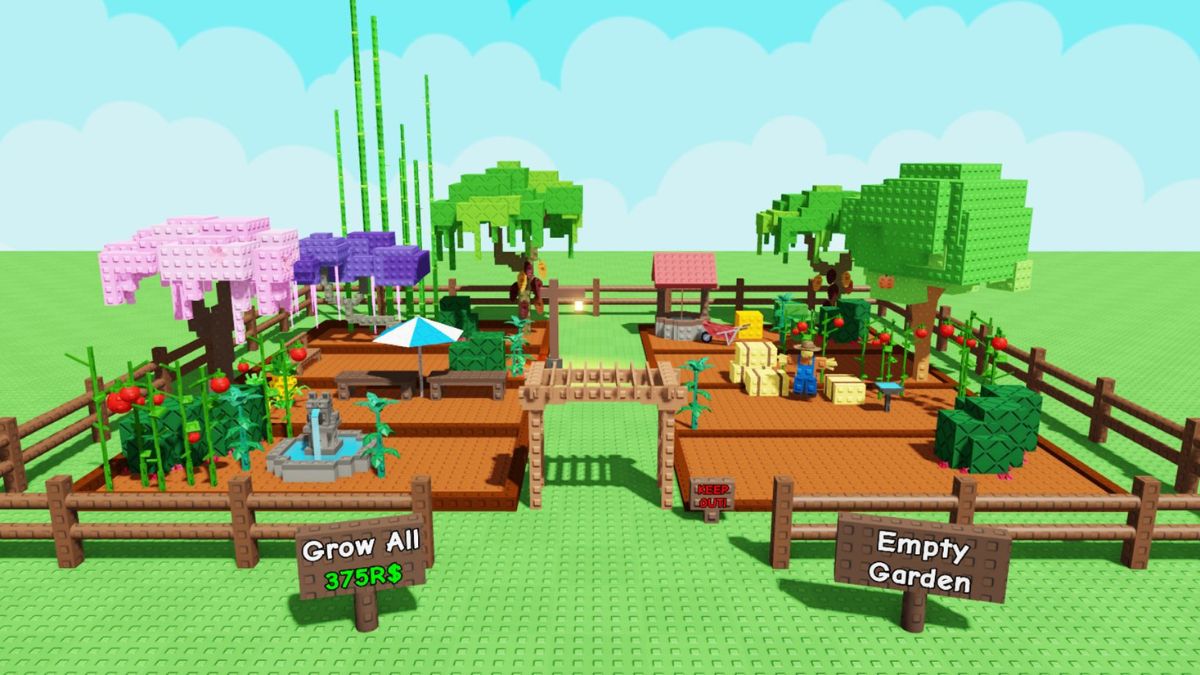
Soft lighting spills across rows of crops during sunset cycles. Wind effects move gently through oversized plants. Other players wander silently between plots carrying watering cans, strange pets, or giant vegetables that look almost ridiculous against the game’s otherwise cozy tone.
There is very little urgency here.
That matters.
Most Roblox experiences chase noise constantly — explosions, anime effects, combat loops, screaming multiplayer chaos. Grow a Garden instead builds emotional rhythm around patience. The soundtrack stays light and unobtrusive. Environmental sounds remain soft. Even busy servers somehow feel peaceful rather than overwhelming.
I remember stopping completely during one nighttime session just to watch rain fall across my garden while lanterns glowed beside tomato rows I had spent nearly an hour organizing.
Nothing dramatic happened.
And somehow that became memorable.
The visual design is intentionally approachable. Bright colors, oversized crops, clean interfaces, and simple animations make the world readable instantly. Yet the strongest moments appear when the game slows down enough for players to notice tiny environmental details — glowing fireflies near fences, weather shifts across farmland, distant crop movement during storms.
Grow a Garden succeeds because it never feels desperate for attention.
Gameplay Mechanics and Core Systems
At its core, Grow a Garden is a farming progression simulator built around planting, harvesting, upgrading, automation, collection systems, and long-term economic growth.
The gameplay loop is straightforward:
Plant crops.
Wait for growth cycles.
Harvest profits.
Expand your garden.
Unlock upgrades.
Repeat.
That simplicity becomes both the game’s greatest strength and its biggest risk.
Early progression feels satisfying because upgrades arrive steadily. New seeds unlock frequently enough to maintain momentum, and watching small gardens slowly transform into dense agricultural layouts creates genuine emotional attachment. Expanding farmland piece by piece feels rewarding in the same way organizing a physical workspace can feel strangely comforting.
The economy systems drive long-term retention effectively. Crop values, rare plants, upgrades, pets, automation features, weather bonuses, and progression pacing constantly encourage players toward “just one more harvest.”
And yes, it works embarrassingly well.
I once logged in planning to collect crops for five minutes before sleeping. Then a weather event started. Then a rare seed became available. Then I reorganized my entire garden layout because one section looked inefficient.
Two hours disappeared quietly.
That is the game’s trick.
Unlike combat-heavy multiplayer games, Grow a Garden creates progression through maintenance rather than intensity. Players optimize layouts, compare profits, experiment with crop combinations, and slowly transform efficiency into personal routine.
Still, repetition absolutely becomes visible after longer sessions.
Harvest cycles eventually blur together. Certain upgrades feel grind-heavy. Waiting mechanics can slow pacing too aggressively for players wanting faster engagement. The game works best when approached as a relaxing long-term experience rather than a rapid progression chase.
Multiplayer features help considerably. Seeing neighboring gardens evolve creates subtle social motivation. Players naturally compare layouts, growth efficiency, rare items, and decorative choices without the game needing heavy competitive systems.
That softer social pressure feels surprisingly effective.
World Design and Player Immersion
Grow a Garden does not rely on massive exploration systems or sprawling open worlds.
Instead, immersion comes from familiarity.
Players return repeatedly to the same space and slowly reshape it through time investment. Tiny adjustments become emotionally meaningful because the garden evolves gradually rather than instantly.
That slow transformation matters enormously.
The map itself remains relatively compact, but environmental identity grows stronger through repetition. Certain corners become associated with specific crops. Pathways develop naturally through movement habits. Decorative objects slowly stop feeling cosmetic and start feeling personal.
I became irrationally attached to one small pumpkin section near a wooden fence purely because it was the first area that finally looked “organized” after several messy redesigns.
That sounds ridiculous.
Yet anyone who enjoys simulation games probably understands the feeling immediately.
Environmental storytelling appears subtly through player behavior rather than scripted narrative. Some gardens become chaotic profit factories packed with crops everywhere. Others look carefully curated, almost meditative. You can often understand a player’s priorities simply by observing their layout for thirty seconds.
The world feels lived in because players leave evidence of themselves everywhere.
Weather systems strengthen immersion considerably too. Rain creates mood shifts naturally. Night cycles slow the atmosphere emotionally. Morning light across organized rows of crops creates moments that feel oddly peaceful despite the platform’s technical simplicity.
There are limitations, of course. The world can occasionally feel visually repetitive after many hours. Certain decorative systems remain shallow. Exploration outside farming spaces lacks meaningful depth.
But the game rarely pretends to be larger than it is.
That honesty helps.
The Emotional Experience and Player Psychology
Grow a Garden succeeds psychologically because it transforms maintenance into emotional reward.
Players feel responsible for their spaces.
Returning after several hours to collect mature crops creates low-stakes satisfaction similar to checking progress in real-life hobbies. The game constantly rewards consistency rather than aggression. That slower pacing creates emotional comfort many modern multiplayer games completely ignore.
There is also something strangely therapeutic about repetitive farming loops when paired with calm atmosphere and manageable goals.
Plant. Organize. Expand. Adjust. Repeat.
The structure becomes predictable in a reassuring way.
But beneath that calm sits a surprisingly effective progression psychology system. Better crops remain slightly out of reach. Larger profits constantly suggest future optimization possibilities. Rare seeds create anticipation. Seasonal events disrupt routines just enough to prevent total stagnation.
And because gardens remain visible social spaces, players naturally chase aesthetic improvement alongside efficiency.
That combination — progression plus personalization — creates long-term attachment.
Not obsession exactly.
Something softer.
Real Gameplay Moments and Examples
One of my favorite moments in Grow a Garden involved almost nothing happening mechanically.
A storm rolled across the server while several nearby players stood quietly inside their farms collecting crops. The lighting shifted darker. Rain effects covered the paths. Nobody spoke much in chat.
For about five minutes, the entire server slowed down emotionally.
It felt peaceful in a way most online games rarely allow themselves to feel.
Another moment was less graceful.
I accidentally sold several valuable crops because I was reorganizing inventory too quickly after a long harvesting session. For a few seconds I just stared at the empty inventory space in complete silence before realizing nearly an hour of growth cycles had disappeared.
The frustration felt weirdly personal.
Then there are the tiny accidental memories. Discovering rare seeds unexpectedly. Watching another player’s absurdly optimized garden and immediately redesigning your own. Spending forty unnecessary minutes adjusting decorative fences because the spacing looked “slightly wrong.”
Grow a Garden creates stories through routine rather than spectacle.
And honestly, that slower emotional rhythm becomes its identity.
Strengths and Weaknesses
Strengths
The game’s strongest quality is atmosphere.
Grow a Garden understands pacing better than many larger Roblox experiences. It creates comfort through repetition, visual consistency, and long-term progression systems without overwhelming players constantly.
The farming loop remains accessible and emotionally satisfying. Garden customization encourages creativity naturally, while multiplayer interaction stays light enough to feel social without becoming chaotic.
Replayability also works surprisingly well due to:
-
Progressive upgrades
-
Rare crop systems
-
Garden optimization
-
Decorative freedom
-
Seasonal events
-
Social comparison
-
Relaxing routine-based progression
Weaknesses
But repetition absolutely becomes noticeable over time.
The core mechanics eventually reveal their simplicity. Crop harvesting, waiting cycles, and economic progression can become grind-heavy during longer sessions. Some players may lose motivation once optimization replaces discovery.
Content variety also feels limited compared to larger simulation games. Exploration systems remain minimal, and certain progression upgrades lack meaningful gameplay transformation beyond numerical efficiency increases.
Monetization pacing occasionally becomes visible too. Like many Roblox simulators, premium acceleration systems risk undermining the relaxed progression flow for players sensitive to waiting mechanics.
And emotionally, the game may simply feel “too calm” for players wanting excitement, challenge, or competitive tension.
Still, the game knows exactly what it wants to be.
That clarity helps protect its identity.
Advanced Perspective and Long-Term Replayability
Long-term engagement in Grow a Garden depends almost entirely on player mindset.
People who enjoy optimization, collection systems, routine progression, and personal customization will likely remain invested far longer than expected. Over time, advanced players stop focusing purely on crops and begin refining efficiency, aesthetics, layout design, economic balance, and seasonal event planning.
The mastery curve becomes subtle rather than dramatic.
Experienced players understand crop timing, spacing optimization, weather bonuses, inventory flow, and profit pacing instinctively. Gardens begin looking intentional rather than improvised.
Community longevity also comes from social visibility. Players compare farms constantly even without direct competition systems. Large, visually impressive gardens naturally become status symbols within servers.
Streaming culture and short-form content strengthen this further. Timelapse farm transformations, optimization guides, rare seed showcases, and aesthetic garden tours all fit perfectly into modern Roblox content ecosystems.
That visibility matters enormously for retention.
Trends, Popularity, and Community Growth
Grow a Garden reflects a broader trend inside gaming culture: the rising popularity of low-stress progression games.
Players increasingly seek experiences focused on relaxation, routine, customization, and soft social interaction rather than nonstop competitive pressure. Farming simulators, cozy games, sandbox builders, and maintenance-focused progression systems continue growing across gaming platforms partly because they create emotional decompression.
Grow a Garden fits that trend extremely well.
The Roblox platform itself continues maintaining enormous community engagement globally. According to Roblox Corporation financial reporting, the platform reached tens of millions of daily active users in recent reporting periods, strengthening visibility for simulator and farming genres alike. [Source: Roblox Investor Reports, 2025]
Source:
The game succeeds not through spectacle, but through consistency.
That difference matters.
Comparison With Similar Games
Compared to Stardew Valley, Grow a Garden feels far simpler mechanically and narratively, but also far more socially lightweight and immediately accessible.
Against Animal Crossing: New Horizons, Grow a Garden lacks the same environmental depth and personality, yet captures similar emotional comfort through repetitive routine and customization.
Compared with many Roblox simulator games, Grow a Garden feels calmer and more visually cohesive. It avoids the hyperactive energy common across progression-heavy simulators that constantly overwhelm players with notifications, explosions, or flashing rewards.
Its pacing philosophy is slower.
More patient.
And honestly, that patience becomes refreshing after enough time inside louder multiplayer ecosystems.
Common Misunderstandings or Criticism
One common misconception is that Grow a Garden has “nothing to do.”
Technically, that criticism is understandable. The game intentionally focuses on repetitive farming loops rather than structured missions or combat systems. Players seeking constant stimulation may absolutely find the pacing too passive.
Another criticism targets progression depth.
Fairly.
While optimization systems remain satisfying, the underlying mechanics eventually expose limited complexity compared to larger farming simulators. Experienced players may eventually crave more environmental interaction, event variety, or strategic decision-making.
Monetization discussions also deserve honesty. Waiting systems and premium acceleration mechanics can create subtle pressure toward spending depending on player patience and progression expectations.
Yet dismissing the game entirely misses its strongest achievement:
It creates emotional routine remarkably well.
Reference:
The game is less about achievement and more about returning.
Final Verdict and Closing Thoughts
Grow a Garden is not revolutionary.
Its systems are simple. Its pacing occasionally drifts into repetition. Its long-term depth has visible limits.
And yet, the game quietly succeeds where many louder multiplayer experiences fail completely: it creates comfort players genuinely want to revisit.
The farming systems feel satisfying because they reward patience rather than intensity. The atmosphere feels calming without becoming empty. The progression works because it grows gradually alongside personal attachment to the garden itself.
Some nights you optimize profits efficiently.
Other nights you spend an hour moving fences slightly because the layout finally “feels right.”
That second kind of session explains the game far better than any feature list ever could.
Long after the harvesting loops become familiar, players continue returning for the same reason people revisit comfortable routines in real life:
Not because something dramatic will happen.
But because the space slowly starts feeling like theirs.