

Introduction
Some games entertain for a few weeks. Others become places you remember. GTA V belongs firmly in the second category.
First Impressions and Atmosphere
The first thing that struck me when returning to GTA V wasn't the scale of Los Santos.
It was the feeling.
The city breathes in a way few virtual worlds ever have. Morning sunlight spills across downtown skyscrapers. Traffic crawls through intersections while distant sirens echo between concrete canyons. On the outskirts, dusty highways stretch toward mountains wrapped in haze.
Even after hundreds of hours, Los Santos still feels less like a game map and more like a living location.
The visual presentation has aged remarkably well. While newer games undoubtedly offer more advanced lighting technologies and denser textures, GTA V compensates with extraordinary artistic direction. Every district possesses a unique identity. Wealthy neighborhoods contrast sharply with industrial zones. Beachfront boardwalks buzz with life while remote desert roads evoke isolation.
Environmental storytelling quietly enhances immersion.
A broken-down vehicle abandoned near a dirt road. Graffiti-covered walls beneath overpasses. Small conversations overheard while walking through crowded areas.
None of these details demand attention.
Yet together they create authenticity.
Sound design deserves equal praise. The distant hum of traffic, radio stations, helicopter blades overhead, and ambient city noise constantly reinforce the illusion of a functioning world.
There were moments late at night when I simply parked on a hill overlooking the city and listened.
Not because a mission required it.
Because the atmosphere invited it.
Gameplay Mechanics and Core Systems
At its core, GTA V remains one of the most successful examples of open-world sandbox design.
The gameplay loop appears simple:
Accept missions.
Earn money.
Acquire vehicles.
Explore.
Cause chaos.
Repeat.
Yet underneath that simplicity lies an interconnected network of systems that constantly encourage experimentation.
Driving remains one of the game's greatest strengths. Every vehicle category feels distinct. Sports cars hug corners aggressively while heavy trucks require patience and control.
Movement is fluid without feeling overly arcade-like.
Combat, meanwhile, sits somewhere between accessibility and depth. The cover system works reliably, weapons feel impactful, and firefights maintain a cinematic quality.
The shooting mechanics won't rival dedicated tactical shooters.
They don't need to.
Their purpose is to support the broader experience.
Character switching remains one of GTA V's most innovative features. Instantly moving between Michael, Franklin, and Trevor transforms storytelling and gameplay pacing.
Each protagonist offers different skills and perspectives.
The result is a campaign that rarely feels stagnant.
Economy systems provide meaningful progression without overwhelming complexity. Players can invest in properties, purchase vehicles, modify equipment, and gradually expand their influence throughout Los Santos.
Exploration rewards curiosity.
One moment you're heading toward a mission marker.
The next, you've spent forty minutes racing motorcycles across mountains or chasing a random event you stumbled upon entirely by accident.
That unpredictability remains one of GTA V's greatest achievements.
World Design and Player Immersion
Few open worlds encourage aimless exploration as effectively as GTA V.
Los Santos and Blaine County aren't merely large.
They're diverse.
The transition from urban sprawl to rural wilderness feels natural. Dense city blocks give way to rolling hills, forests, deserts, and coastlines.
Every region tells a different story.
Downtown Los Santos represents ambition and excess.
Vespucci Beach captures leisure and vanity.
Sandy Shores embodies decay and desperation.
Mount Chiliad offers mystery and isolation.
I still remember getting distracted while driving toward a mission near Vinewood.
An unfamiliar dirt trail appeared on my minimap.
Two hours later, I found myself at the summit of Mount Chiliad watching sunrise illuminate the entire map.
The original objective had been forgotten entirely.
That kind of spontaneous adventure cannot be scripted.
It emerges from exceptional world design.
The map feels handcrafted despite its enormous scale.
Every road seems placed intentionally.
Every viewpoint feels earned.
Every neighborhood possesses character.
Players eventually develop emotional attachments to locations.
Not because the game tells them to.
Because they've created memories there.
The Emotional Experience and Player Psychology
GTA V succeeds because it understands something fundamental about player psychology.
Freedom creates ownership.
When players are allowed to create their own stories, those stories become more memorable than scripted events.
The game constantly balances structure and spontaneity.
Main missions deliver cinematic spectacle.
The open world provides unpredictability.
This combination generates emotional investment.
There are moments of excitement.
Moments of frustration.
Moments of absurd comedy.
And moments of surprising calm.
A high-speed police chase through downtown traffic creates adrenaline.
Watching sunset from a remote beach creates reflection.
Both experiences belong naturally within the same world.
Replayability stems from this emotional variety.
Few sessions unfold identically.
Players return because they know something unexpected may happen.
Not necessarily because new content exists.
But because the systems continue producing fresh experiences.
Source:
-
The Evolution of Open-World Game Design
-
Why Sandbox Games Create Stronger Player Memories
-
Environmental Storytelling in Modern Interactive Worlds
-
The Psychology Behind Open-World Exploration
-
How Player Freedom Increases Long-Term Engagement
Real Gameplay Moments and Examples
Some of my favorite memories from GTA V involve complete accidents.
One evening I attempted a simple vehicle delivery mission.
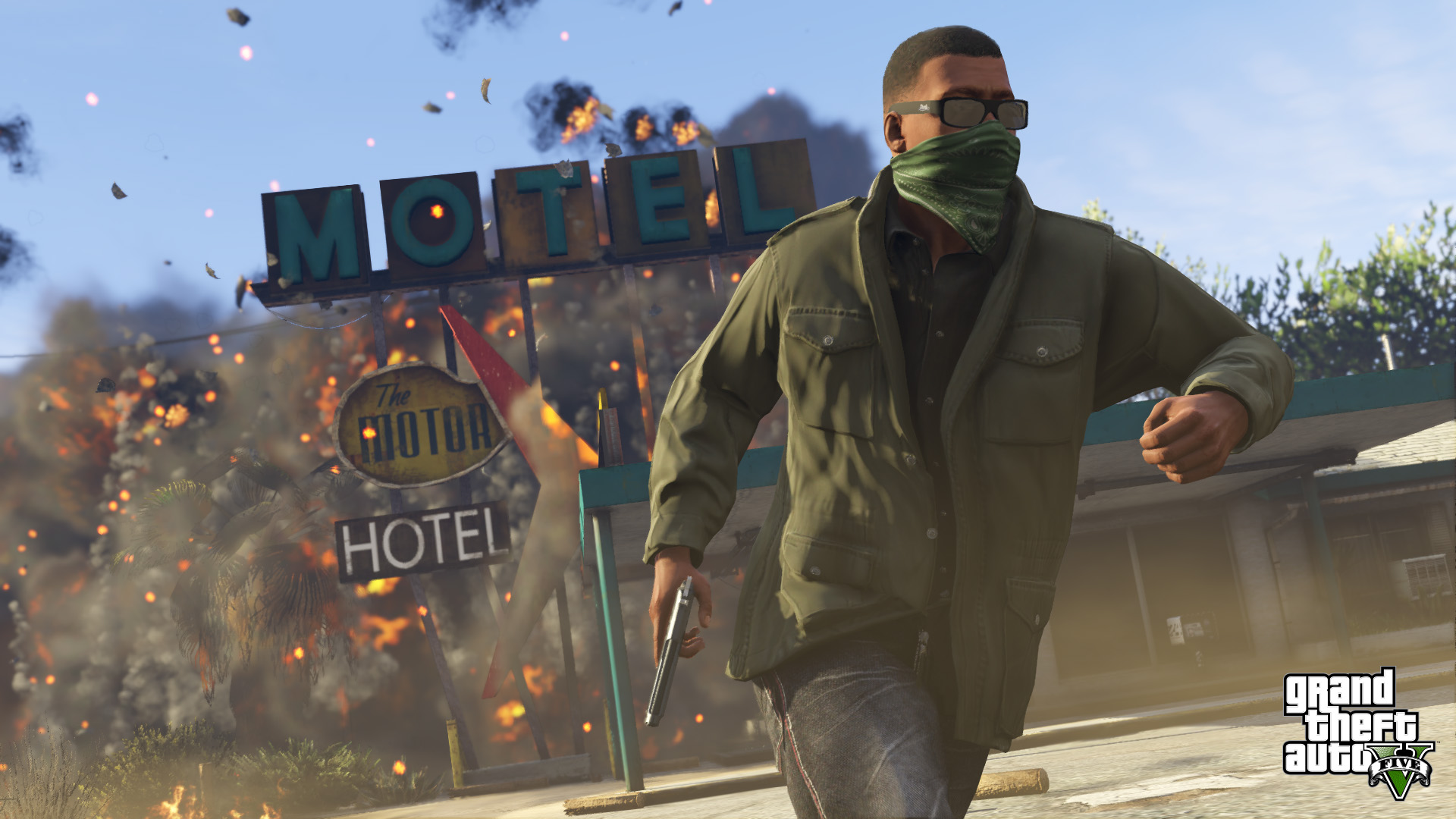
Halfway there, a collision launched my car into a roadside gas station.
An explosion followed.
Police arrived.
Then helicopters.
Then military vehicles.
What should have taken five minutes evolved into a thirty-minute survival scenario across mountains and forests.
Another memorable moment occurred while flying above the Pacific Ocean during a storm.
Lightning illuminated the clouds.
Rain hammered the aircraft.
For a brief moment, the mission objective disappeared from my mind.
I simply enjoyed the spectacle.
Then there was Trevor.
Many players remember Trevor for his unpredictability.
I remember accidentally switching to him only to discover he'd somehow ended up wearing questionable clothing in the middle of nowhere.
Those unexpected character transitions remain consistently entertaining.
The best GTA V stories often emerge between missions rather than during them.
That is a rare achievement.
Strengths and Weaknesses
Strengths
Exceptional open-world design
Los Santos remains one of gaming's most believable environments.
Outstanding environmental storytelling
Small details create immersion without relying on exposition.
Memorable protagonists
Michael, Franklin, and Trevor provide unique perspectives and motivations.
Strong gameplay variety
Driving, shooting, flying, exploration, and side activities prevent monotony.
Remarkable replayability
Player freedom ensures different experiences across multiple playthroughs.
Weaknesses
Some mission structures feel restrictive
Ironically, the open world offers more freedom than many story missions.
Combat shows its age
While functional, shooting mechanics occasionally lack precision compared to modern standards.
Economic progression can feel uneven
Certain purchases become trivial late-game while others feel overpriced.
Side content quality varies
Not every activity reaches the same standard as the main campaign.
Despite these flaws, few significantly damage the overall experience.
Advanced Perspective and Long-Term Replayability
The longer you play GTA V, the more depth reveals itself.
Initially, players focus on missions.
Later, they begin mastering systems.
Vehicle handling becomes second nature.
Map knowledge improves.
Economic opportunities expand.
Exploration grows more intentional.
Then GTA Online enters the equation.
Whether players enjoy competitive activities, cooperative missions, business management, racing, or roleplaying communities, the multiplayer component dramatically extends longevity.
Years after release, communities continue generating new stories daily.
That level of retention is rare.
Most games fade.
GTA V evolved.
Trends, Popularity, and Community Growth
GTA V has become more than a successful game.
It has become a cultural phenomenon.
Streaming platforms continue featuring GTA content years after launch. Roleplay servers attract massive audiences and generate millions of views across content platforms.
According to industry reports from organizations such as the Take-Two Interactive and industry analysts, GTA V remains one of the best-selling entertainment products ever created. [Source: Take-Two Interactive, Annual Reports]
The game's longevity highlights broader trends within the gaming industry.
Players increasingly seek experiences that encourage creativity, social interaction, and emergent storytelling.
GTA V delivers all three.
Its community remains active because the game empowers players to create experiences rather than simply consume content.
Reference:
-
The Rise of Persistent Multiplayer Communities
-
How Replayability Extends Game Lifecycles
-
The Business Impact of Long-Term Player Retention
-
Why Open Worlds Continue Dominating Modern Gaming
-
Community-Driven Content and Player Engagement
Comparison With Similar Games
Compared with Red Dead Redemption 2, GTA V offers faster pacing and greater urban density.
Compared with Watch Dogs 2, GTA V delivers stronger world-building and more memorable protagonists.
Compared with Saints Row IV, GTA V feels more grounded despite its occasional absurdity.
Each title excels differently.
What separates GTA V is balance.
It successfully combines storytelling, exploration, sandbox freedom, action, and social systems without allowing any single element to dominate.
That harmony remains difficult to replicate.
Common Misunderstandings or Criticism
Some critics argue GTA V relies too heavily on chaos and spectacle.
That criticism overlooks the quieter strengths of the experience.
Beneath explosions and criminal escapades lies a carefully constructed world filled with subtle details and environmental storytelling.
Others claim the gameplay has aged poorly.
Certain mechanics certainly reveal their age.
However, great design often outlasts technical limitations.
Many players continue returning because the underlying systems remain engaging.
Another common misconception is that GTA V is only enjoyable when causing destruction.
In reality, some of the game's strongest moments emerge during simple exploration, casual driving, or unexpected discoveries far away from mission objectives.
Final Verdict and Closing Thoughts
More than a decade after release, GTA V remains one of the most compelling open-world games ever created.
Not because every mechanic is perfect.
Not because every mission is revolutionary.
But because Los Santos still feels alive.
The city possesses a rare quality that many modern games chase yet struggle to achieve. It invites curiosity. It rewards experimentation. It transforms routine activities into memorable stories.
Players who enjoy open-world exploration, sandbox systems, emergent gameplay, and richly detailed environments will find countless reasons to stay invested.
Even today.
Long after the credits roll.
Long after the biggest heists are completed.
Long after the final mission is finished.
There's a good chance you'll find yourself returning to Los Santos one evening, driving without a destination, watching city lights flicker in the distance, and remembering exactly why GTA V became unforgettable in the first place.